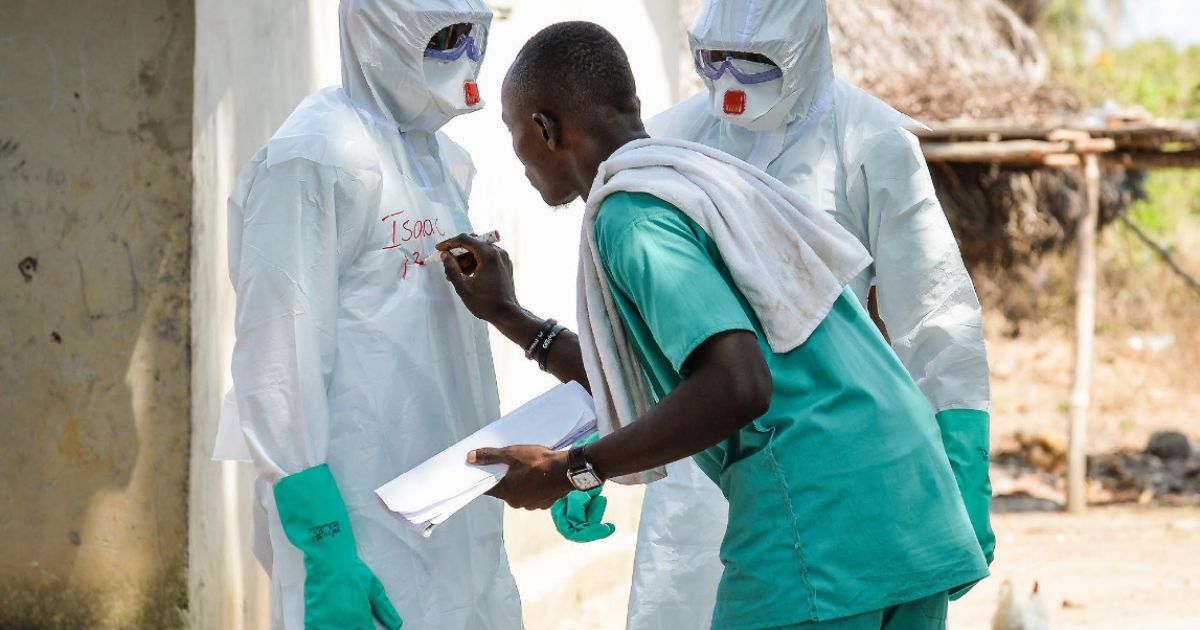
In the Democratic Republic of Congo, a young doctor has died of Ebola as the outbreak escapes its epicentre due to the lack of a vaccine against the strain of Ebola currently spreading, severe insecurity and community mistrust.
DDRC’s death in Kisangani is an important escalation in an outbreak that the World Health Organisation is warning may become “the worst on record. Although the number of cases has dropped in Ituri province, neighbouring North Kivu has experienced an increase of 73 per cent in cases over the last three weeks, highlighting the limitations in the containment effort in terms of structure and biology.
Vaccine Mismatch Poses Challenges to Ebola Containment
The ongoing escalation is attributed to an urgent need for a new strain of the pathogen and a lack of medical countermeasures against it. Vaccination campaigns with the Ervebo vaccine, which is approved to be given against the Zaire ebolavirus species, have been started by health authorities. But this outbreak is being caused by a different strain of the virus, called the Bundibugyo strain, which was first identified in Uganda in 2007.
Even though Ervebo shows there is some cross-reactive immune response, it is not optimised for Bundibugyo. This immune deficiency leaves frontline responders under-provisioned when it comes to protection, thereby compromising the ring vaccination strategy. There are trials going on regarding the development of therapeutics for Bundibugyo, but the lack of a matching vaccine leaves a vulnerable situation as the virus spreads into the densely populated areas.
Lack of Trust and Delayed Action Hamper Response
Biological challenges are complicated by harsh operational limitations. The outbreak has been happening at a time of extreme conditions, including high population mobility, displacement and a health workers’ strike. In North Kivu, the growth in cases was 73 per cent in three weeks, and the armed conflict makes it very difficult to reach people and to conduct safe burials.
Spread in a security vacuum, unlike outbreaks in stable regions. Treatment centres and burial teams are often attacked, and authorities are forced to stop working in hotspots. This paralysis in operations allows chains of transmission to go undetected, leading to a regional crisis from localised flare-ups. Without resolution of constraints, the epidemic could outnumber the 2014-2016 West Africa outbreak that has killed more than 11,000 people, the World Health Organisation warns.
Low Community Trust Deepens the Human Cost of the Outbreak
This is complicated by widespread distrust in the community. There have been widespread rumours refuting the existence of the virus, prompting people to ignore medical measures and to conceal family members who are infected. This was emphasised at the burial of Dr Victor Kingombe, a young doctor in internal medicine who died in the new treatment centre in Kisangani because of the virus.
The vice-governor of Tshopo province, Didier Lomoyo Iteku, attended the funeral to dispel rumours and disbelief, which he saw in a plastic window. This is a serious disease. Come on, Iteku, a doctor who is trying to save lives and who was himself saved. The case of a frontline doctor’s death in a specialist hospital highlights the high risk of the job and weaknesses in current infection control measures.
Systemic Failures and the Path to Containment
The spread of the virus beyond the epicentre of Ituri province is a sign of the virus’ capacity to take advantage of systemic weaknesses. The West Africa epidemic between 2014 and 2016 taught the world that biology alone is not enough – community trust and safe access are essential. Those early mistakes are being repeated in the current crisis in the DRC.
The first priority is negotiating safe humanitarian access to provide treatment in North Kivu to slow the escalation of the situation and avert a health crisis on the continent. At the same time, authorities need to speed up the development of countermeasures for the Bundibugyo strain of the Ebola virus and aggressively engage with the community to break transmission rumours. The deficit of security, trust, and vaccine effectiveness is inextricably linked and cannot be resolved without them, and if these cannot be resolved, the outbreak will outpace containment efforts.
Historical context and infrastructure limits
The Bundibugyo strain, which has a 40 per cent case fatality rate, versus 90 per cent for the Zaire strain, remains a deadly virus that strains already weak health systems. Less than 2 weeks before Dr Kingobe’s death, the Kisangani treatment centre was inaugurated, a sign of a reactive infrastructure response. Training capacity during the rapidly expanding outbreak results in facilities being overwhelmed and staff vulnerable before they can be fully developed.
A new strain meeting the new geographic location, coupled with continually “catching up” infrastructure, makes for a compounding risk. Health workers struggle with the logistical challenge of keeping vaccine cold chains and the psychological toll of multiple attacks in conflict areas, while working in facilities not built to isolate hemorrhagic fever. This fragility can lead to a potentially exponentially higher risk of a new case leading to wider transmission.