An unexpected rise in crude oil prices and rising sovereign bond yields pushed back the global equity markets on Wednesday, as they revived inflation worries. Debt market data from the U.S. Department of the Treasury showed that the benchmark 10-year U.S. Treasury yield rose to as high as 5.11 percent, the highest level since 2007. The rapid rise in borrowing rates had a negative impact on investor mood, with widespread selling on key global stock exchanges.
The markets for commodities were volatile after a few days of declines. North Sea Brent crude rose 3.86 percent to $103.08 a barrel and West Texas Intermediate crude rose 1.81 percent to $92.16 a barrel. Market data followed by the United States Energy Information Administration has followed the same pattern, indicating that high-level meetings in New York may not quickly get the vital Strait of Hormuz back to normal for commercial shipping, analysts noted.
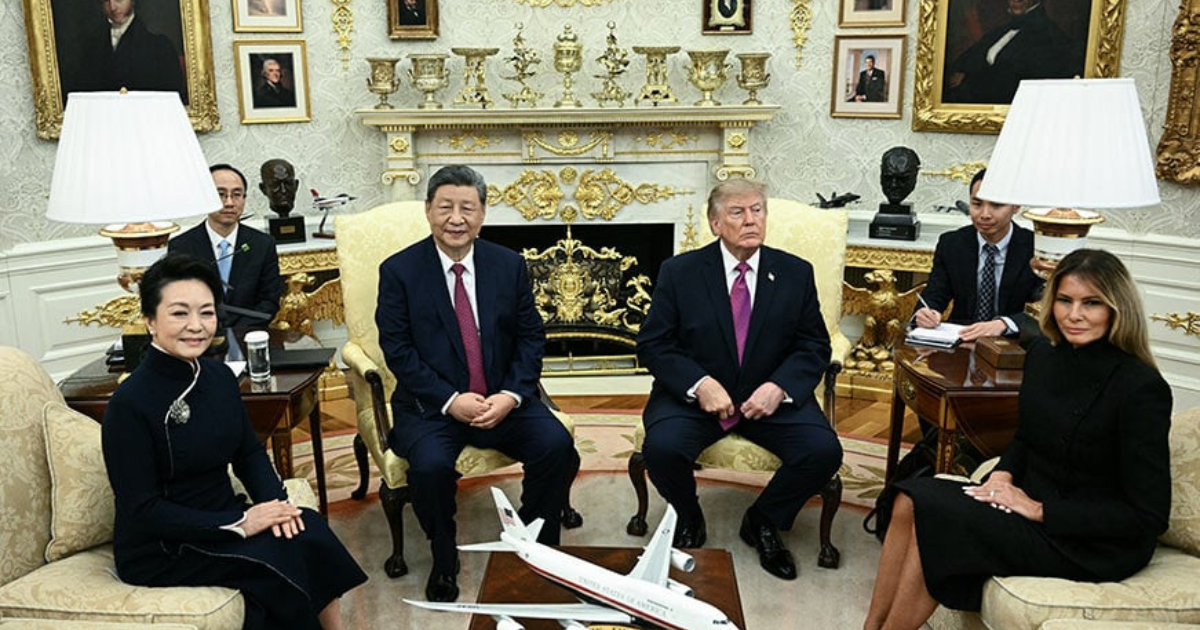
But the annual UN gathering also raised geopolitical tensions, further stirring up energy traders. Iranian President Masoud Pezeshkian was defiant, promising Tehran would never bend to U.S. pressure as the region’s conflict rages on. His comments came after U.S. President Donald Trump threatened to unleash “severe consequences” if Iran fails to cooperate and was also celebrating the direct dialogue renewal, fueling doubt among market watchers that Iran will be able to be resolved quickly.
The equity indexes had significant declines on Wall Street. The Dow Jones Industrial Average lost 0.68 percent to close at 51,511, and the S&P 500 lost 0.75 percent to close at 7,706. The Nasdaq Composite, which has more technology stocks, was the largest domestic loser, dropping 1.13 percent to end at 26,936. The possibility that the Board of Governors of the Federal Reserve System will keep its interest rate policy hiking in the near future, not pausing after its recent change of course, was a topic on investors’ minds.
European stock exchanges also ended broadly down as investors reacted to rising global bond yields and rising energy prices. The DAX was down 0.7 percent to 25,410.63 in Frankfurt, and the CAC 40 index in Paris tumbled 0.4 percent to close at 8,123.41. The FTSE 100 index in London was able to end almost unchanged at 10,705.26. The dollar has also rallied against most major peers in the foreign exchange markets, lifting the euro to $1.1385 and the British pound to 85.97 pence against the euro, and the dollar has risen 2.29 points to 158.29 against the Japanese yen.
The Asian trading was also negative at a number of important trade centers. Chinese tech giant Alibaba Group Ltd is planning to extend its data centre footprint overseas, but that development was largely ignored by Hong Kong’s Hang Seng index, which declined 1.0 percent to close at 24,834.12, and the Shanghai Composite, which lost 0.4 percent to 3,936.52. On the other hand, trading was closed in the financial markets in Tokyo for a public holiday, and South Korea’s Kospi and Taiwan’s Taiex rallied by almost one per cent on semiconductor gains.
But larger-scale economic and macroeconomic reviews showed resilience in the face of the escalating geopolitical tensions and economic market uncertainty.Even as geopolitical tensions grew and financial markets became volatile, in the larger picture economic and macroeconomic reviews showed resilience. The Organisation for Economic Co-operation and Development (OECD) in its updated outlook yesterday has indicated that the overall growth of economic activity in several major economies has been remarkably resilient so far, prompting it to slightly lift its overall economic activity forecasts for 2026.