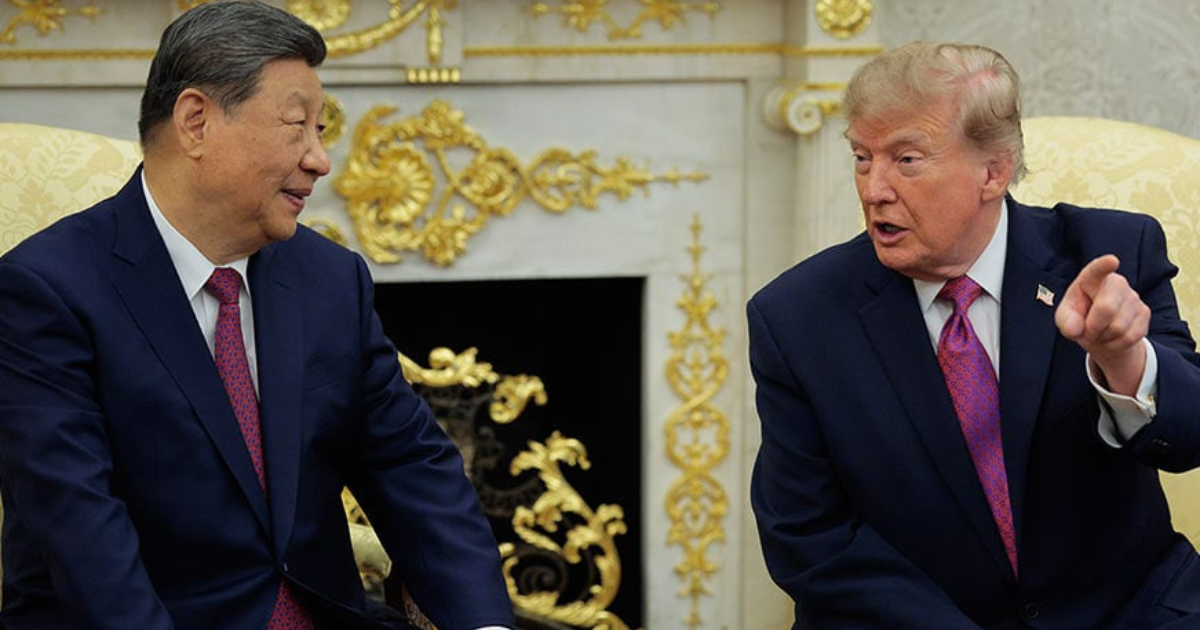
President Donald Trump and Chinese President Xi Jinping recently wrapped up their three-day summit, which included military flyovers, state dinner, and a tour of National Archives wrapped up by tea drinking session at White House. But, despite all the pageantry, not much important was achieved during the visit, especially with respect to resolving the major contentious issues like trade issues, artificial intelligence, Taiwan, and Iranian matter.
The most concrete outcome of this summit turned out to be the two-month extension of the trade truce that was supposed to expire on November 10 thus creating an option to negotiate the broader agreement. US Trade Representative has officially confirmed that United States will exempt some goods from trade wars including consumer goods, medical devices, and agricultural products shipped to China.
The leaders of the two superpowers pointed to artificial intelligence as an area in which they are set to continue talks. Trump suggested that negotiations are set to continue and mentioned that they planned at least two more meetings this year, namely the Asia-Pacific Economic Cooperation (APEC) summit in China in November and the G20 summit in Miami in December. American ambassador to China David Perdue stressed that perhaps the most important achievement of the summit was keeping the communication lines between the two nations open.
Despite a friendly tone voiced by the two leaders, there are many geopolitical problems yet to solve. Regarding Iran, Trump communicated that he had a fruitful discussion about the nation, as Perdue noted that Donald Trump was assured that China would refrain from supporting Iran directly or indirectly. However, no clear position of the People’s Republic of China could yet be found in the statements of its Ministry of Foreign Affairs or publications of state news agencies, as the leader of the Republic still called for negotiations in order to solve the issue.
Another sticking point emerged in the form of Taiwan. Xi called on Washington to take prudent steps, calling on the US government to acknowledge Taiwan’s independence and stop selling arms to the island. Although the US does not have any formal diplomatic relations with Taiwan, America remains the most important partner and guarantor of security for the nation.
In line with Trump’s previously announced arms sale worth $11 billion, the president characterized the new military assistance worth $14 billion as a “negotiating chip.” Senate Democrats criticized the statement made by Trump, demanding immediate fulfillment of the already agreed upon deal. As for experts in geopolitics, they agree that current friendly relations will most likely not last long because of ongoing disagreements in terms of technology, resources, and other key issues.