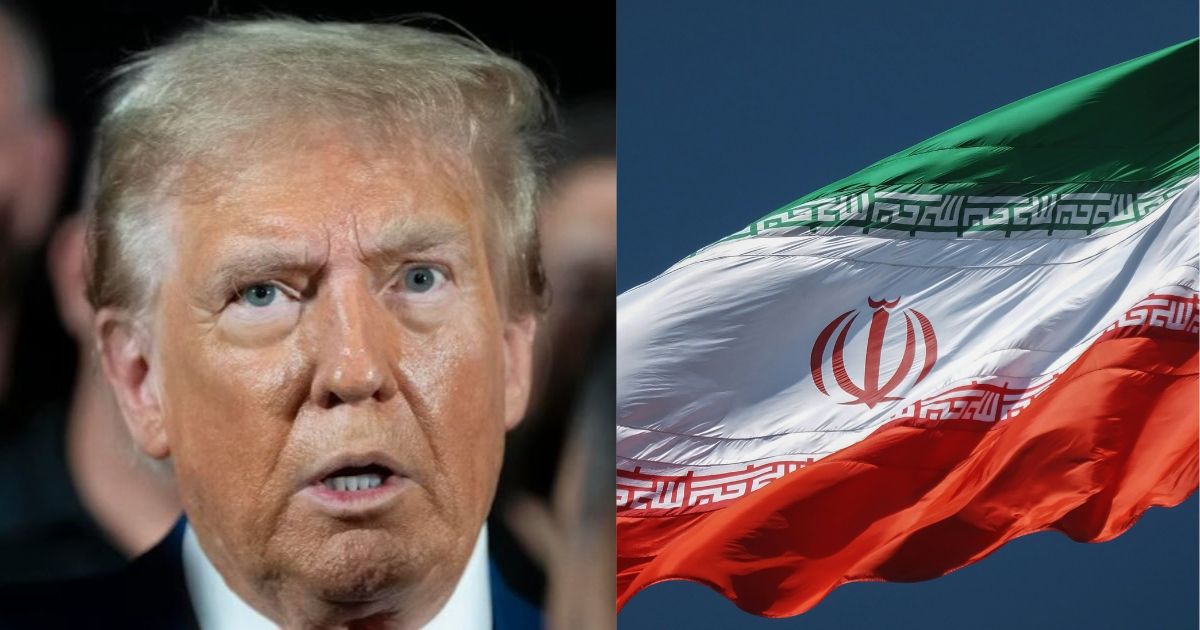
Iran reported on 2nd April that the demands of Washington were maximalist and unreasonable, and there were no negotiations underway regarding a ceasefire to end the war in the Middle East, as President Donald Trump was about to give a national address on the war.
Trump alleged on Wednesday that the president of Iran had requested a ceasefire, but must first close the Strait of Hormuz, prompting the world to focus on his 9:00 pm (0100 GMT Thursday) speech at the White House.
Iranian foreign ministry spokesman Esmaeil Baqaei, quoted by the ISNA news agency, said “there was no direct negotiation with the US, but they have received messages through intermediaries, one of them being Pakistan.”
He claimed that Washington had made “maximalist and irrational” demands and that Iran was prepared to counter any attack, even an invasion by ground troops.
In advance of his speech at Truth Social, Trump wrote that the United States would contemplate a ceasefire “once the Hormuz Strait is open, free and clear. In the meantime, we are reducing Iran to nothingness or, as they put it, into the Stone Age!”
Iran’s Revolutionary Guards promised to continue closing the Strait of Hormuz, by which the Gulf oil and gas products are exported to global markets, to its “enemies.”
A fifth of the world’s oil usually flows through the narrow strait, and its virtual shutdown has shot up energy prices and made the world economy volatile.
His speech will mark the first Trump has made since US-Israeli attacks on February 28 escalated the war, and as his ratings remain low, the economy is shaky, and diplomatic ties are in free fall.
Since the war broke out, Trump has been alternating between combative and conciliatory. On Tuesday, he said the month-long war may end in “two weeks or three.”
The President of Iran, Masoud Pezeshkian, has indicated that Iran has the required goodwill to cease hostilities, but only when its adversaries assure that the hostilities would not be rekindled.
Hours prior to Trump speaking, Pezeshinian questioned the American people on whether the war was indeed putting “America First,” claiming that Washington was guilty of war crimes as well as a victim of Israeli influence.
Wednesday evening, Tehran announced another salvo of missile and drone attacks against Israel and US bases in the Gulf, which hit Israeli cities such as Tel Aviv and Eilat, as well as US military installations in Bahrain and Kuwait.
At the beginning of Thursday, the Israeli military reported that its air defences were on to intercept Iranian missiles.
When Israel was getting ready to celebrate the Passover holiday that started at sunset on Wednesday, the air-raid sirens warning of new missiles coming in hit the Tel Aviv region several times.
Emergency services reported that a missile attack by the Iranians in the morning on Wednesday injured 14 individuals, including an 11-year-old girl.
The Revolutionary Guards also reported striking an oil tanker in the Gulf, which they claimed was an Israeli ship. A British maritime security organisation reported that the ship was hit off Qatar, and that it was damaged, but there were no casualties.
Resist to the end
On Wednesday afternoon, an AFP reporter described massive explosions in Tehran and previous attacks in and around the former US embassy.
Mojtaba Khamenei, the new supreme leader of Iran, who has not been seen publicly since his father was killed on the first day of the war, claimed that “the vicious and brutal American and Zionist foe had no human, moral or vital boundaries.”
The funeral of the naval commander of the Guards, who had been assassinated by the Israelis, was attended by thousands of Iranians in Tehran.
“It will fight to the last,” said a 57-year-old mourner, Moussa Nowruzi.
According to Iranian media, former Iranian foreign minister Kamal Kharazi suffered a severe wound in an attack that also killed his wife.
On Wednesday, the Iranian media also reported that a passenger airport in Isfahan province and steel complexes in other regions of the country had been destroyed during strikes.
In Lebanon, seven individuals were assassinated in attacks near south Beirut, the health ministry reported Wednesday, and the Israeli military reported having attacked a senior Hezbollah official.
The AFP representatives at the crime scene observed a blackened street that was littered.
The health ministry of Lebanon reported that since the war between Israel and the Iran-supported group Hezbollah broke out on March 2, Israeli attacks had killed over 1,300 people in Lebanon.
In Kuwait, a major fire in its international airport was initiated by strikes, and Bahrain reported a fire in a business premise, and Saudi Arabia claimed that a number of drones were shot down.
In the United Arab Emirates, a Bangladeshi national was shot dead by falling shrapnel when an intercepted drone was shot down.
“Every day, we listen to the drones,” Waad Abdulrazaq, a 31-year-old truck driver, said, near the Erbil international airport in Iraq. “We hear them in the morning, we hear them at night. We can no longer sleep or live in peace.”
Price turmoil
Trump sparked optimism on the timing of the war coming to an end, which pushed the oil prices down on Wednesday, and stock markets rallied in Europe, Asia and the United States.
Nevertheless, the average US gasoline prices soared beyond 4 a gallon for the first time in four years, European prices soared, and governments around the world started rolling out support.