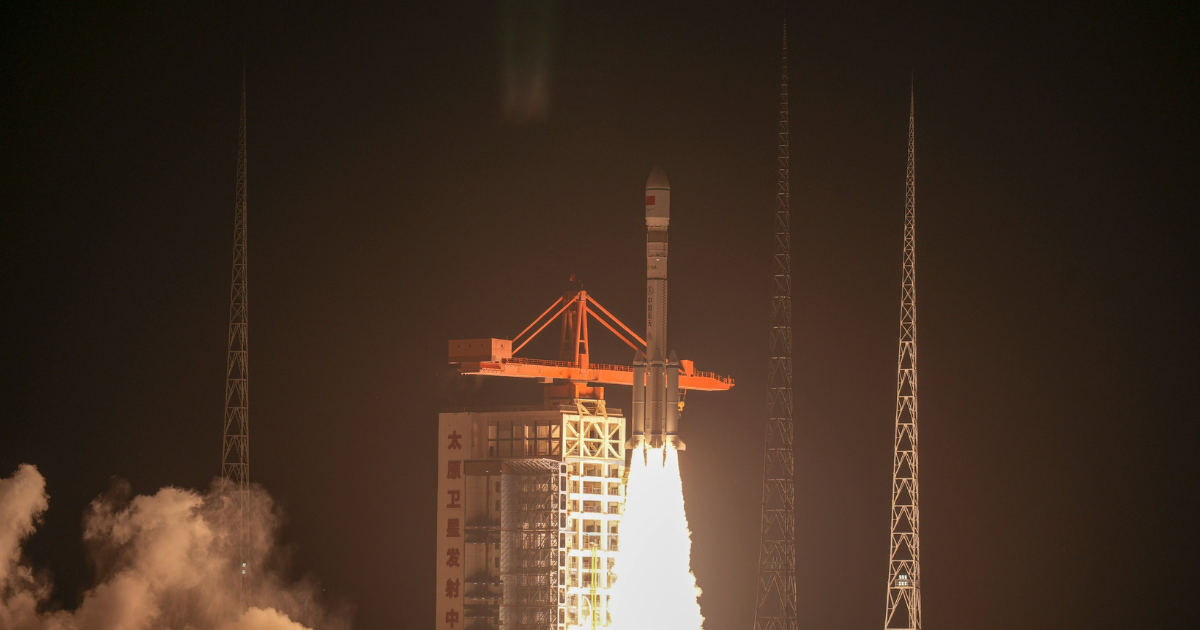
Leaked military documents show that Iran’s Islamic Revolutionary Guard Corps (IRGC) obtained a Chinese spy satellite which they used to plan their military operations across the region. The TEE-01B satellite which the military acquired through unauthorized purchase in late 2024 operated as a reconnaissance tool to track American military placements during the current Middle East conflict.
The U.S. Department of Defense and the Central Intelligence Agency have not yet confirmed the details of the report. The satellite tracked U.S. assets in Saudi Arabia, Jordan, and Iraq through time-stamped coordinates which showed its activity during major drone and missile strikes that occurred in March 2026.
Strategic Surveillance and Global Ground Support
The IRGC’s Aerospace Force used commercial ground stations operated by Beijing-based Emposat to control their satellite operations. The global network enabled Iran to obtain high-resolution photographs of Prince Sultan Air Base which is located in Saudi Arabia. The images were collected just before President Trump announced that U.S. planes at the base had been successfully attacked.
The United States conducted additional monitoring operations which included the Muwaffaq Salti Air Base in Jordan and the Fifth Fleet naval base location in Bahrain. The White House manages conflict consequences while Tehran and its eastern allies maintain advanced intelligence exchange.
Geopolitical Friction and Intelligence Alliances
The satellite maneuvers during this time period occurred when U.S.-led bombing missions had intensified their attacks on Iranian military targets. Reports indicate that Iran received intelligence support from Russia which helped them locate specific military targets. The region continues to experience tension despite the recent ceasefire declaration because advanced military technologies alter existing combat strategies.
China’s Ministry of Foreign Affairs has not yet made any statement about the reported sale of TEE-01B to IRGC. The diplomatic gap between the two countries has grown wider since the recent United Nations Security Council meetings.
Russia and China both exercised their veto power to block resolutions which sought to reopen the Strait of Hormuz that Iran had successfully closed. The combination of satellite surveillance and diplomatic protection indicates that although active combat has stopped due to the truce, both sides continue to engage in their strategic battle.