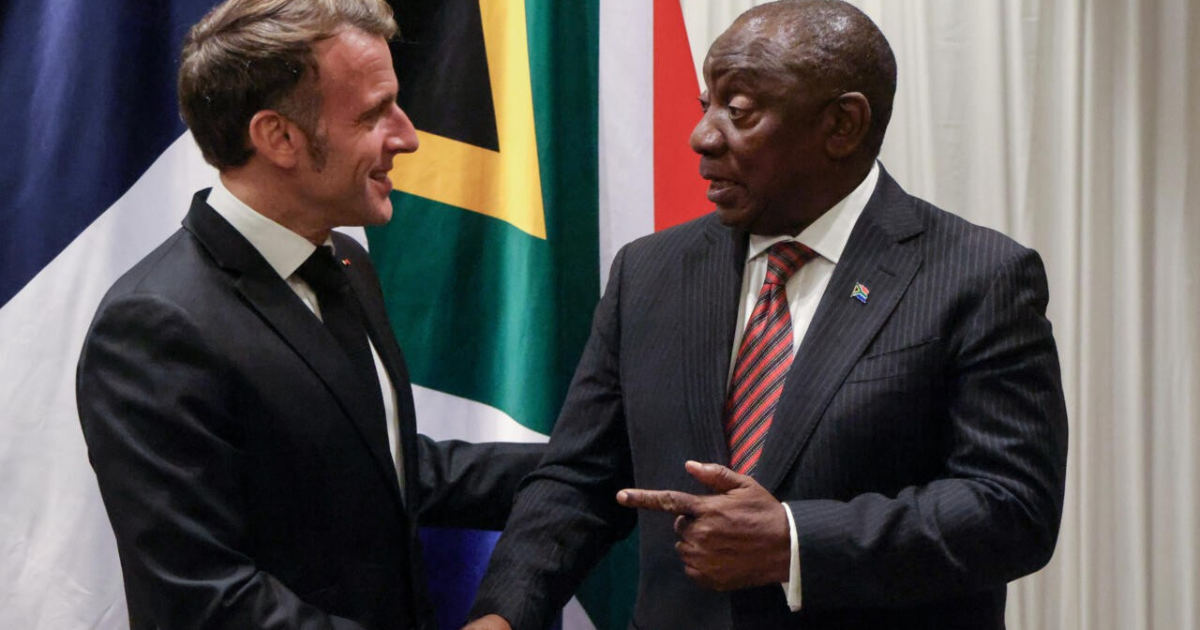
There was an international diplomatic flurry this week over the list of guests to attend the next Group of Seven (G7) summit to be held in France. South Africa, a country that has consistently been the guest of honor in past summits as a representative of the Global South, first alleged that it was suddenly invited. This scenario caused a speculation frenzy and was soon settled with official retractions.
Initial Claims of a Boycott Threat
The scandal started on Thursday when the officials of The Presidency of the Republic of South Africa declared that the country was not invited to the high-profile event. In these early reports, Pretoria had been invited to the summit formally about two weeks before only to have the invitation recalled supposedly.
The initial story was that the United States acting under the instructions of The White House had threatened to entirely boycott the summit held in France in the event that South Africa is granted the right to attend. This accusation was directed at the intensification of geopolitical tensions, especially in the context of South Africa non-alignment on a number of international conflicts and the active participation in the BRICS economic bloc.
The official spokesperson of President Cyril Ramaphosa, Vincent Magwenya, publicly commented on the situation at the beginning of Thursday. According to him, South Africa had received the French ruling amicably. Magwenya further explained that Pretoria knew and recognized the tremendous diplomatic pressure the summit organizers had supposedly suffered at the hands of their Western supporters to a large extent suggesting that Washington had pushed France into action.
Rapid Retractions and French Denials
The diplomatic antagonism, however, was most peculiarly of a temporary nature. President Ramaphosa suddenly went back on the harsh statement barely hours after his spokesperson made his first statements. He made it clear to the press that as per his most recent internal intelligence and communications that the Department of International Relations and Cooperation had put in place, there was no pressure whatsoever by any country to coerce South Africa into exclusion.
The French officials also simultaneously actioned to close down brutally the swirling rumors. The leadership that was functioning under the Élysée Palace thoroughly refuted that they had forced South Africa to be left out by Washington or any other allied country. They stressed a lot on the sovereign right of France as the host country to decide on its own on the guest list in the multilateral forum.
Historically, the French Ministry of Europe and Foreign Affairs has been using the G7 platform to fill in the divide between the developed Western economies and the most essential developing countries in order to address the global crisis. Though the quick flow of assertions and denials created a temporary international flummoxing, the two countries have now conclusively rejected the story of a U.S.-led pressure operation that determined the final attendance list of the summit.