The government announced that Israel and Lebanon have agreed to extend their tenuous truce, on condition. The agreement aims to create “pilot security zones” in Lebanon, in which Hezbollah would not be allowed to operate.
A cease fire is highly dependent on the end of the attacks by Hezbollah. A joint statement pointed out that the future of Lebanon must not be tied to any state or non-state entity. In addition, all Hezbollah fighters are to be removed from an area between the Litani River and the Israeli border in return for the agreement, and Israeli military forces are in charge of the area.In addition, all the Hezbollah fighters will be evacuated from the area between the Israeli border and the Litani River, an area currently occupied by Israeli ground forces, as part of the terms of the agreement.
U.S. will assist in establishment of these security zones, in which Lebanese Armed Forces will be the sole security force. But no maps or details have been supplied about the use of these zones until now. On June 22, negotiators from both countries will meet again to discuss a more comprehensive deal.
A Fragile Truce Amidst Deep Political and Regional Resistance
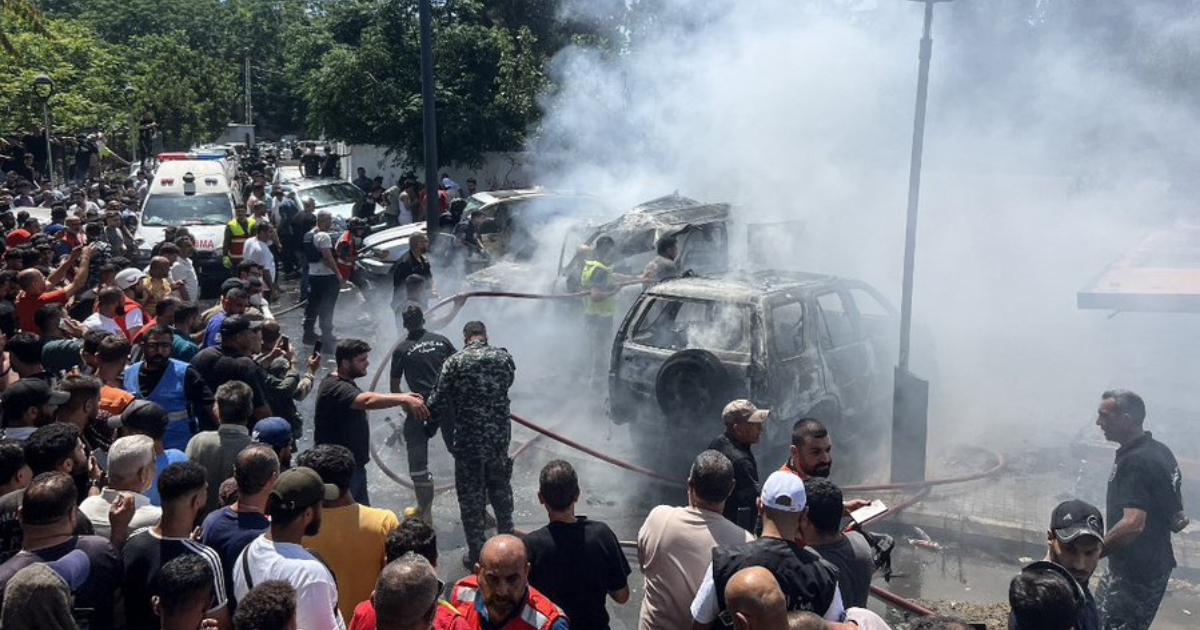
While diplomatic relations have improved, the situation on the ground is very uncertain. At least nine people have been killed in recent days in southern Lebanon, including several direct strikes on paramedics, the Lebanese Ministry of Public Health reported, and Israeli airstrikes have continued in the region. As a counterattack, Hezbollah militants fired rockets into northern Israel, alleging it was in response to Israeli ceasefire violations.
As the conflict rages, the humanitarian situation is growing worse. The United Nations says that over 1 million people got displaced in Lebanon, and also that the casualties went above 3,500 since the conflict began in early March , which is kind of hard to grasp, but that’s what they report. The national military of Lebanon has also denounced the violence, saying it has suffered casualties in its ranks in recent drone attacks.
On both sides there is a robust political opposition to the agreement. Far-right Israeli National Security Minister Itamar Ben-Gvir decried the ceasefire as a “serious mistake” that will only allow Hezbollah to strengthen itself. Hezbollah’s political council, meanwhile, flatly rejected the agreement, saying they don’t accept the findings or power of the Washington talks.
U.S. President Donald Trump is allegedly responsible for the temporary suspension of strikes on Beirut, which was obtained directly from him. The White House sources said the White House considered the Lebanese ceasefire as one of the key milestones that would pave the way for a larger regional peace accord between the U.S., Israel, and Iran. The dangerously high stakes is also reflected in Iranian officials, who said their armed forces are ready to fight when Israel’s aggression against Lebanon’s capital continues.