The blast in the province of Balochistan, home to abundant natural resources, near the provincial capital of Mastung on 30th July left dozens of people missing and injured and led to a rescue operation that continued into the night.
In a statement in the early hours of Friday, the provincial disaster management authority of southern Balochistan said the information gathered from the deployed teams indicated the recovery of 34 bodies.
The joint rescue effort to find and retrieve the remaining trapped miners is ongoing, it added, without saying how many miners were in the mine at the time of the explosion.
Minutes after the explosion was heard, unidentified miners in the vicinity ran as fast as they could to try and locate workers in the tunnel, witnesses told authorities.
The explosion left no survivors other than the rescuers who went down after the blast, but also perished, Ahmed Zada, a mine worker at the site, told AFP.
Safety concerns
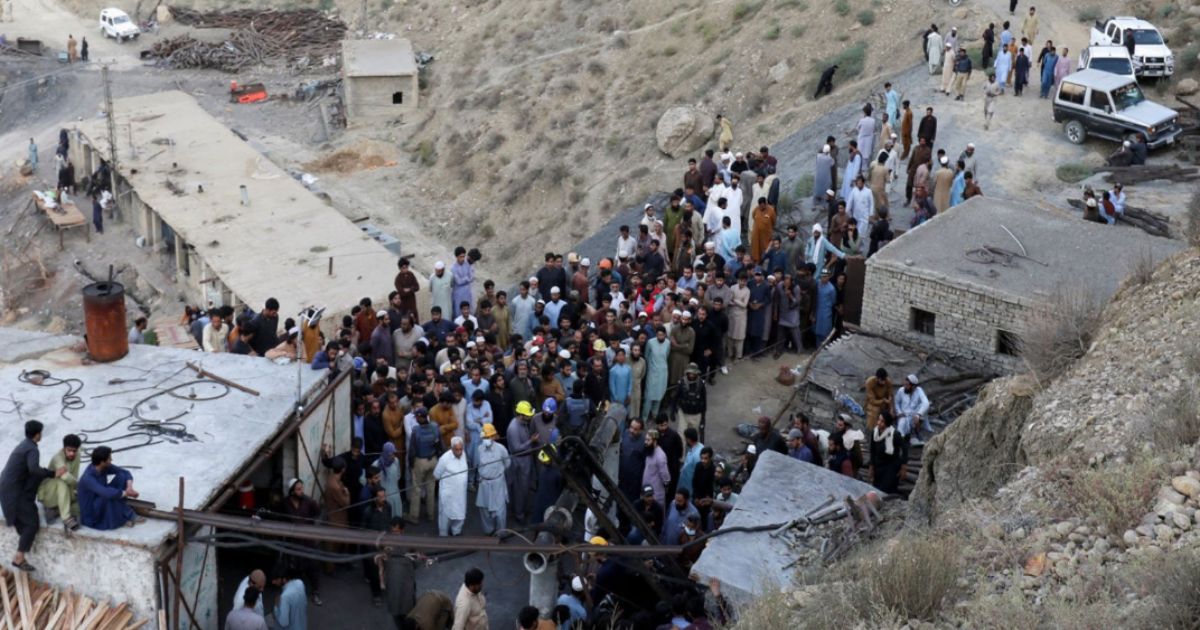
As the rescue was being carried out, relatives, rescuers and miners converged on the entrance of the mine in the city of Sorange, located about 50 kilometres (31 miles) from the provincial capital Quetta.
Some rescuers and workers wore hard hats; most wore everyday work clothes as they helped carry bodies out of the concrete tunnel, some of them smudged with black soot.
They ferried them on stretchers to waiting vehicles and ambulances near the entrance to the mine.
In the past, labour rights activists have demanded more attention for safety measures and enforcement within the mining industry in Pakistan, a region plagued by frequent accidents, especially in Balochistan.
Pakistan’s poorest province and largest by landmass, Balochistan lags behind the rest of the country in almost every index, including education, employment and economic development, but is rich in resources including coal – as well as more lucrative gold and copper reserves.