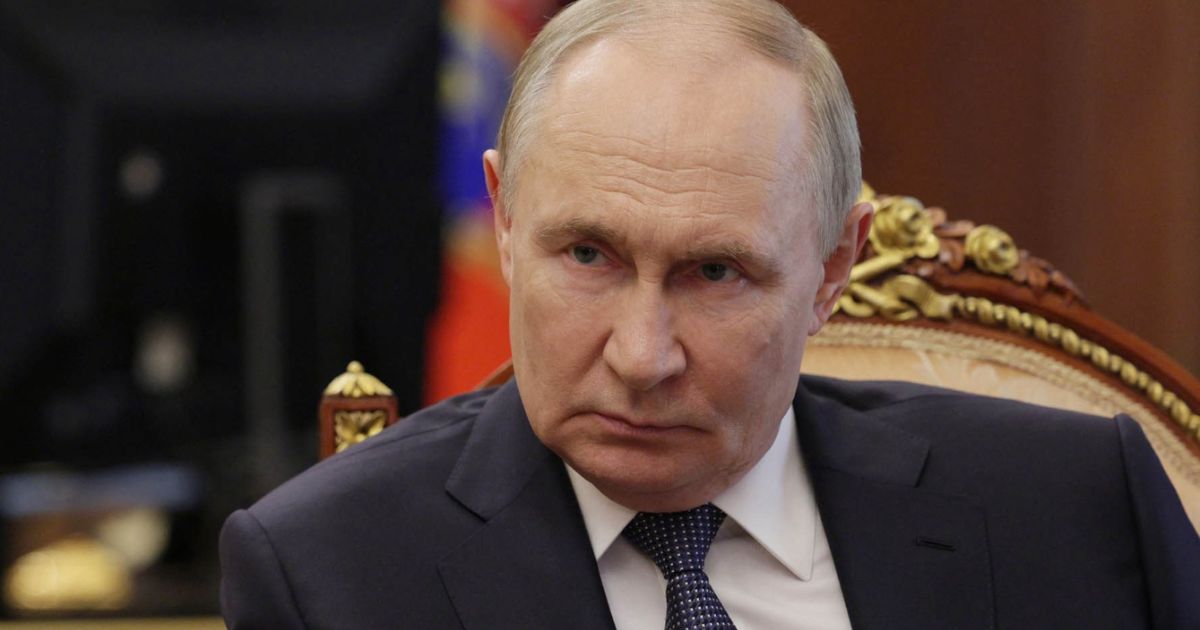
Putin spoke following his address to troops during a reduced version of the military parade in Moscow, where he claimed to be fighting an “aggressive force” in Ukraine supported by the entirety of NATO, and declared that his objectives in Ukraine were “just”.
The Soviet triumph over Nazi Germany in World War II has been an integral part of the narrative of the Russian president’s 25 years of rule, and he has often appealed to it in support of his Ukraine campaign.
The Victory Parade in Russia is a grand celebration of the nation’s victory in the war. Ukrainian long-range attacks in recent weeks, however, have led to an increase in security measures and a reduction in the scale of this year’s festivities by the Kremlin.
When asked after the parade whether the Western military aid to Ukraine had gone too far, Putin said: “They started ratcheting up the confrontation with Russia, which continues to this day.
“I think it (the conflict) is heading to an end, but it’s still a serious matter.”
For months, they waited for Russia to be defeated and for its imperial statehood to be shattered. It didn’t work out.
“And then they got stuck in that groove and now they can’t get out of it,” Putin said, referring to the Western countries.
Putin stated that he was willing to meet Ukrainian President Volodymyr Zelensky only in a third country if they reached a peace agreement, after they reached a “full agreement.”
“The actual negotiations should not be at this point,” he said.
Ceasefire violations
Following two futile attempts at a truce each this week, both from Russia and Ukraine, US President Donald Trump on Friday declared that a three-day stop to all hostilities between the two warring sides will begin on Saturday.
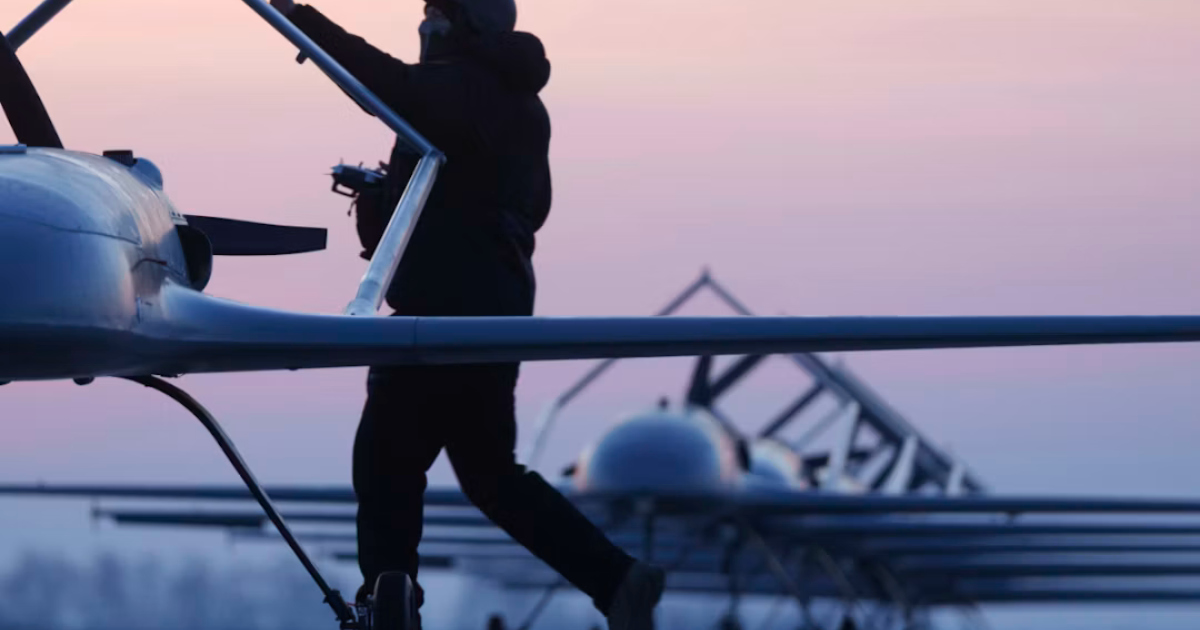
Although there were ongoing drone strikes and civilian casualties on both sides, no significant strikes were reported as Moscow and Kyiv accused each other of breaking the law.
“Hopefully, it’s the start of the end of a very long, deadly and hard-fought war,” Trump said in a post on his Truth Social network, which also promises a prisoner swap.
The Kremlin said that as of now, there were no plans to prolong the truce.
The warring sides also agreed to swap 1,000 prisoners each during the truce. However, Putin stated Saturday that Russia had not yet received any offers from Ukraine regarding the exchange.
Scaled-down parade
The parade was significantly smaller than previous years, for the first time in almost 20 years without military equipment being showcased and with only a few foreign dignitaries participating — mostly close Russian allies.
In an address to the parade, attended by Russian military units as well as soldiers from North Korea, Putin invoked the Soviet victory to rally support for his army in Ukraine.
Putin said that today’s soldiers were fulfilling the objectives of the special military operation, engaged in a great feat of the generation of victors.
But faced with an aggressive force backed and armed by the whole NATO bloc, our heroes press on, he said.
Later, he added that he is convinced that our cause is just.
Some in Moscow were cool to the speech, and the events were marred by internet outages and fatigue due to the four-year war.
Economist Elena, 36, responded to a question on whether she felt anything on the occasion of Victory Day, which commemorates the Soviet Union’s victory over Nazi Germany during World War II: “Nothing.”
From the centre of Moscow, she told AFP she wouldn’t watch the parade, adding that she would need the internet, which she doesn’t have.
Russia has announced it will carry out “temporary” internet restrictions during the parade, citing a rise in threats from Ukrainian attacks.
Unlike last year’s high-powered guests, such as China’s Xi Jinping, only leaders of Belarus, Malaysia, Laos, Uzbekistan and Kazakhstan were invited to participate.
Talks mediated by the U.S. for a cease-fire to the conflict have been lacklustre since February, when Washington turned its attention to its war against Iran.