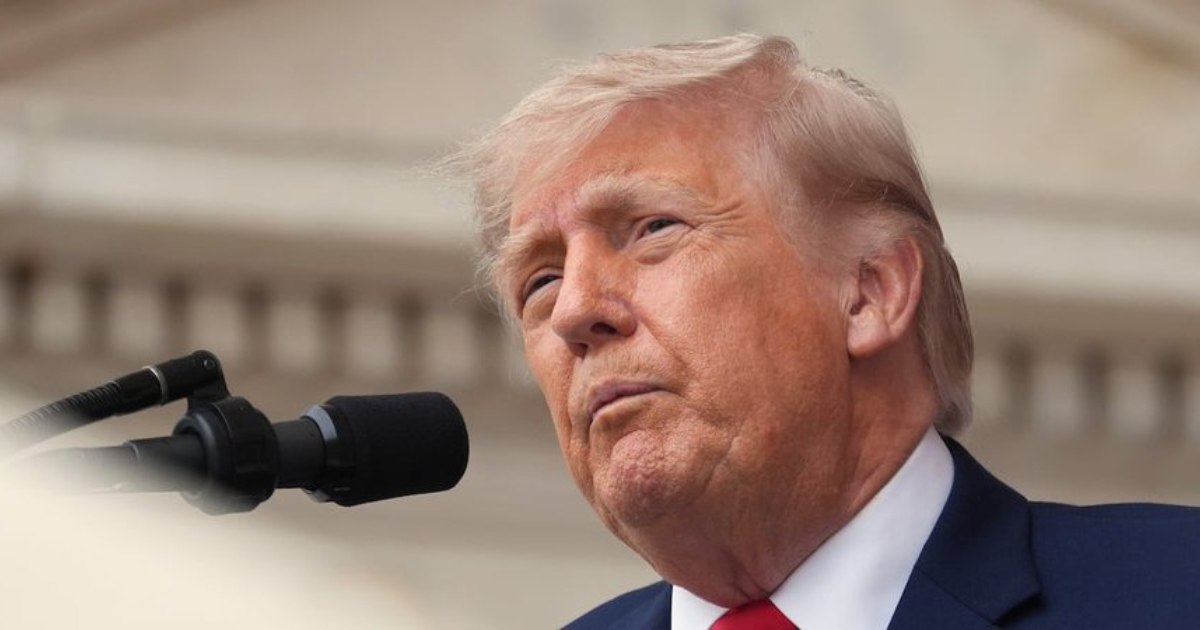
On Wednesday, the U.S. forces launched new airstrikes in response to Iranian targets. The military action came amid U.S. President Donald Trump’s assertion that Iran is “negotiating on fumes,” meaning that a peace deal is not on Trump’s timeline as the upcoming midterm elections are a factor.
The State of U.S.-Iran Conflict and Negotiations
Recent Military Actions
Four Iranian attack drones were intercepted and destroyed by U.S. Central Command near the Strait of Hormuz, which threatened to attack U.S. forces, anonymous officials said.
Also, the military hit an Iranian ground control station in the Iranian port of Bandar Abbas, which was about to launch a fifth drone. These operations came on the heels of previous defensive actions announced by the Department of Defense in the wake of reports of Iranian missile launch sites and minelaying ships.
Political Pressures and Deal Terms
Trump was hopeful his administration is making a “savory” headway toward a settlement despite the continuing conflict, adding that he would have no better way to keep his troops occupied than by advancing that settlement. He is looking for a solution that restores the Strait of Hormuz and seriously hinders Iran’s nuclear program.
But the new model has been harshly criticized by its Republican friends, who say it’s too much like the Obama-era nuclear deal. The deal struck by the White House would allow Iran to get sanctions relief in return for surrendering its highly enriched uranium stockpile.
The Uranium Stockpile Dilemma
The IAEA currently estimates Iran has around 440.9kg of uranium enriched to 60%, or 60% purity. This purity level is a short technical step away from the purity level of weapons-grade material, which is 90%.
Details on how Iran will dispose of this stockpile are still being negotiated. The material may be turned over to a third party, but President Trump flatly rejected the prospect of China or Russia – Tehran’s closest allies – owning the uranium.
Regional Impacts: Hezbollah and the Abraham Accords
The proposed ceasefire also comes at a time when Israel is continuing its military campaign against Hezbollah in Lebanon. An emerging memorandum requires a cease-fire between the U.S. and Iranian proxies, but it maintains Israel’s right to respond to a “real threat.
Moreover, Trump is seeking to broaden the scope of the Abraham Accords as part of his regional agenda. He has asked countries such as Saudi Arabia, Kuwait, Qatar, and Pakistan to accede to the diplomatic agreement.
Expanding the agreement is still this kind of complex challenge, like really. Some former U.S. officials who were familiar with regional discussions have said they saw mixed reactions to the proposal across the Middle East. At the same time, Saudi Arabia keeps insisting on a credible and secure path toward a Palestinian state, as a core condition to normalize relations with Israel.