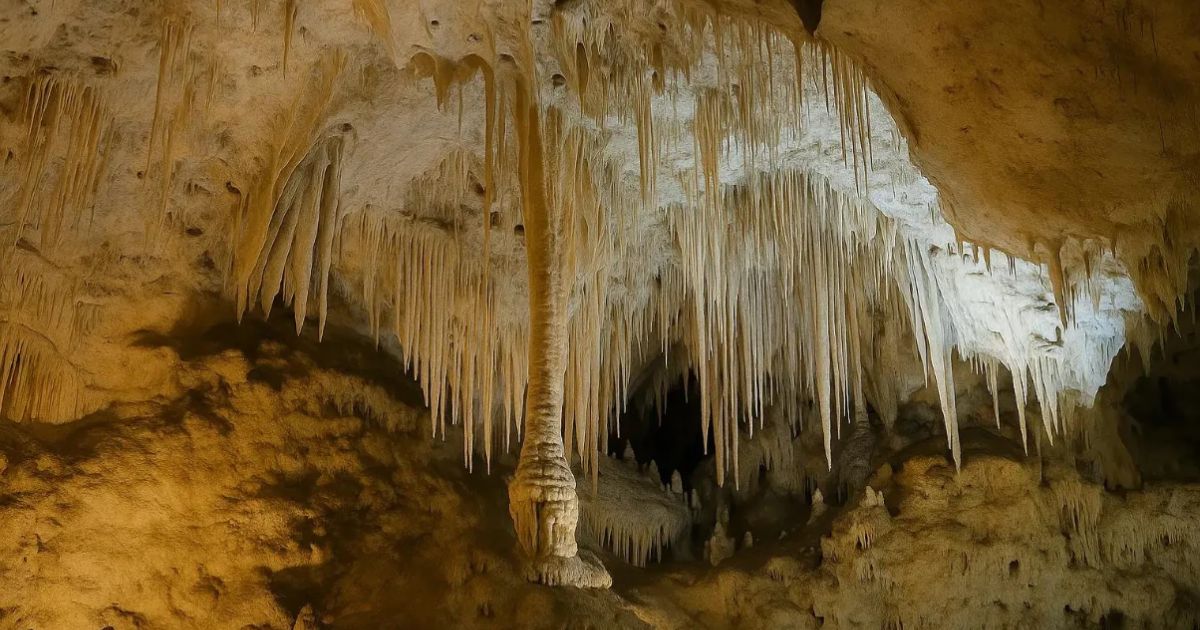
Three sites in India have been inscribed in the Tentative List of World Heritage sites announced by the world organisation UNESCO; the Permanent Delegation of India to UNESCO, Paris, has announced. The announcement on Tuesday (October 20) is related to the Karst-mud-volcano Complex of Baratang and the Andaman Subduction Volcanoes on the Andaman and Nicobar Islands, and the Chhattisgarh-based Sirpur Cultural and Archaeological Landscape.
The inclusion on the Tentative List is a first step towards a site becoming a candidate for the UNESCO World Heritage List. India has 45 sites of UNESCO World Heritage Sites; 37 are cultural and 7 are natural and 1 is a mixed site.
The 299.57 sq km Baratang (on the Great Andaman main chain) has several limestone caves and active mud volcanoes, according to UNESCO’s official description. The proposed portion of the limestone cave system is a one sq km area, “’Jalki’ as called by the local people, are a significant example of seismically triggered mud volcanism”. It notes:
The Baratang Limestone Caves are not only significant in terms of their geological characteristics but also play a crucial role in the region’s biodiversity, which is rich in the presence of tropical forests and coastal ecosystems.
UNESCO says that tourism in the vicinity of this ‘remarkable natural heritage’ not only creates economic opportunities but also contributes to environmental conservation. This Mud Volcano of Baratang was declared a Geo-Heritage Site by the Geological Survey of India in 2025.
The Andaman Subduction Volcanoes are situated on Barren Island, 138km away from Sri Vijayapuram, the capital and on Narcondam Island, 240km away from the capital. The volcanic rocks of both islands are suggested to be listed on the UNESCO World Heritage Sites List. Until 1968, it was not inhabited by humans, except for a small police check post, which had about 20 personnel, according to UNESCO.
According to UNESCO, ‘Narcondam’ came from ‘Naraka-Kundam ‘, meaning ‘a pit of hell ‘. The volcano is steeply rising from the depths, reaching a height of 710 m above sea level. It describes the dense forests on the main summit, which is surrounded by steep cliffs on all sides, before a rocky shoreline and caverns on the western side of the island.
Currently, both islands are protected areas, and entry is permitted only with permission from the wildlife wardens.
Sirpur Village, located on the Mahanadi River 78 kilometres away from the state capital Raipur, is already a nationally protected monument. According to UNESCO, it is situated:
The development of Sirpur town into a cultural and economic melting pot expanded from being a spiritual centre alone as a result of a policy of multi-religious patronage and commercial activities. Thus, the site is a layered, complex and interconnected system of archaeological and architectural remains of this unique natural, multi-religious and mercantile nature of ancient India.
The current boundaries of the property have structures built between the 5th and 12th centuries CE. At the east end, there is a complex of temples dedicated to Vishnu, a school and a temple dedicated to Shiva. There are three isolated sites at the south edge: two houses of priests and a Shiva Temple.
The western side is the Rajmahal Complex and the Gandheshwar temple, and on the northern side is the apancharatha Shiva temple. The Bateshwar Group of monuments is located within the centre of the area, says UNESCO.