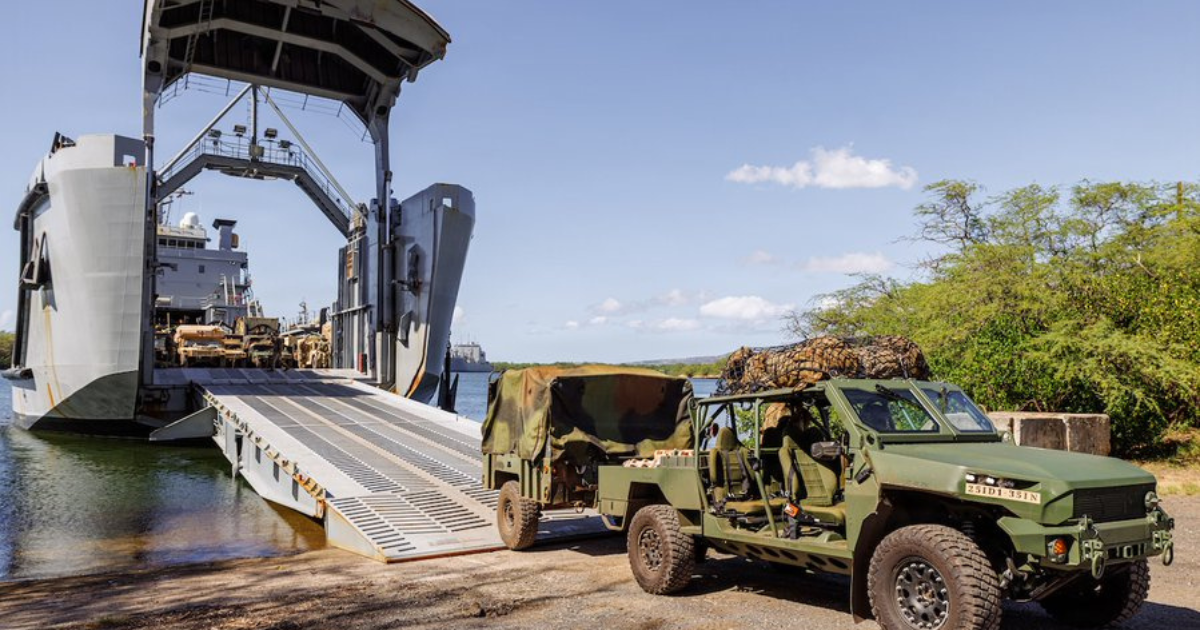
More than 50,000 soldiers from the Japan Self-Defense Forces and the United States military are to participate in a “massive joint exercise” throughout Japan. The biennial Keen Sword field exercise is meant to boost the combined response and deterrence threat in the face of emerging geopolitical challenges and military assertiveness in the Indo-Pacific.
The operation unleashes some 45,000 Japanese troops and 12,000 Japan-U.S. Defense forces until Oct. 29. The all-encompassing drills will be conducted on land, sea, air, space and cyber domains to comprehensively train the forces participating in the exercise against possible military contingencies.
Seven other countries are also taking part in the exercise, to highlight international cooperation. Five of these allied countries, including France and Germany, are taking part in the coordinated drills for the very first time.
Admiral Tateki Tawara emphasized the need for pro-active cooperation in a ceremony on Ishigaki Island, about 270 kilometers away from Taiwan. Speaking on behalf of the Joint Operations Command, Tawara said “to ensure the protection of peaceful daily life” it is necessary to take action to prevent the occurrence of crises with the participation of allies before they happen, not just reacting to them once they do.
The exercise this year is the first such mobilisation of Japan’s long-range surface-to-ship guided missile, which was deployed in March. The vehicle-mounted missile has a range of about 1,000 km, and was featured in a simulated target detection and firing exercise – theoretically placing some coastal areas in mainland China within striking distance.
This high-tech weaponry is part of the Government of Japan’s broader strategic changes. Japan has been ratcheting up its military spending and developing new counterstrike capabilities in response to China’s assertiveness and the rise of North Korea’s nuclear and missile program, forging a dramatic change in its postwar security policy.
Four vehicles associated with the missile system were moved from Camp Kengun, in Kumamoto, Japan, to the Onohara Maneuver Area in the south-west of the country to facilitate the drills, under the supervision of the Ministry of Defense.
The military displays a good level of coordination, but the drills come at a politically sensitive time for domestic relations. The opening ceremony in Ishigaki was finally closed to journalists for respecting local residents’ sentiments. The warning comes after a U.S. Marine was arrested for allegedly murdering an Okinawan woman in a recent robbery of an American military base, a case that could fan anti-base protests in Japan’s southern prefecture where most U.S. Forces facilities are located.