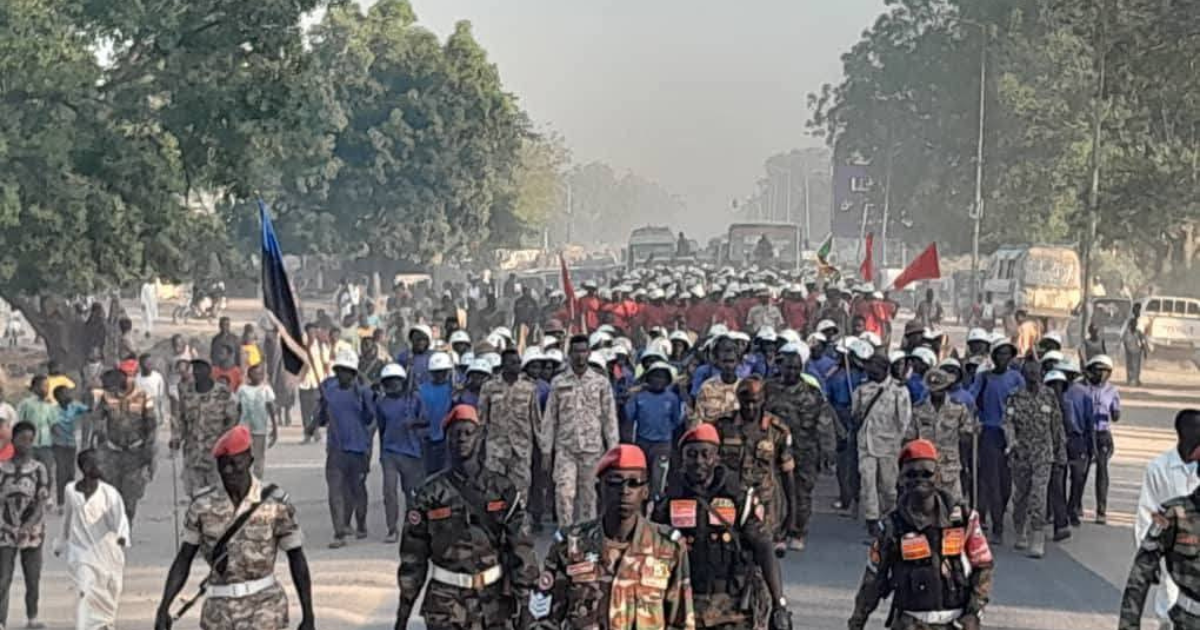
The Sudanese Armed Forces have managed to fend off a joint assault on Thursday by the Rapid Support Forces (RSF) and the Sudan People’s Liberation Movement-North (SPLM-N). The fighting between rebels and government forces was at the Amora station in the Blue Nile region, which was designed to cut off key military supply lines.
The 13th Infantry Brigade from Kuri intercepted the rebel attack of Joseph Tuka, commander of the rebel forces, according to the Fourth Infantry Division. In the fierce battle, the army destroyed several combat vehicles and captured a number of vehicles that were functioning properly.
Defending the Ethiopian Border and Supply Lines
The military sources said the assault on Amora, northeast of Qaisan, was an “intellectual move” to cut off the 13th Brigade. In this case, if a supply route had been penetrated, the rebels set up within Ethiopia could have moved forward to seize Qaisan. If the supply route had been breached, the rebels were able to occupy the border town of Qaisan and move forward to take it.
Sudanese officials have long blamed their neighbour for logistical support for the rebel alliance. This geopolitical conflict is compounded by the proximity of this region to South Sudan, making it a very volatile border area.
In recent days, the military has adopted a tough stance in the Qaisan district. The army was able to repel an attack on the Al-Barka station and to recapture four strategic positions north of the neighbouring town of Kurmuk, which was taken by the rebels in March, before the Amora victory.
The Kurmuk and the Qaisan have had a long history of warfare. For 22 years, these border towns were hotly disputed before the historic Comprehensive Peace Agreement of 2005, which was brokered by international groups such as the United Nations and the African Union.