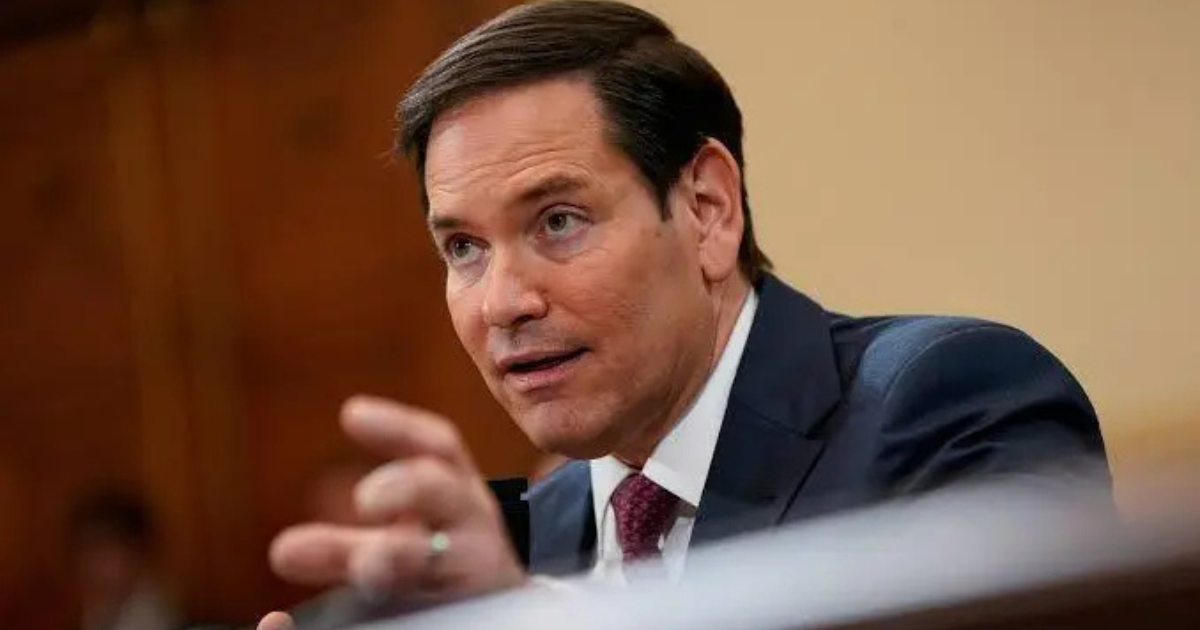
U.S. Secretary of State Marco Rubio testified before lawmakers, sort of stressing that Washington will not give Iran sanctions relief just because Tehran is reopening the Strait of Hormuz. He said, in a pretty direct way, that any easing of economic sanctions would only happen if Iran truly abandons its nuclear program. And, in his view, any relief needs to be tied to the nuclear worries, not to shipping access or regional commerce routes, even if those routes matter.
Speaking publicly to lawmakers for the first time since the U.S. and Israel started military strikes on February 28, Rubio told the panel that the sanctions squeezing Iran’s economy were put in place specifically because of highly enriched uranium. He added that sanctions relief will stay fully condition-based, meaning strict and verifiable compliance with a nuclear disarmament agreement is required, no shortcuts.
Rubio delivered the testimony to the Senate Foreign Relations Committee during the first of four hearings on the administration’s new budget proposal. That budget, which is already generating pushback, asks for a 30% cut to the foreign affairs budget—dropping it to $36 billion—while at the same time proposing a huge 50% rise in military spending to $1.5 trillion.
Navigating Congressional Pushback and Geopolitical Hurdles
During the hearings, lawmakers pushed Rubio for some kind of more coherent plan to wrap up the four-month clash. At one point, Rubio came out with this bold line that “the war is over,” and that statement kinda triggered a sharp back and forth with Democratic Senator Cory Booker
Senator Jeanne Shaheen, basically the top Democrat on the foreign relations panel, went after the administration pretty hard, saying it was keeping back critical details about its military aims. She claimed White House officials were skirting normal consultations, and pointed out that while the administration had sent war powers notices saying there were no active hostilities, the U.S. was simultaneously running strikes as Iran bombed American bases. Shaheen added that the public really wants domestic economic relief, not this idea of foreign regime change.
When it came to where the whole military action started, Rubio said Iran was actively working to form a conventional weapons shield, you know, to shield its nuclear operations. But then he also mentioned more hopeful diplomatic signals, saying Iran’s new Supreme Leader, Ayatollah Mojtaba Khamenei, seems to be increasingly involved in ongoing peace discussions.
Rubio later testified at an appropriations hearing in the House of Representatives, where he did a quick pivot to defend the administration’s approach toward Venezuela. Even after the military removal of President Nicolas Maduro in January, a lot of the machinery of his regime is still there. Rubio sort of conceded that reality, saying plainly that the right conditions don’t exist yet for a free and fair election in Caracas.
With the November elections coming up, President Donald Trump is feeling the heat. He has to juggle nervous voters who are frustrated over high gas prices; they want some kind of rapid bargain to reopen the Strait. At the same time, Republican hawks are pushing back hard; they’re firmly against any Iranian concessions. And because the conflict has dragged on, lawmakers in the United States Congress have gotten more and more restless; both chambers have recently advanced resolutions meant to constrain the president’s war powers.