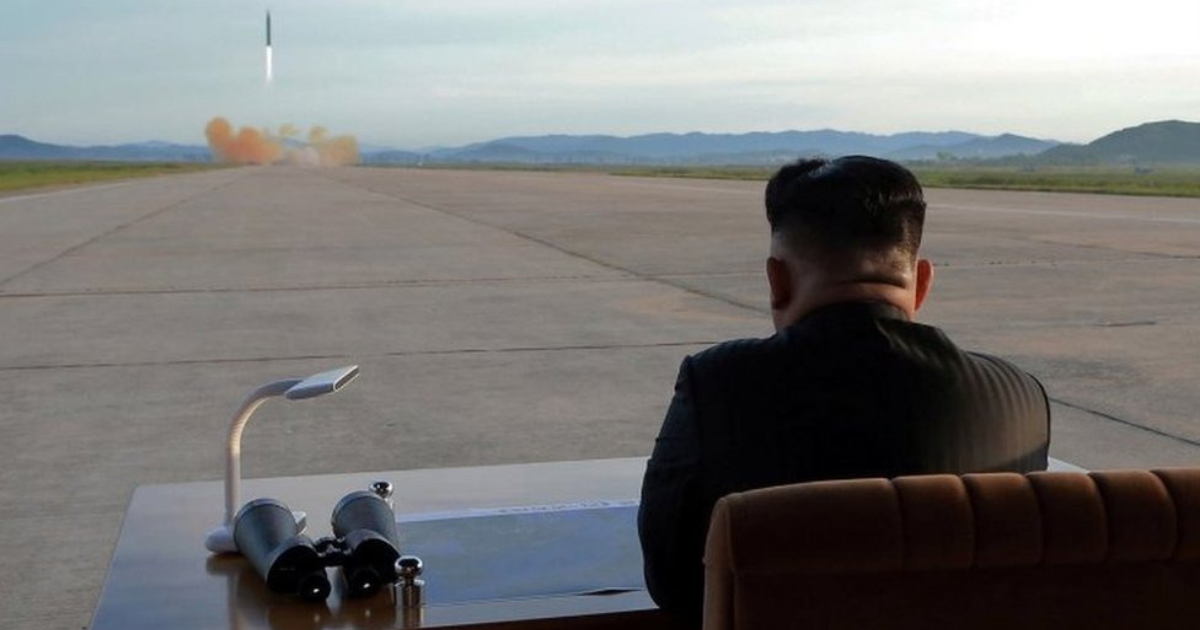
North Korea did fire a bunch of close-range ballistic missiles into the sea, so that counts as its newest showing of military force so far this year.
As reported by South Korea’s Joint Chiefs of Staff, the launches on Tuesday came from Jongju city, which sits on North Korea’s western coast. This is Pyongyang’s first weapons demonstration since April 19, when state media talked about testing short-range missiles made to deliver cluster bomb warheads.
After the launches, the South Korean side has tightened its watch significantly, ramping up surveillance operations.
Seoul officials say they are closely monitoring developments and actively exchanging intelligence with the U.S. Department of Defense and Japan’s Ministry of Defense to maintain a coordinated security posture across the region.
Pyongyang’s Hardline Stance
North Korean leader Kim Jong Un has been aggressively building up both missile and nuclear arsenals, after the diplomacy with the United States sorta fell apart in 2019.
Even with repeated invitations from U.S. leadership to go back to talking, Pyongyang keeps brushing these requests off. North Korea says Washington should really let go of its nuclear disarmament demands first, before any conversation can happen.
Also, Kim is taking a more openly hostile stance toward South Korea. He recently called the South his country’s “permanent and most hostile enemy”, and has moved to cut away the last remaining links between them.
South Korea’s Push for Military Advancement
Earlier on Tuesday, South Korean President Lee Jae Myung swung by a Cabinet meeting to advocate for the quick modernization of the country’s armed forces.
While he didn’t spell out the latest North Korean threats directly, the Office of the President still pointed to his ongoing push to tie together artificial intelligence and advanced drone technologies for military use. He also touched on the possibility of getting a nuclear-powered submarine, and that is a topic still in motion in diplomacy with the U.S.
President Lee, who normally backs better inter-Korean relations, stressed that South Korea needs to take full ownership of its own defense. In his view, showing a firm resolve to shield the nation on its own would in the end strengthen its key alliance with the United States.