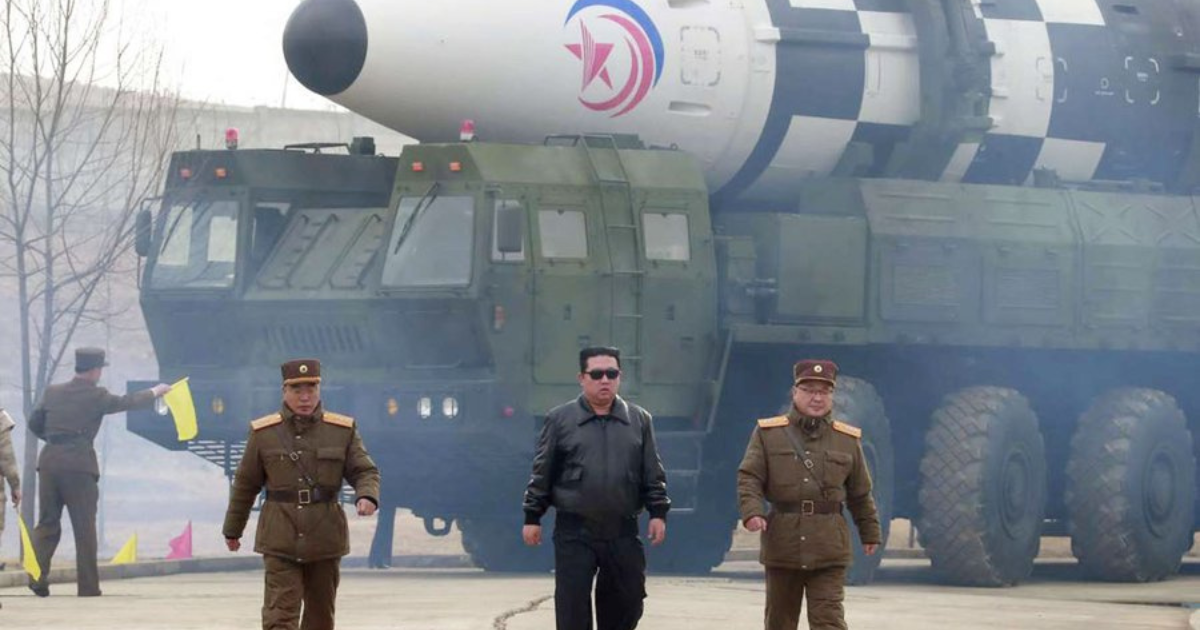
North Korea launched a ballistic missile into the East Sea early Saturday morning, further raising tensions with South Korea days after the South demanded an apology for a landmine explosion in the Demilitarized Zone (DMZ). The missile was tracked by South Korea’s Ministry of National Defense and was seen flying for over 700 kilometers from the Wonsan area. South Korea, the U.S. and Japan have a strong joint defense posture and are exchanging close intelligence on the launch.
The military show comes after a serious clash in the heavily fortified buffer zone on the peninsula that has been split by a border since 1953. Three South Korean soldiers were injured last month by an explosion. Seoul and the United Nations Command (UNC), led by the United States, found that the explosion resulted from North Koreans hiding mines along the southern border. The activity is said to be a continuation of Pyongyang’s long-term plan to permanently close the border, following Kim Jong Un’s announcement that South Korea serves as the main enemy in his country.
The Office of the President of the Republic of Korea (ROK) called on Pyongyang to resume exchanges.The Office of the President of the Republic of Korea (ROK) requested Pyongyang to resume dialogue. But the North’s powerful Kim Yo Jong quickly gave the green light to the dovish overture. She dismissed Pyongyang’s claim to be behind the blast as false, dismissed Seoul’s demand for an apology as “ridiculous” and threatened the North with any actions it might take.
Saturday’s missile firing by North Korea is seen as an unambiguous response to South Korea’s diplomatic efforts. Seoul has been urging Pyongyang to take steps to ease tensions, but Pyongyang seems intent on replying to these moves with confrontation. Despite the Ministry of Unification’s call for talks to resolve border issues, South Korea’s defense minister has said that the military has a number of stage-by-stage measures in place to react to the DMZ incident.
The flare-up comes at a very sensitive geopolitical juncture. The White House has made overtures to Pyongyang recently and fears that even though South Korea is a firm ally, it could be left out of future nuclear talks with the North.
At home, the issue has sparked intense political controversy in South Korea. The People Power Party (PPP) strongly condemned the government led by President Lee Jae-myung’s policies toward North Korea from the opposition. The opposition leaders said the government had failed to spare the country’s dignity, while it was much tougher on the international issues like the Ukraine conflict, when the country’s soldiers were injured, they were mocked instead of apologised to Pyongyang.