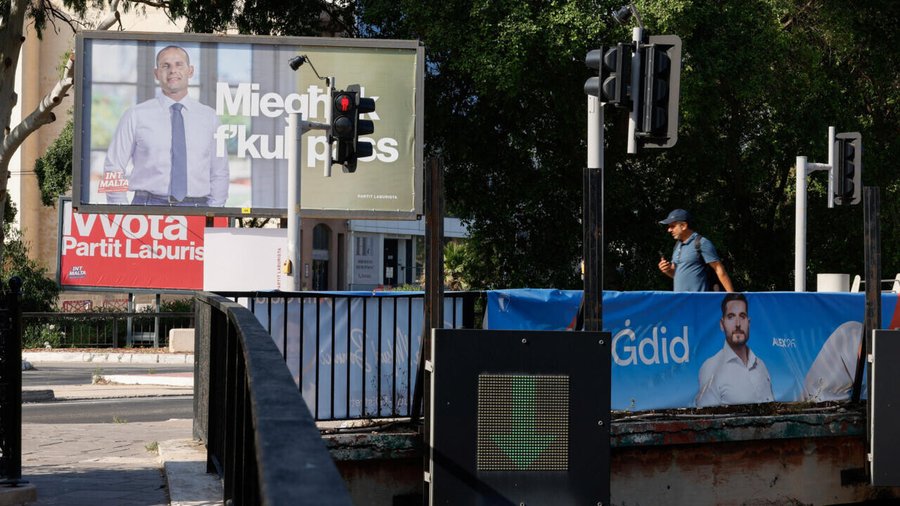
Polling for the parliamentary elections in Malta is officially underway and opinion polls suggest a fourth consecutive victory for the country’s ruling Labour Party which won a historic 31 of the 65 seats it had this time, compared to just 26 for the opposition Nationalist Party. The Electoral Commission of Malta has opened the polling on Saturday after Prime Minister Robert Abela called a snap election.
Representing the Government of Malta, Abela triggered the vote just four years into his five-year mandate. He spoke of the necessity to have a new mandate to face future difficulties, which are arising due to the continuing instability in the world. His campaign has been centered around his administration’s economic performance, promising voters further stability and competence.
Malta’s current economy is among the EU’s healthiest. The nation had a spectacular growth rate of 4% last year, based on data gathered by the National Statistics Office. The island country has some of the lowest inflation rates and near zero unemployment in the world. Moreover, energy prices have been frozen for almost 10 years and have been one of the lowest in Europe.
Economic Prosperity vs. Quality of Life
Although the macroeconomic factors are favourable, there are significant domestic and international issues. Led by opposition nationalist leader Alex Borg, the opposition Nationalist Party claims that the economy is booming, but that the average citizen’s quality of life hasn’t improved.
A large number of migrants have moved to the country in recent years, leading to heated discussions on the skyrocketing rent prices, overcrowding and strain on healthcare and local infrastructure. Also, concerns about the unending conflict in the Middle East have raised the possibility of higher aviation fuel prices. This would negatively affect Malta, which is a very import-dependent country reliant on tourism.
The six political parties on the ballot have only had parliamentary representation since 1966, with the Labour Party and the Nationalist Party being the ones to achieve it. Smaller third parties have historically not had a chance of achieving the legislative representation they desire due to its lack of 5% of the vote.
Official election results are expected to come out about midday on Sunday.