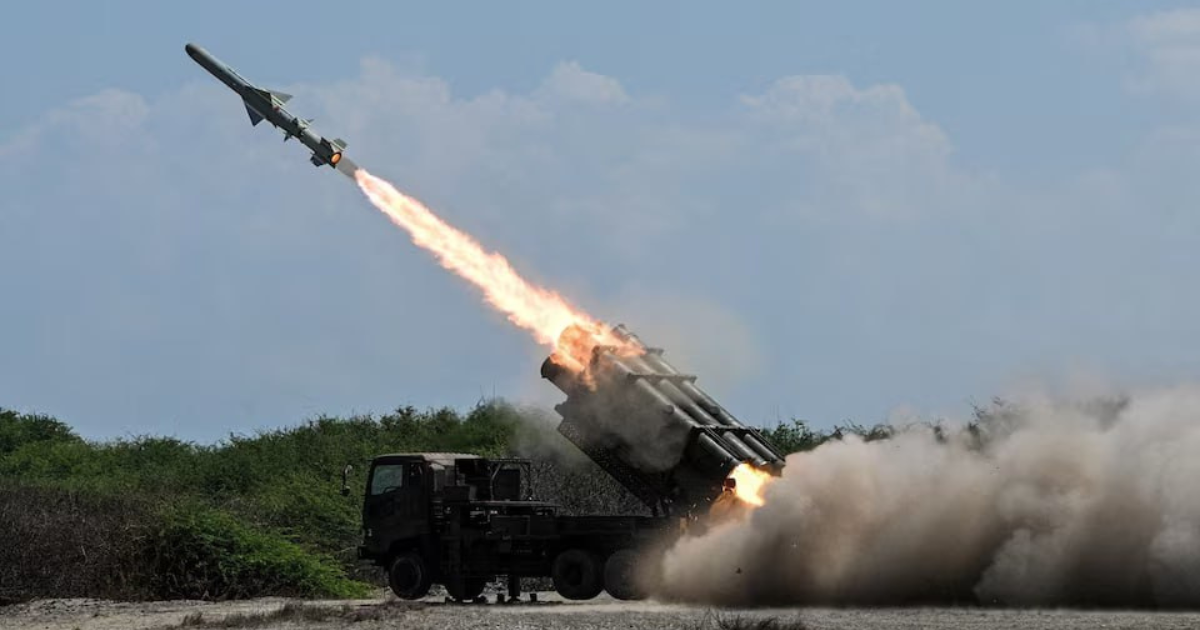
Japan broke another postwar taboo on Wednesday by launching Type 88 surface-to-ship missiles from the Philippines during the joint Balikatan military exercises, and, yeah, it did feel like a big step. For the first time, the Japanese Self-Defense Forces (SDF) took on an active combat role, deploying roughly 1,400 personnel, multiple warships, aircraft, and also advanced anti-ship missile systems.
The missiles reportedly hit a simulated adversary vessel, specifically the decommissioned Philippine Navy corvette Quezon, sitting about 75 kilometers off the coast near Paoay, Ilocos Norte. Japanese Defense Minister Shinjiro Koizumi and Philippine Defense Secretary Gilberto Teodoro Jr. were there as well, watching the so-called historic drills together at the Paoay Sand Dunes.
A Historic Shift in Japan’s Military Posture
According to the Japan Ministry of Defense, the Type 88 weapon has a range of about 100 kilometers, and it is made in order to hit enemy ships when they are coming in near the coast, like coastal approach lines. This deployment kinda, really spells out a maritime denial priority and island defense work in a region that is very contested, you know.
Even though Japan has sent observers to the Balikatan exercises since 2012, this year’s actual involvement feels like a major strategic change. As Tokyo keeps moving away from postwar military limits, troops from the Australian Department of Defence and the Armed Forces of the Philippines were also there for the full live-fire drills. On top of that, a recent arrangement between Tokyo and Manila is expected to help open the door for an early handover, as in transferring used Japanese warships to the Philippines.
Strategic Missile Deployments and Regional Deterrence
In a kind of related, and honestly equally unprecedented move, the U.S. Department of Defense fired the Typhon Mid-Range Capability, or MRC missile system in the Philippines for the very first time. U.S. forces launched a Tomahawk cruise missile from Leyte toward an intended site in Nueva Ecija, covering roughly 630 kilometers, give or take.
The Typhon set up, which can launch Tomahawks along with SM-6 air defense missiles, has stirred serious worry in Beijing. The Tomahawks, with a striking reach of about 1,600 kilometers, put portions of China’s mainland fairly within reach. Even though Beijing has kept pressing again and again to remove the system, the Philippine Department of National Defense says it plans to keep drilling its soldiers on the Typhoon launcher and later, eventually obtain its own mid-range system.
These sprawling exercises, which also cover cyber, naval, airlift, and amphibious capabilities, kinda resemble regional defense planning scenarios pretty well. The main aim stays on deterrence from potential flashpoints, and yeah, that includes a Chinese move toward self-ruled Taiwan, which is sitting about 400 kilometers north of the actual live-fire drill zones, so not exactly far.