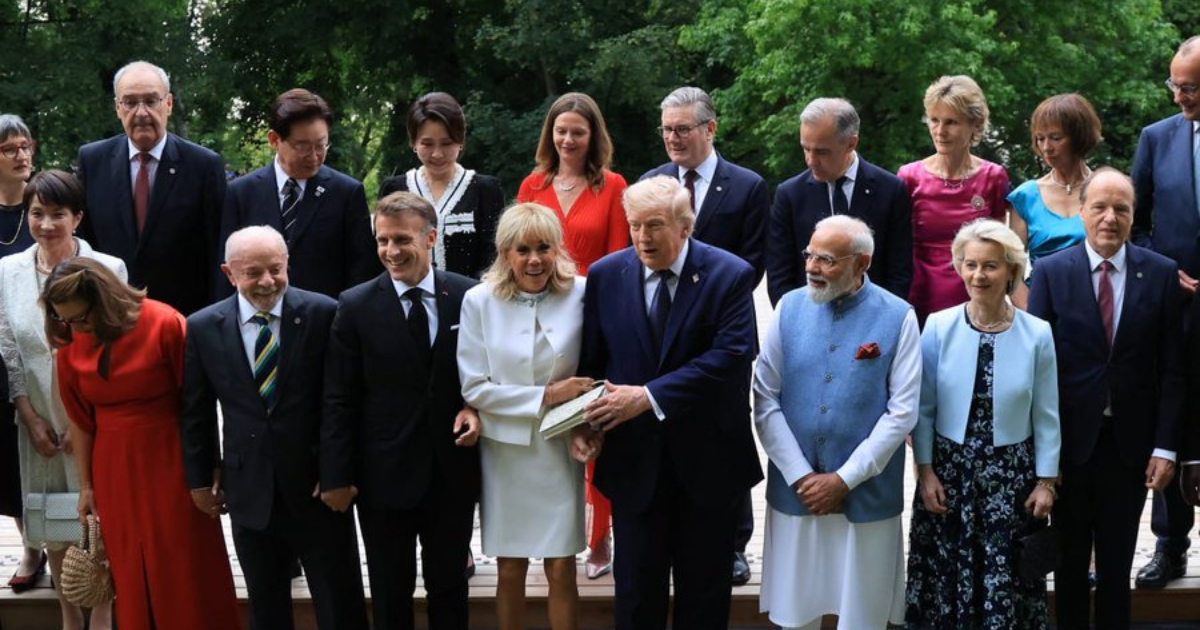
The leaders of the Group of Seven (G7) countries have shown a new level of hope for peace in Ukraine. The leaders signed a joint declaration at a summit hosted by French President Emmanuel Macron and attended by special Ukrainian guest Volodymyr Zelenskyy that they would increase economic and military sanctions against Moscow.
A Unified Strategy for Accountability and Peace
The G7 countries agreed to further tighten sanctions against the Russian war economy. Strict new energy sanctions are planned, with the aim of hitting Russia’s oil and gas industry, given that global energy markets are likely to stabilize.
These new sanctions come at a time of a key diplomatic achievement. The G7 agreed to a recent agreement reached by the U.S. administration that will enable the Strait of Hormuz to re-open. The development helps to alleviate oil supply fears, which will give allies the power to cut off Russian energy supplies even more.
Alongside the economic measures, the leaders pledged to speed up the delivery of important military equipment to Kyiv, including advanced air defence systems, interceptor missiles and improved long range capabilities meant for shielding Ukrainian infrastructure from attacks.
The easing of sanctions during the recent conflict in Iran can now be put back in place, U.S. President Donald Trump said, as oil is pumping through the Strait of Hormuz again. Trump said “Let’s make a deal” with Russia to bring an end to the conflict, while offering support as needed.
But the U.S. administration has a different view of the war. The conflict has “no impact on us” beyond weapons sales, Trump told reporters because of the distance. The White House has been very busy in Middle Eastern diplomacy, and European allies have made independent pledges. The EU has officially surpassed the US as the world’s largest financial backer of Ukraine.
The European leadership in general is very optimistic about the defensive capacity of Ukraine. European Commission President Ursula von der Leyen pointed to Russia’s “visible fatigue” and the fact that the tide has turned in the interest of Ukraine.
German Chancellor Friedrich Merz shares this optimism, calling the U.S. administration cooperative. Sources of the German Federal Government (BSL) report that the US is pushing for the inclusion of European countries in the upcoming peace talks between Ukraine and Russia. Sources in the German Federal Government (BSL) state that Washington is pushing for the inclusion of European countries in the upcoming peace negotiations between Ukraine and Russia.
Ukraine’s strategic drone warfare has halted recent Russian advances, including a successful long-range attack on a military facility in St. Petersburg, according to military men. This is still very serious, however. Russian missile and drone attacks on Ukraine’s major cities have reportedly continued, and recently targeted a prominent religious and cultural center, sending the Government of Ukraine into a frenzy.