The riots against fuel prices in Ireland have caused havoc, and other riots in Norway have been felt as a knock-on effect of the Middle East war.
Irish people were encouraged to purchase only the necessary fuel as 100 fuel stations were out of supply, and the National Emergency Coordination Group estimated that it could be up to 500 by Friday.
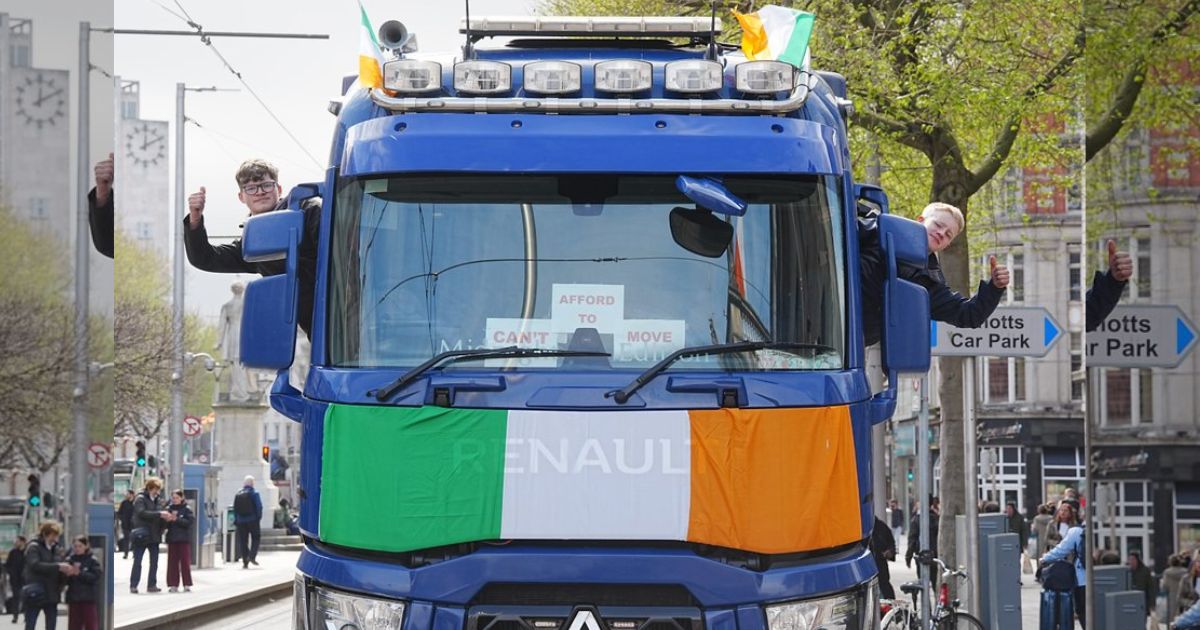
The conflict had a trickle-down effect as hauliers, farmers and other groups blocked motorways and brought part of Dublin to a standstill on Friday as part of a fourth day of action.
🚨 Farmers in the North of Ireland are fighting back against sky high fuel prices and crushing cost of living pressures.
Yesterday, slow moving convoys of tractors and vehicles brought major roads to a standstill and more protests are coming. Eight drivers were hit with Fixed… pic.twitter.com/sdbKV8mrbB
— IRISH PATRIOT (@irishpatriot91) April 15, 2026
In Ireland, the demonstrations have resulted in fuel shortages and travel disruption and in Norway, the lorry drivers who participated in the diesel roar protest invaded the capital. The Irish government placed the army on standby in a bid to assist in removing blockades, and the police threatened to arrest some protesters, which saw them defiant and threatened to keep disrupting it in the weeks to come.
The police force, An Garda Siochana, said that “protests were threatening vital supplies of food, fuel, clean water and animal feed. This is unacceptable and illegal.” Protesters have been accused by the government leaders of holding the country to ransom.
Blockading ports and a refinery, which would leave Ireland just days away from rejecting oil deliveries and losing its supply, the Taoiseach, Micheal Martin, told RTE. “That is outrageous; it is illogical.”
In the past few weeks, despite government mitigation efforts, the price of diesel has increased to an average of €2.17 a litre compared to €1.70 a litre, and that of petrol has increased to an average of €1.97 a litre compared to €1.74 a litre in recent weeks.
Talks between haulage and farming industry ministers and their representative bodies ended without a solution, a meeting that had been scheduled to take place on Friday without the involvement of the protesters proceeded on Saturday.
Deputy Premier of Ireland, Simon Harris, stated that “there would be a significant and considerable package of support for the economy in key sectors.”
Harris claimed that discussions between the government and representative organisations in the farming and haulage industries were “progressing well,” and more “intensive consultations” over the weekend were possible.
In an interview with RTÉ News, he indicated: “The blockade must come to an end.”
But Christopher Duffy, a spokesman for the protest in Dublin, said the move would go on until there was specificity on a “serious cut in our costs.”
The justice minister, Jim O’Callaghan, alleged that the protests were being used by “outside actors,” including the British far-right activist Tommy Robinson, to further their own interests.
The Danish People’s Party, a far-right party in Denmark, made a bid to exploit discontent by offering voters free petrol during the recent election.
The surge in the cost of oil since the US and Israel started to attack Iran on 28 February has rocked global markets and sent shouts of protest by consumers and businesses to governments to do more to cushion the impact.
Other countries announced temporary fuel tax reductions, and others acted to limit demand and even rationing. A state of “energy emergency” was declared in the Philippines. In France, officials attempted to prevent shortages on a large scale by declaring on Friday that fuel tankers would be permitted to circulate throughout the weekend and on public holidays up to 11 May.
On Friday, demonstrators in Norway drove a lorry convoy to the Oslo parliament. Approximately 70-80 trucks; some bearing banners saying nok er nok! (Enough is enough!), is added to another organisation, called Dieselbrrolet (diesel roar). Those few who were permitted to enter the capital by car.
On 1 April, Norway reduced fuel taxes, but hauliers insist on more predictable and lower fuel prices. Mirroring the situation in other oil-producing countries, the price of fuel in Norway has rocketed since the effective shutdown of the Strait of Hormuz. According to Statistics Norway, fuel and lubricants increased by 17.9 per cent between February and March, and diesel prices during this time shot up by 23.6 per cent.
A spokesperson of Statistics Norway said it had never seen such a sharp rise in the cost of fuel per month in terms of the CPI inflation index. The previous occasion when we saw a similar one was in the spring of 2022, when the full-scale invasion of Ukraine by Russia took place, but then the price rise was realised over two months.
The Irish government last month declared a package of measures worth 250m to be used to cut fuel prices, including a temporary cut in excise, a doubling of a fuel rebate scheme to hauliers and bus operators and an increase in the fuel allowance.
Deliveries were crippled by blockades of the only oil refinery of Ireland at Whitegate, County Cork and fuel depots at Galway City and Foynes, County Limerick. Dozens of forecourts had gone dry, and there were alerts as motorists scrambled to fill up on petrol and diesel.
Motorways and the main street of Dublin, O’Connell Street, were blocked by columns of tractors and other vehicles. The Irish Medical Organisation opined that the increased response rates to emergency services and missed healthcare appointments would be detrimental to the welfare of patients. DPD, a courier company, halted deliveries.
The protesters were also ready to spend weeks in the capital, a spokesperson, John Dallon, informed RTÉ. It would be a month, said he, and we are ready to sit here.
He blamed the government for not paying attention to the suffering and destruction of people due to fuel prices. What is their audacity to come out and say that these people, who are protesting, are ransoming the country? It is the government that is holding this country to ransom, not the protesters.
The Taoiseach also postponed a trade visit to Canada in order to address the crisis.