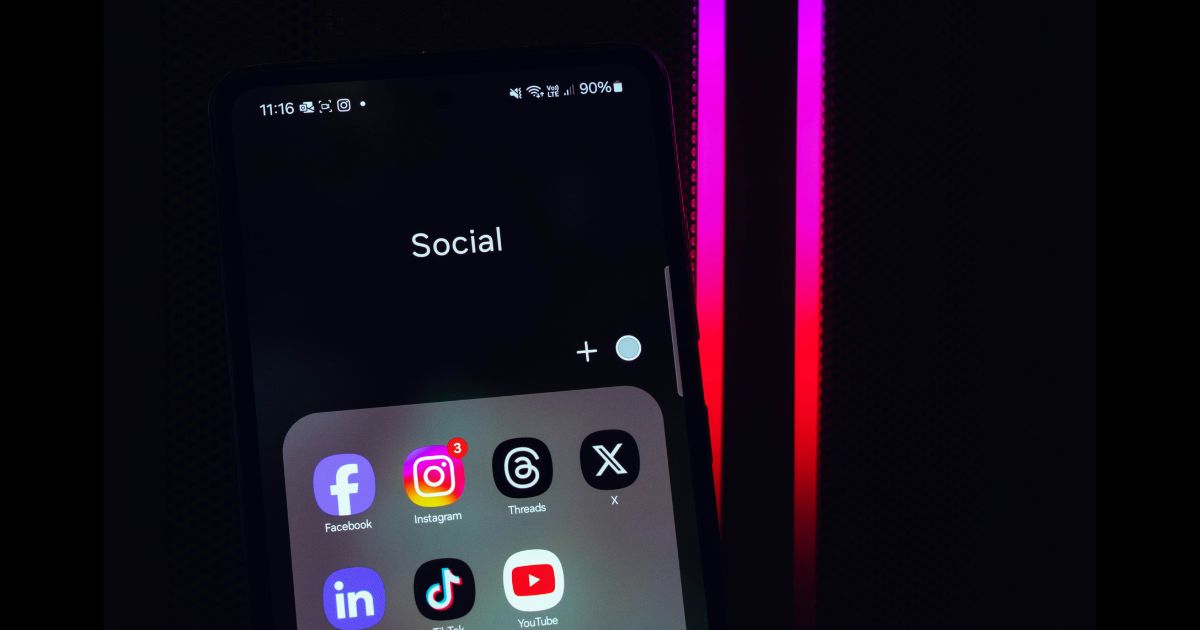
The Indian government has suggested reforms to expand its regulation to more online news voices, like influencers and podcasters on websites like Facebook, YouTube and X.
The Ministry of Electronics and Information Technology (MeitY) proposed last week to amend the Indian IT rules – under which digital media content is governed – to cover users who are not publishers and share content concerning news and current affairs within a code of ethics, which it now applies to registered news publishers.
Experts indicate that this will possibly enable the government to have greater control over the news-related posts made by common users, including independent journalists and podcasters.
The government has suggested that social media sites be required to obey no less than a set of orders and guidelines in order to receive a safe harbour status – legal immunity against responsibility for the content posted by users.
The amendments proposed have threatened the digital rights activists and independent news makers, who they say would impose almost complete obedience to state-directed censorship on social media sites. They also caution that the rules may be abused to attack opponents and suppress opposition.
The government believes that the amendments will reinforce the current IT regulations and combat fake news, hate speech and deepfakes, and it seeks community input by 14 April.
Nevertheless, critics are sceptical of the intentions of the government.
Akash Banerjee, the creator of the YouTube channel The Deshbhakt, where he has over six million subscribers, argues that the rules might lead to a sense of fear, and many creators may turn to self-censorship.
“Interestingly, despite numerous laws governing the content on the internet, hate speech and fake news have not decreased in the country. In the meantime, any posts that criticise the government- even satirical ones- are being censored or deleted more frequently,” Banerjee says. The government denies the accusations.
However, last month, X blocked approximately a dozen accounts, most of which had posts satirising the government, based on the orders issued under Section 69A of the Indian IT Act.
Kumar Nayan, whose X account @Nehr_who? has approximately 242,000 followers, told the BBC that he did not get any prior notice or even an explanation of the block.
Nayan claimed that his account was reinstated this week with the help of a court order, yet in India, 10 posts are still blocked, awaiting evaluation by a panel appointed by the government. The BBC has taken notice of the posts, all of which either ridicule Prime Minister Narendra Modi or blame his Bharatiya Janata Party (BJP) government.
“No sensible individual will claim that these posts pose a danger to the security of the country or disrupt communal peace. They are merely humorous posts. Why does the government want them removed?” Nayan asks.
He further said that his identity is no longer a secret since he has gone to court to contest the order, and this may lead to his insecurity.
He says that this has cost him the anonymity that social media provides, which is a two-sided sword, but also gives whistleblowers and critics the security to speak up without the threat and harassment.
Nayan has returned home because his identity was revealed.
The BBC has provided a list of questions to MeitY.
In the meantime, the US government report released in 2021 reported that since 2021, the US social media companies had received more and more takedown requests of material and accounts concerning matters that seemingly had a political motivational context.
According to digital rights activist Nikhil Pahwa, the changes that are proposed in the amendments to the IT rules can only reinforce the mass censorship infrastructure that already exists under the government.
In an article written together with Apar Gupta, who is the founder of the Internet Freedom Foundation, in the Times of India newspaper, Pahwa follows the development of successive amendments made to the IT rules – presented in 2021 – and their impact on the increasing governmental control over the content of the Internet and the rights of users.
In 2021, there was an amendment under which digital news organisations were put under the state surveillance, whereas in 2025, the Sahyog portal of the federal home ministry was reinforced – a centralised platform enabling a range of agencies to send a takedown notice to social media companies with limited transparency and fewer protections, according to the authors.
This portal is an independent content removal mechanism, separate from the blocking authority that the federal government has under Section 69A of the IT Act.
In early 2026, the IT regulations were revised again, with the timeframe during which social media companies have to comply with government blocking orders shortened to three hours, virtually eliminating the possibility of legal examination.
Placing loyalty in maintaining market access in India, platforms oblige. People whose speech is curtailed have no warning, no hearings, no explanations, and a legal system that is losing pace to regulatory agility cannot be put to the test by any legal system, Pahwa writes.
A defence of the IT rules and the new changes that have been proposed has been given by MeitY Secretary S Krishnan, who said that the guidelines issued by his ministry are within the boundaries of the law and the Constitution.
He informed the BBC that there had to be a common policy or common framework in which the content of news and current affairs is regulated, since the content is no longer the preserve of the news publishers only, but is also shared by ordinary citizens.
Sandeep Singh (X account, ActivistSandeep (100,000 followers and blocked in March) was one of the accounts blocked, who says he started sharing critical opinions after realising that the mainstream media was biased towards the BJP.
At the time of writing this article, Singh had an X account blocked in India.
Singh told the BBC that she will not be deterred by getting her accounts or posts blocked and will continue to speak the truth to power.
Nayan explains that though he can afford to appeal to the blocking orders in court, not all individuals will be in a position to do so in order to have their content reinstated.
He says: “In a democracy, citizens must be given the freedom to post what they desire, of course, with some restrictions, but without fear. India is a democracy, so why has it become extremely difficult to do so?”