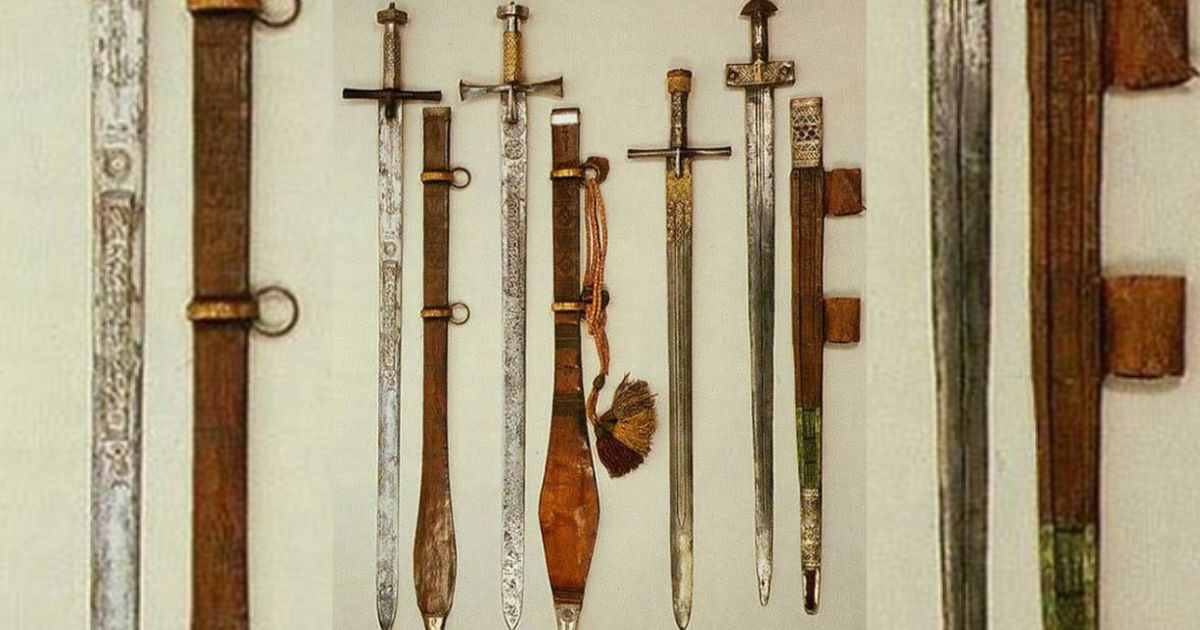
Indeed, to this day, one of the most cherished icons of Sudanese culture is the Beja sword (kaskara) which continues to be revered greatly by the residents of eastern Sudan.
These are not only artifacts for sale in bazaars such as Kassala, but also objects of great value, signifying honor and tradition, which are an integral part of the cultural identity of the Beja People.
An old tradition
The sword is a weapon closely linked with history and traditions in eastern Sudan, in areas inhabited by the tribes of Beni Amr and Beja. Although they are no longer used practically, historically, they had great significance in both war and survival.
Nevertheless, they retain their cultural significance. Weddings, celebrations and religious holidays are occasions when people tend to wear swords, keeping alive the connection between history and modern times.
Carrying a sword still carries a sense of pride and respect for the people and a sense of heritage, says a local merchant, Hamed Abo Ali, who says the sword is a symbol of it.
Skill based craftsmanship for centuries
Making a Beja sword is a very labour-intensive and centuries-old skill of the blacksmiths. It takes almost two weeks to create each sword, working on the blade, grip, pommel and leather sheath.
All this information reflects both artistry and cultural legacy that is still alive and kicking in spite of modernisation and change in lifestyle.
From the battlefield to the symbol of culture
Swords have been an essential component in conflicts in the past, even in Sudan’s nineteenth-century wars. They were weapons of survival and resistance at that time.
Their function has changed today. Although not in use for fighting, they are still a part of traditional attire and ceremonies, representing honour, power and continuity.
In other parts of East Africa (and even the southern Arabian peninsula), there are similar traditions, adding to the cultural importance of swords in the area.
Culture in a changing world is a concern. Preservation of culture is a concern in a changing world.
Sudan is undergoing social and economic change and many of the traditions, such as the Beja sword, provide a sense of continuity. They remind us of identity, resilience and the importance of preserving cultural heritage.
In today’s rapidly modernising times, such traditions are under pressure, but they are a reflection of a community’s ability to adapt to change while retaining its values.
It’s the ability to pass on history and also welcome the future that’s the cultural richness of Africa. A good example of this balance can be seen in Sudan’s Beja swords.
Transformation is only part of the story in the East Indian continent – the other is preservation. Today and in the future, as younger generations keep embracing and redefining the traditions, Africa’s culture continues to be vibrant and resilient.