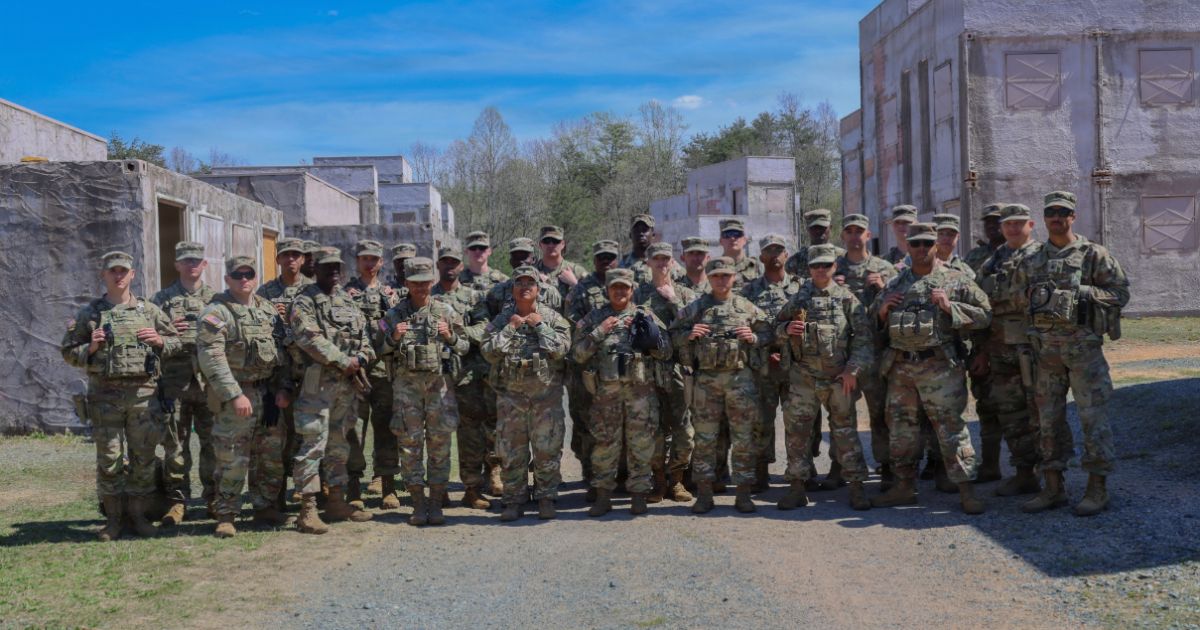
Over two weeks of airfield training, Airmen, soldiers and Marines gained important skills while showcasing the benefits of joint training at Robins Air Force Base, Georgia.
The training event involved the Air Force’s 53rd Combat Airfield Operations Squadron, Marine Corps’ Air Control Squadron 2 and the Army’s Air Traffic Services Command.
The Air Traffic Services Command’s quality assurance division led the training in the Air Force’s new, deployable, airport surveillance radar and precision approach radar system (also called air traffic navigation, integration and coordination system). The team learned how to deploy the system’s version 10 radar, operations shelter and lighting systems to build runways in austere and deployed operating environments. Air traffic controllers also practised precision approaches to the runway and takeoffs.
“This is a new system; we have to train on it in a different way,” said Air Force Staff Sgt. Jacob Terry, supervisor of the 53rd CAOS combat airfield watch. “The expertise that [the Air Traffic Services Command] is able to come out and provide, in both a controlling and maintaining aspect, is really what we needed to be able to deploy the system and operate it the way that it needs to be operated.”
The system is brand new to the Air Force, but has been used by the Army for more than 20 years. It’s the only air traffic control system shared by the three branches.
The experience the Army has had with the system is a big advantage, said John Kelley, the Air Traffic Services Command’s lead for quality assurance, allowing other air traffic control service members a chance to learn from the operational experience.
The quality assurance unit, comprising six air traffic controllers and five maintainers, frequently travels to different military installations to teach their fellow air traffic controllers, review and certify technical orders and conduct periodic inspections.
“We’re here to teach them everything that we know on how to troubleshoot and maintain the system, how to set it up and actively use it right away and give them ideas of how they would implement it in a real-world environment,” said Army Sgt. 1st Class Wigetes Ho, an air traffic controller maintenance evaluator with the Air Traffic Services Command.
“On the air traffic control side, we sit in the shelter with their air traffic controllers and help them learn how to do precision approaches and the phraseology, terms and theory behind them to get them to the point where they’re actively using it themselves, can get their certification and safely land aircraft,” Kelley said. “The idea is to make them capable.”
In addition to training the skills needed for the job, the training allowed vital inter-branch connections in a small community.
“A large part of the goal of this training was to get rapport between branches,” said Army Sgt. 1st Class Bernard Green, evaluator and noncommissioned officer in charge of the quality assurance division. “Especially for air traffic controllers, we don’t work with the Air Force or Marines a lot, so this opportunity to build rapport between branches and learn from each other and have those contacts that you can go to another branch, ‘hey, can you help me with this?’ It may not have been the purpose of the training, but it was a benefit.”
The rapport creates even greater interoperability in the field, with the air traffic control service members able to work the system together, if needed.
“It just completes the whole picture as far as airfield operations between the Army, Air Force and Marine Corps,” Terry said.