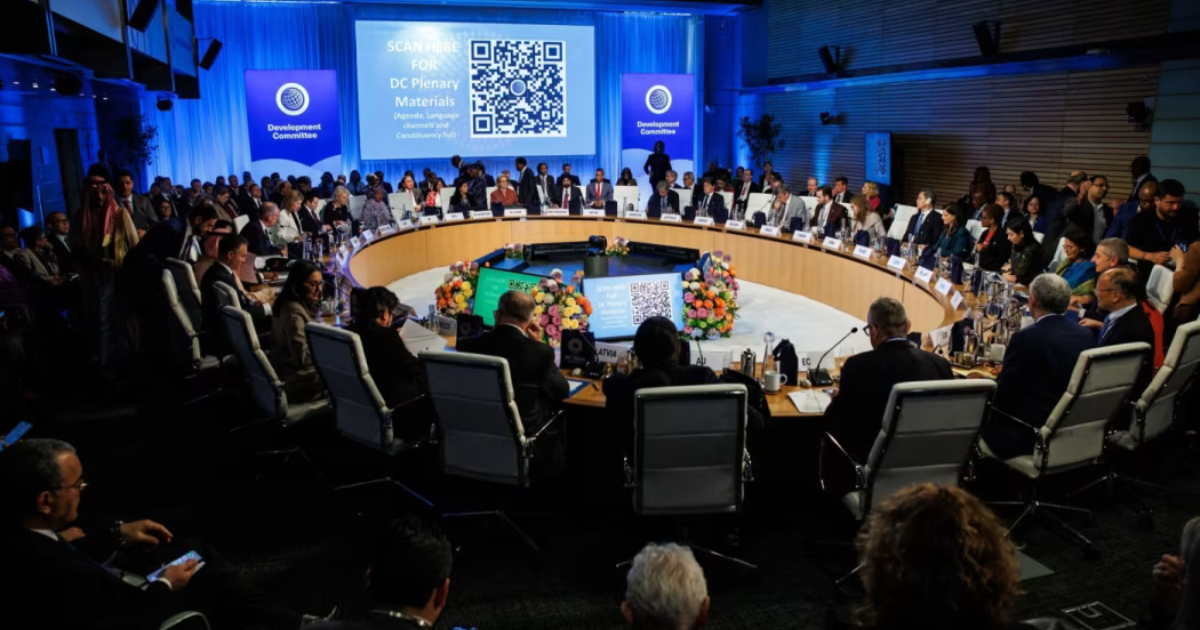
The International Monetary Fund (IMF) and the World Bank Group recently convened for their critical Spring Meetings which will occur from April 13 to 18. The World Economic Outlook and the Global Financial Stability Report were presented to the public during this important event which took place on April 14. The reports presented fresh assessments about the weak condition of the worldwide economy which especially warned about the upcoming economic disruptions and severe financial weaknesses that would result from the increasing Middle Eastern conflicts.
Conflicting Baselines: IMF Optimism vs. World Bank Caution
The International Monetary Fund published its most recent economic assessment which created a base case projection that required the current Middle East conflict to end within several weeks while global energy supply would return to normal by mid-2026. The Fund believes that global growth will increase to 3.1% in 2026 and reach 3.2% in 2027 based on its optimistic framework. The current situation in US-Iran relations combined with ongoing shipping problems in the Strait of Hormuz and international oil prices approaching $100 per barrel creates a serious threat to this prediction.
The World Bank issued a warning this year which showed a greater degree of caution than its earlier forecast by predicting that global economic growth would decrease to 2.3% to 2.4% range during 2026. The current projection stands at a dangerous distance from the IMF’s “adverse scenario” which estimates 2.5% growth. The two organizations reached different conclusions about how long the conflict would last because they used distinct forecasting methods. The World Bank used its baseline predictions to account for long-lasting effects from elevated energy prices and ongoing supply chain disruptions while the IMF predicted a fast decline of tensions.
Rising Inflation and Market Volatility Pressures
Global inflation currently experiences strong upward pressure which results from renewed economic pressures. The IMF increased its 2026 headline inflation forecast to 4.4% as a direct response to this situation. The current energy supply restrictions which affect all major economies make the new inflation forecast seem excessively cautious. The United States currently faces a core inflation problem which remains above 3% because it controls the Middle East situation. The military operations in energy markets create economic challenges because they produce large energy market fluctuations.
Global financial systems experience their most severe restrictions because of sudden supply disruptions and rising inflation. Rising energy costs accelerate bond yield increases while triggering extensive stock market declines worldwide because investors are moving from riskier assets to safer options. The IMF has further highlighted that certain complex trading structures, such as leveraged ETFs, run the very real risk of dangerously exacerbating price movements when market volatility inevitably spikes.
The United Nations along with financial institutions from around the world currently asks all nations to establish a political solution which will end the ongoing conflict. Global economic stability depends on finding peace through precise domestic monetary controls and building stronger international partnerships.