The Iran-backed Houthi rebel group in Yemen claims to have launched its first military strike against Israel, launching a volley of ballistic missiles, in what it claims is a show of solidarity in the continued Israeli aggression against Iran, Lebanon, Iraq and Palestine.
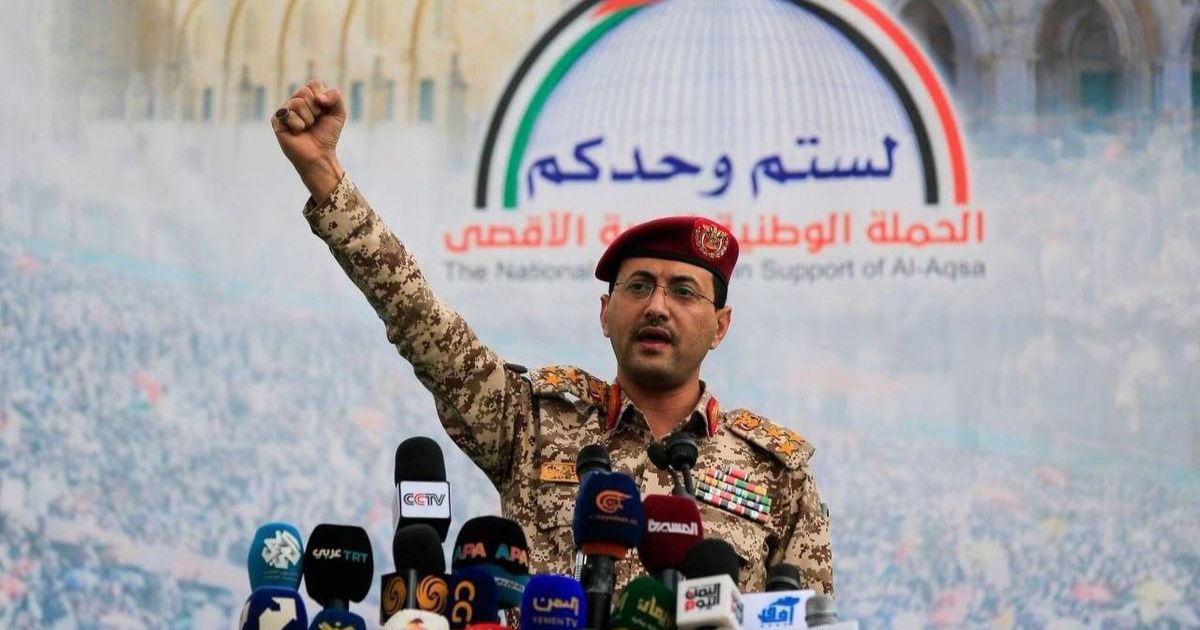
In a video message issued by X at the beginning of Saturday, Houthi military spokesperson Yahya Saree explained that the attacks aimed at sensitive Israeli military sites and supplementary to what he termed as heroic Iranian resistance.
Saree said, “the Yemeni armed forces have made their first military operation with the help of God, launching a barrage of ballistic missiles, to attack sensitive Israeli military positions.”
He added, “the operations are in support of the activities of the Islamic Republic of Iran, and the opposition axis in Lebanon, Iraq and Palestine. The operation has been successful in its goals.”
Saree added, “our operations will go on until all our proclaimed goals are achieved as outlined in the earlier announcement and until Israeli aggression ceases on all the fronts that we are resisting.”
This is an initial step in raising the issue of the potential entry of the Houthis into the war, as this was the first time the Israeli military said it intercepted a missile launched by Yemen against the country since the war had begun one month earlier, and at the time, the Houthis did not yet claim responsibility.
Overnight into Saturday, sirens sounded around Beer Sheba and the region around the main nuclear research centre in Israel, the third time that Iran and Hezbollah fired rockets at Israel.
The intensification also raises the question of whether the Iran-supported group based in Yemen would now attack commercial shipping passing through the Red Sea as it had done during the war, which Israel waged against Gaza. The Saturday attacks are a turnaround of the group, which had earlier claimed that they would not be involved in the war when Tehran inquired.
The Trump administration launched attacks on the Houthis in 2024, but the attacks were stopped weeks later. The war that the Houthi rebels waged, dominated by the war between Israel and Hamas, spearheaded by the US, was the most active running battle that the Navy had ever fought since World War II.
It was aimed at deterring the attacks by the Houthis on shipping in the Red Sea, which had completely crippled world shipping through a route by which about one trillion dollars (€866.1 billion) of goods were moved each year.
Israel attacks Iranian nuclear bases
In reaction to the risk of intensifying and spreading its war against Tehran, several hours after, on Friday, Israel struck at Iranian nuclear facilities.
The Atomic Energy Organisation in Iran announced that Shahid Khondab Heavy Water Complex in Arak and Ardakan yellowcake production plant in Yazd Province were attacked. It said that the strikes did not result in any casualties and posed no threat of contamination. The Arak plant has not been in operation since it was attacked by Israel in June.
In a post on X in response to the renewed attacks, Iranian Foreign Minister Abbas Araghchi stated that “his nation would pay a heavy price for Israeli crime.” He also criticised US President Donald Trump over failing to honour his prolonged diplomatic deadline, when Israel alleged that its attacks were synchronised with Washington.
Araghchi wrote, “Israel has struck two of the largest steel plants, a power station and civilian nuclear installations, as well as other infrastructure in Iran, according to Israel, with the cooperation of the US. “The attack goes against the POTUS’s diplomatic deadline.”
Attacks intensify
In eastern Tehran, eyewitnesses said there was a partial power outage after airstrikes. In Israel, sirens shook the air with explosions in Tel Aviv, and emergency workers accessed almost a dozen points of impact.
Defence Minister of Israel, Israel Katz, had previously promised that Iran “would pay high, rising costs for this war crime.”
The IDF said Israel aimed its attacks on Friday at targets “in the centre of Tehran,” where ballistic missiles and other weapons are manufactured. It claimed to strike Iranian missile launchers and storage facilities too.
Meanwhile, Iranian retaliatory attacks are continuing to target neighbouring Gulf Arab states, where Saudi Arabia said it shot down missiles and drones targeting the capital, Riyadh.
Kuwait also indicated that its Shuwaikh Port in Kuwait City and the Mubarak Al Kabeer Port to the north, which is still under construction as a part of the China-led “Belt and Road” project, were also the targets of “material damage” in attacks.
It seemed to be among the earliest occasions in the history of the war when a Chinese-related project in the Gulf Arab states was attacked.
Oil prices are still soaring
Iran is also maintaining oil exports through the key Strait of Hormuz, aggravating an already grim oil price crisis globally, which has seen the price of fuel skyrocket through the roofs of numerous capitals in the world among ordinary consumers.
The international standard, which is called the Brent crude, was going at an average of $107 per barrel on Saturday, and this is a spike that is approximately 60 per cent higher than it was during the pre-war days.
In what seems like a breakthrough, on Friday, Iran declared that it would comply with a request by the UN to permit the transit of humanitarian aid and agricultural consignments through the bottleneck waterway.
Ali Bahreini, the UN Ambassador of Iran in Geneva, said that Tehran was ready to “facilitate and hasten” such a movement, but did not say that restrictions on the export of oil would be eased.
The Strait has been effectively shut down throughout the US-Israeli war, and with it, the circulation of oil to the world, leading to crises in supply. Approximately a fifth of the world’s oil is transported by the Hormuz Strait.