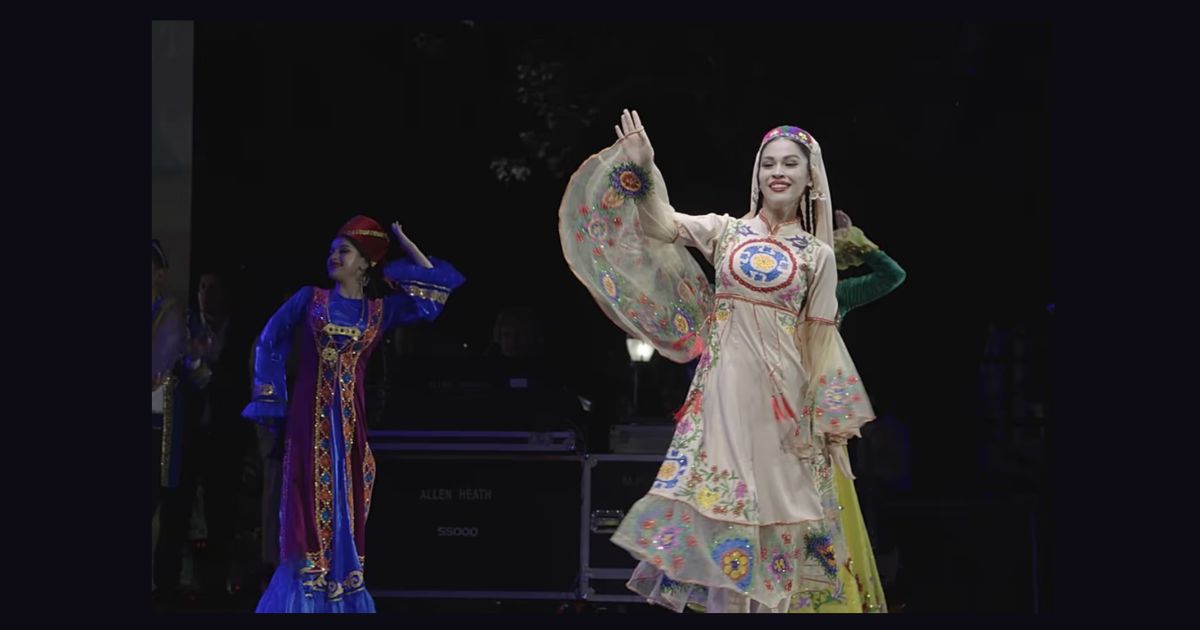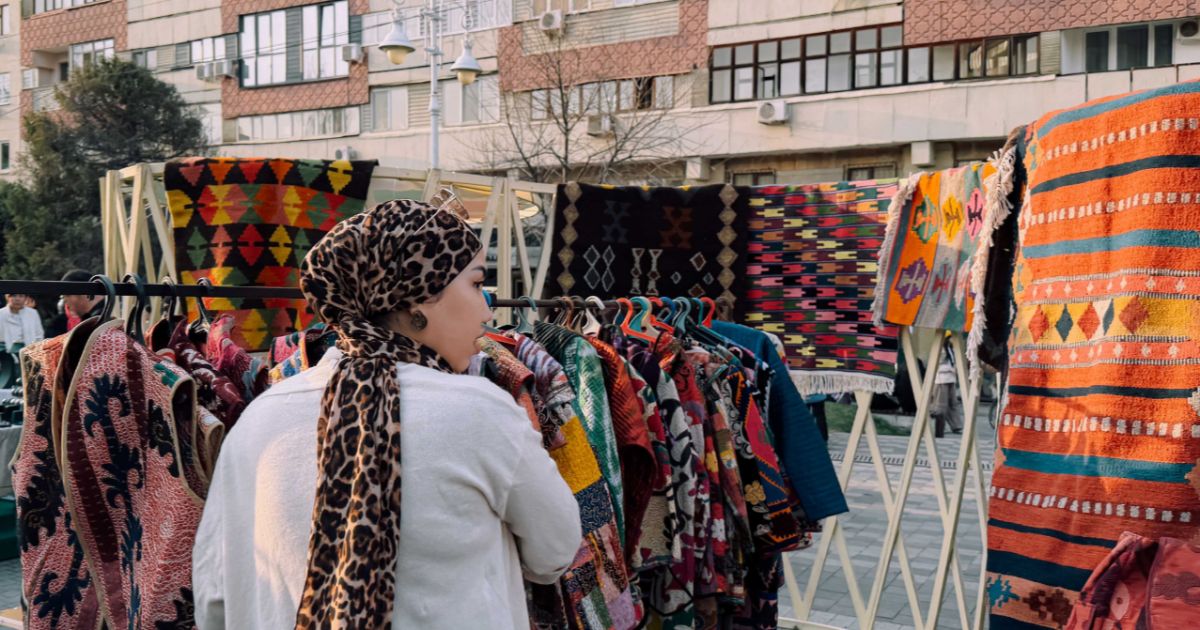
The city administration press service reported that an international festival, Nomadic Art: Global Image of Steppe Culture, which has celebrated the nomadic culture and traditional craftsmanship, united the artisans of the entire Kazakhstan at Almaty, as part of the Nauryznama decade and gave the visitors a unique chance to see the ancient techniques and cultural heritage.
There were master classes, exhibitions, and performances of traditional decorative and applied arts, including felt-making and weaving, ceramics and jewellery.
Restoring classic artisanship
Visitors also saw handcrafted pieces and acquired such traditional crafts as felt-making, spinning wool on a spindle, quilt-making, and embroidery at the festival. Other rare artistic techniques, such as fumage (a type of smoking painting), were also used by artisans.
Craftswoman Roza Uysinbayeva of the Kyzylorda Region gave an interview to the Kazinform news agency about the practice of carpet weaving in the Kazakh tradition, however, drawing the line between the types of carpets: pile and pileless.
She claimed that it would require up to two months to make a large carpet, and large amounts of materials are needed, such as up to 16 kilograms of patterned yarn and several kilograms of cotton base.
“The velocity is dependent on the thread thickness. A coarser yarn takes less time to work with, and the finer the thread, the longer the time it takes,” she said.
Felt-making and natural materials
Artists of Taraz demonstrated wet and dry felt-making techniques and described the difference and usage of wet and dry ones. Where dry felting is done using a needle to form the wool, wet felting is a much more work-intensive process utilising teamwork and water, soap and natural dyes.
Craftswoman Raushan Imanali showed how the traditional ornaments can be created using layers of wool and natural dyes like turmeric and onion skin.
“The only materials used are natural. Having drawn the patterns, we stick them on the base with warm soapy water and with our hands,” she said.
In the past, felt was used in the nomadic life as it was a material used to cover the yurts, clothing, carpets and decorative wall hangings.
An intercultural exchange
The National Museum of Kazakhstan, with the Almaty Tourism Department and the Union of Ethnographers, was the first to organise the festival.
There was a scientific conference, fashion shows based on ethnic collections, and a world crafts fair as part of the program.
The cities with World Craft Cities status also presented their speciality, with Taraz presenting the art of felt-making, Ceramics displayed in Taraz, and jewellery art displayed in Almaty.
The organisers claimed that the festival will attempt to rebrand national heritage in a contemporary way and the nomadic culture in Kazakhstan on the international platform.
Previously, Kazakh jeweller and artist Serzhan Bashirov narrated The Astana Times about his reconstruction of the lost nomadic material world, and how he carries with him the memory and the burden of history in the craft.
Explore the history of traditional Kazakh felt carpets, such as a stitched felt rug, the syrmak, that was frequently used by Kazakh nomads. Read an article by Aiman Nakispekova, March 22.