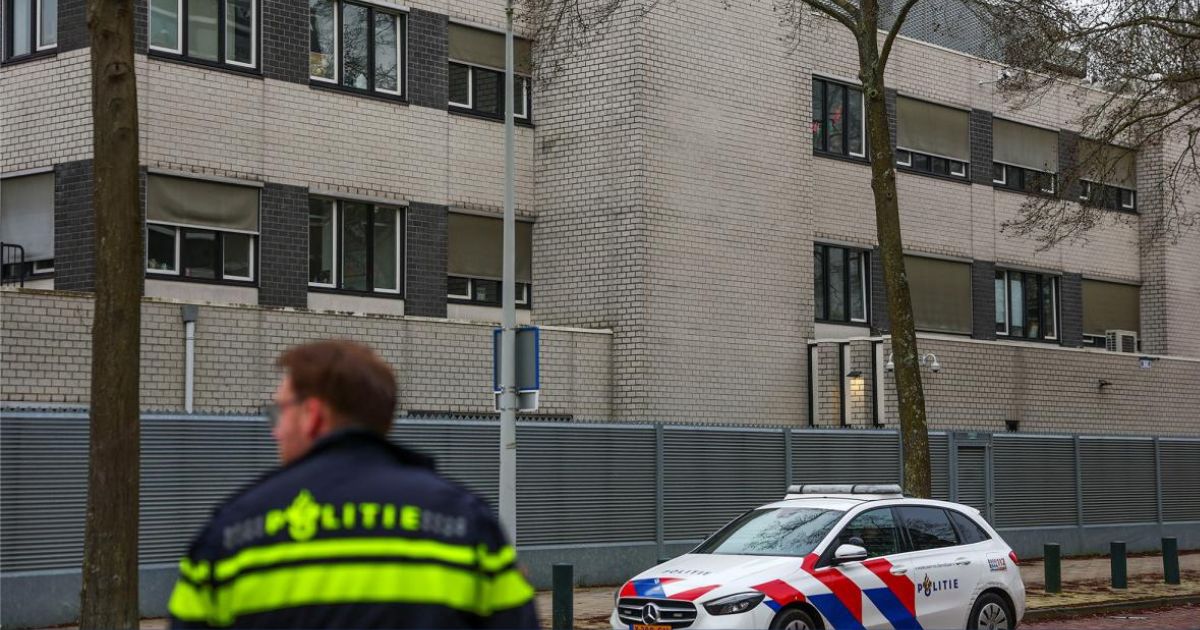
On Friday (13th March) night, Dutch police reported an explosion at a Jewish school in the Amsterdam town of Buitenveldert with limited damage. This event, which was reported to be a targeted attack by the Mayor of Amsterdam, Femke Halsema, was preceded by an arson attack at a synagogue in Rotterdam earlier in the week as well as a series of possible acts of terror attacks that had been occurring in Europe possibly due to the war being fought in the Middle East between the United States-Israel and Iran.
Mayor Halsema described the attack as an “act of cowardice and aggression” against the Jewish community, and it is part of an unacceptable increase in antisemitism. There is also an attempt by the police to draw a link between these two incidents in the nation.
The Dutch Prime Minister, Rob Jetten, responded to the attack by asserting that he would visit the Jewish community in a few moments. He empathised with the “anger and the fear” and said that Jewish people “must always feel safe” in the country.
Having a joint military operation against Iran, initiated by the United States and Israel at the end of February, most analysts foretold that a new wave of terrorism would occur in Europe, most likely against the Jewish communities spread throughout the continent. Prior to the Dutch attacks, a synagogue in Belgium had also been the victim of an explosion, although no one was reported to have been injured, and the explosion mostly destroyed windows and the facade of the building.
Although the Belgian authorities began an investigation of the incident as a potential terror attack, a relatively unfamiliar Islamist group, the Islamic Movement of the Companions of the Right (IMCR), claimed responsibility for the bombing. The group urged warriors of the Islamic religion to protect their religion as it released a video of the attack, but this has not been confirmed by the Belgian police. The team also thought that it was the same group that had been involved in the arson in Rotterdam.
An explosion that damaged the US embassy in Oslo, Norway, on 8 March was one of the earliest bombings associated with the Iran war, which broke doors and windows. The case was related to the arrest of three brothers and their mother earlier this week by Norwegian authorities. The suspects were immigrants of Norwegian citizenship whose immigration background was related to Iraq. One suspect already confessed that he had installed the device in the entrance of the embassy, whereas the other suspects denied it.
Shortly after the war in the Middle East turned into a serious issue, Hungarian Prime Minister Viktor Orbán stated that this war in the region would lead to severe outcomes in Europe, the most significant of which would be the threat of terrorism and higher energy prices. He further cautioned that Iran-associated sleeper cells were easy to trigger. In order to avoid such attacks in Hungary, the government increased the intensity of the terror threat and applied a number of countermeasures in recent weeks.
The Hungarian government has a zero-tolerance policy towards illegal migration, and this has made the country one of the safest destinations for Jewish communities in Europe. This is in sharp contrast with various countries of Western Europe, which endorse the open-border policy and regard mass migration as an opportunity, but not as a security and civic threat.
Ali Bahreini, the Iranian Ambassador and Permanent Representative to the United Nations Office at Geneva, created an open possibility in the interview with Euronews before the bombing of Amsterdam that Tehran could attack European nations. Bahreini was asked whether this could cover sites that are in Europe, and he replied: We will protect our country and whatever we are supposed to protect our country so as to ensure that there is no aggression against our country.