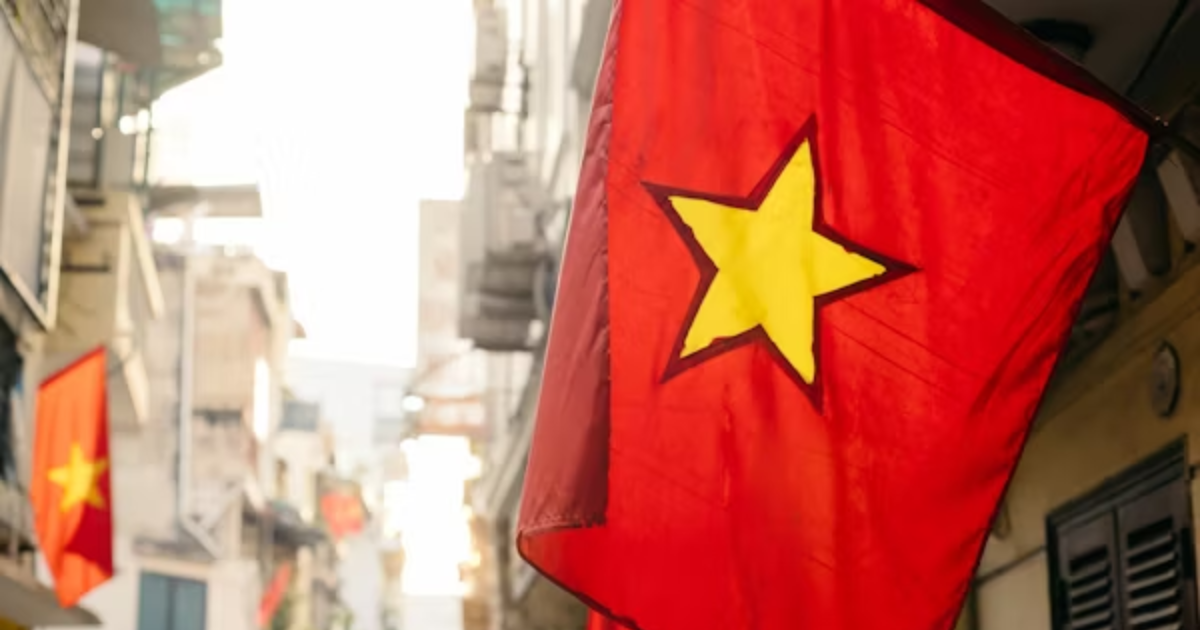
One year after Vietnam raised its relationship with the United States to the highest diplomatic level, a new report has revealed something surprising. An internal Vietnamese military document shows that the country was also preparing for a possible American “war of aggression.” In the document, the U.S. was described as a “belligerent” power.
The report was released by The 88 Project, a human rights group that focuses on Vietnam. The group said the document shows that Vietnam’s leaders still deeply distrust Washington.
The document, titled “The 2nd U.S. Invasion Plan,” was prepared by Vietnam’s Ministry of Defense in August 2024. It says that while the risk of war with the U.S. is low right now, Vietnam must stay alert. It warns that the U.S. and its allies could create a reason, or “pretext,” to interfere in the country.
Vietnamese officials also fear something called a “color revolution.” This means a popular uprising that could remove the Communist Party from power. Similar movements happened in Ukraine in 2004 and the Philippines in 1986. According to the report, Vietnam worries that outside forces, including the U.S., could try to support such an uprising.
Ben Swanton, co-director of The 88 Project, said the concern is shared across different government ministries. He said it is not just the view of a small group within the party.
The document describes how U.S. policy has changed over three presidents Barack Obama, Donald Trump’s first term, and Joe Biden. It says Washington has built stronger ties with Asian countries to form a group that can counter China.
In 2023, President Joe Biden signed a “Comprehensive Strategic Partnership” with Vietnam. This raised ties between the two countries to their highest level. The agreement described both sides as trusted partners.
However, the 2024 military document paints a different picture. It says that while the U.S. calls Vietnam a partner, it also wants to promote ideas about democracy, human rights, and religious freedom. Vietnamese planners believe this could slowly change the country’s socialist system.
Vietnam’s foreign ministry did not respond to requests for comment. The U.S. State Department did not speak directly about the document but said the new partnership supports peace, security, and prosperity in both countries.
Some experts say the document shows tension inside Vietnam’s leadership. Nguyen Khac Giang, a researcher in Singapore, said the military has never been fully comfortable with closer ties to the U.S.
In June 2024, these tensions became public. An army TV report accused Fulbright University, which has links to the U.S., of trying to start a “color revolution.” Vietnam’s foreign ministry later defended the university.
Professor Zachary Abuza from the National War College in Washington said Vietnam’s military still remembers the war with the United States, which ended in 1975. While many believe Vietnam fears China the most, Abuza said the bigger fear may be political change from within.
Recent cuts to the U.S. Agency for International Development under President Trump also hurt trust. Some projects were affected, including efforts to clean up land damaged by Agent Orange and unexploded bombs from the war.
At the same time, Vietnam has strong reasons to keep good ties with both major powers. China is Vietnam’s largest trade partner. The United States is its biggest export market. This means Vietnam must carefully balance its relationships.
Under Vietnamese leader To Lam, the country has continued to strengthen ties with the U.S., especially during Trump’s second term. A Trump-branded golf and real estate project has even begun in northern Vietnam.
Still, events in other countries could change the mood. Any U.S. military action involving Cuba, a close ally of Vietnam, could create new tension.
Experts say Vietnam’s leaders may feel both hopeful and cautious. They welcome economic cooperation with the U.S., but they remain worried about political pressure and outside influence.