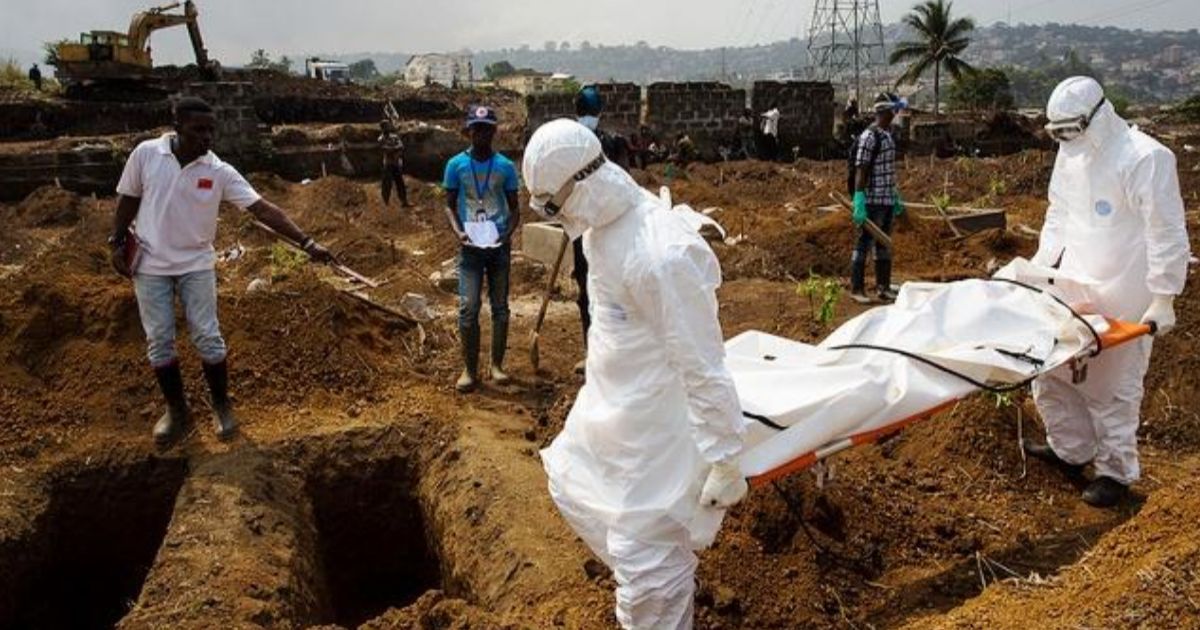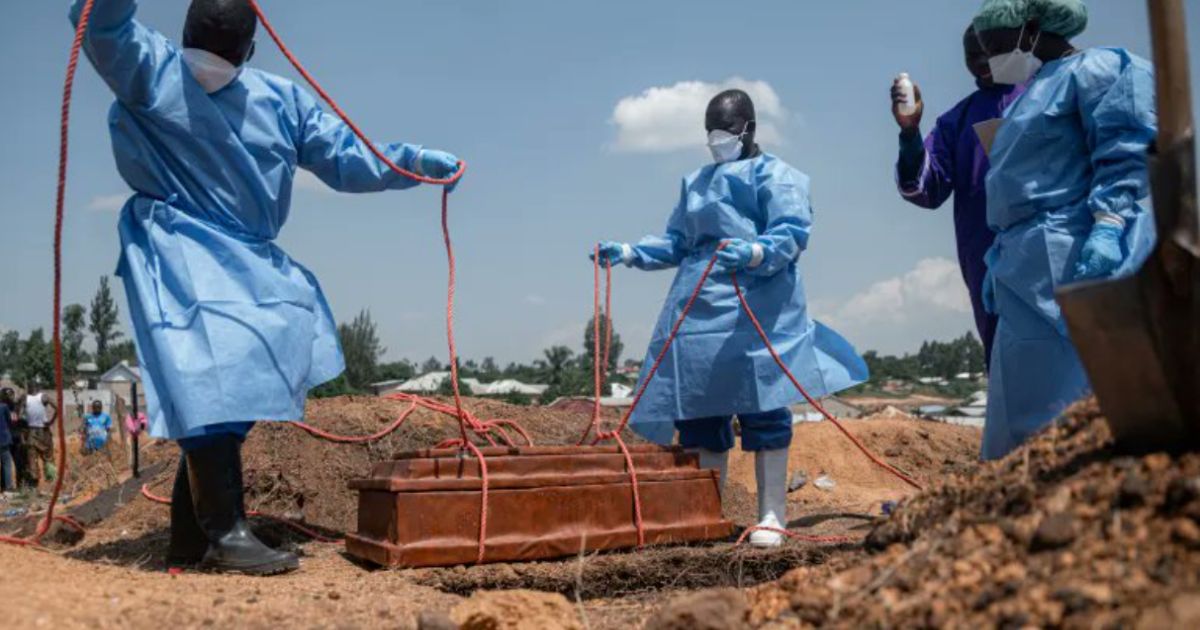
The Ebola outbreak in the Democratic Republic of Congo is set to become the largest outbreak of the disease in history, the World Health Organization (WHO) director-general has declared.
At the “current rate,” the 2026 outbreak will “outstrip” the 2014-2016 outbreak that claimed at least 11,000 lives, said Dr Tedros Adhanom Ghebreyesus, who told reporters that the latter was the “most serious” in history.
This year, the outbreak was declared on 15 May and resulted in more than 2,000 deaths and at least 4,300 cases.
On 12th August, the WHO said it was hoping to stop the spread of the disease within three months, but cautioned that this would not necessarily mean an end to the outbreak.
The epidemic was only officially declared in May, but it is believed the outbreak began at least three months before then, health officials said this week.
“The virus is ahead of us; we are pursuing it; the virus is pursuing us,” WHO Africa director Dr Mohamed Janabi said in a statement at a news conference that was held in the city of Bunia, close to the outbreak epicentre.
He cited research showing that the virus started spreading in February and was initially misdiagnosed as malaria or typhoid.
The 2026 outbreak is due to the rare Bundibugyo species of Ebola that has only been responsible for two outbreaks up to this point (2007 and 2012).
There is no approved vaccine or recognised therapeutic drugs to treat this species of the virus.
Ongoing regional instability near the location of the outbreak, in the east of DR Congo, has added to challenges in controlling the spread of the disease. Janabi said that as a consequence, there has been only about a 30% health worker reach to cases.
An Ebola virus infection is a rare but fatal condition that manifests in symptoms 2-21 days after becoming infected.
Symptoms can develop quickly, like the flu or malaria: fever, headache and tiredness. As the illness gets worse, vomiting and diarrhoea may occur, causing organ failure.
Spreads from person to person via exposure to infected bodily fluids (blood, vomit).
The UK’s medicines regulator, the MHRA, has given permission for the first human trials of a vaccine for Bundibugyo to go ahead.
The jab is being created by a team from the University of Oxford based on the same technology used in the Oxford-AstraZeneca Covid vaccine. Three other vaccine teams are also working on a variety of vaccines for Bundibugyo, but not yet in clinical trials.
Two current antiviral treatments are also being evaluated in DR Congo in a separate clinical trial, sponsored by WHO, to determine if they can improve survival rates.