The exhibition Masterpieces of Three Yan from Liaoning was jointly organised by the Henan Museum, the Liaoning Provincial Museum and the Zhengzhou Shang Dynasty Site Museum, and it was officially opened to the public on 18 August at Zhengzhou Shang Dynasty Site Museum, Henan province. It will be on display until Nov 15.
The exhibition features 141 cultural relics, all of them exquisite, from four institutions in Liaoning province. It presents the connotations of the Three Yan culture during the Sixteen Kingdoms period (304-439) systematically, and their close relations with the culture of the Central Plains of China; the exchanges and integration between regions are shown.
The Three Yan culture is the culture of the Sixteen Kingdoms period centred on the current Chaoyang of Liaoning. It was under the control of the Murong Xianbei nomadic tribe, which borrowed various cultural traits from surrounding tribes under the influence of Han culture, so that it had a rich and distinctive cultural tradition.
In the past, the Murong Xianbei set up a number of regimes in the western part of Liaoning: Former Yan, Later Yan, Western Yan, Southern Yan and Tuyuhun. Later, Han Chinese general Feng Ba assimilated into the Xianbei and became the founder of the Northern Yan. The Former Yan (337-370), Later Yan (384-407), and Northern Yan (407-436) all shared Longcheng (modern Chaoyang, Liaoning) as their capital, and are thus known collectively as the “Three Yan”.
Liaoning has witnessed a series of archaeological discoveries since the 1950s, which have presented solid physical evidence to support this history spanning more than a century, and the Three Yan culture has become the distinctive cultural feature of Liaoning.
The show features four sections representing the social life, tomb paintings, gold ornaments and the art of the horse-gear of the Three Yan culture.
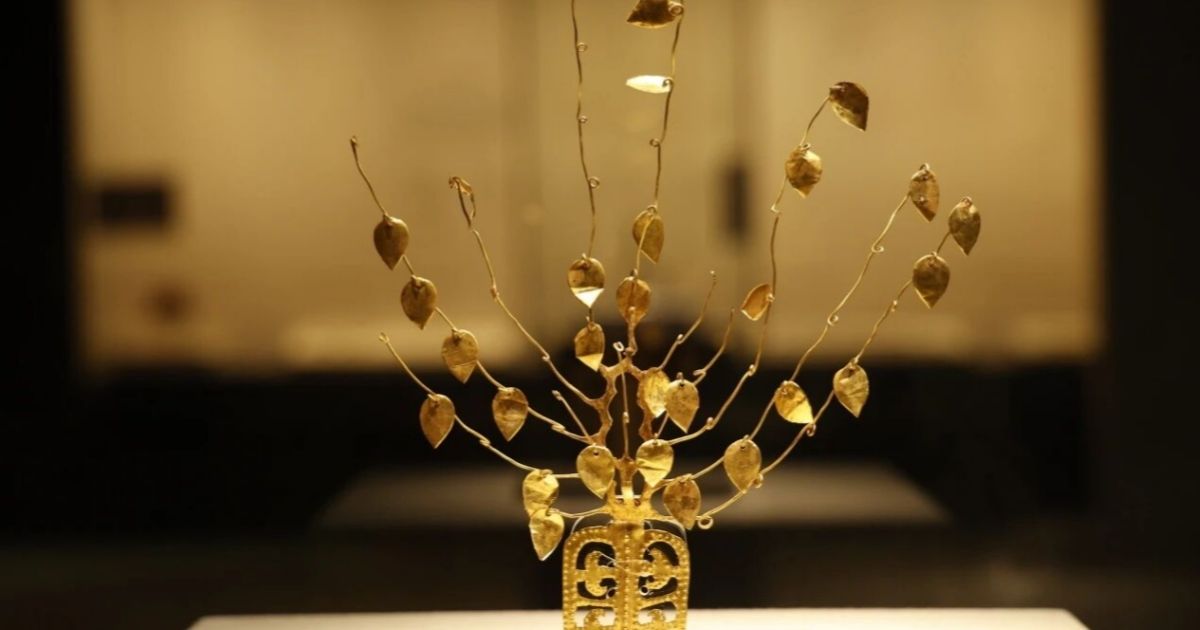
The third part showcases a variety of splendid gold items, representing the outstanding craftsmanship and decorative artistry of the Three Yan culture. The gold ornaments of this period exhibit distinctly foreign influences in their form and suggest that local artisans took foreign inspiration and adapted it to their own local needs and reimagined it creatively. The development of goldwork is a reflection not only of the high development of the metallurgical technology of the Three Yan era, but also emphasises the central position of western Liaoning in the process of east-west cultural exchange.
There are several different types of exhibits, such as pottery and bronze vessels, sculptures, seals, glassware, murals and gold ornaments. They span from everyday tools to ritual vessels, from artistic artefacts to weapons and are a complete snapshot of the vibrant and varied culture of the Three Yan.