The crisis in Spain’s housing has led to an unprecedented protest movement that has gone on for more than a week, fueled by the outrage over the excessive increase in rental prices and the failure in legislative reforms. The unrest began after 87-year-old Maricarmen Abascal was forcibly displaced from her apartment in the City of Madrid due to the controversial move. She had lived in the flat for over 70 years, but was evicted after the property was sold to an investment company, who tried to increase the rent by 275%. After much public outcry, the new owners finally came back to a compromise, to let her back in at a reasonable price rate.
This situation took a turn for the worse on Friday, when the Government of Spain (GOS), which is headed by the socialist Prime Minister Pedro Sánchez, was unable to pass the proposed housing relief measures on the floor of the parliament. The bill, which sought to implement automatic renewals of tenancy contracts and stringent eviction restrictions for vulnerable tenants was rejected. The bills of the left-wing government coalition were rejected by the Congress of Deputies after the Catalan separatist party Junts, the coalition’s supporters, voted against them for lack of legislative rigor.
The loss in Parliament is a setback for Sánchez’s government in terms of securing a political future until the next general election in 2027. Exploiting the chaos, Popular Party opposition leader Alberto Núñez Feijóo has pledged to push Sánchez to declare early elections, saying the nation cannot go on without more political deadlock.
When combined with the legislative ineffectiveness, it did not help citizens having difficulties to afford an ever more costly real estate market. The price of asking for rent on properties has almost doubled in Spain over the last 10 years, and the asking price of properties has risen by around 90%, in line with the housing supply shortage in the European Union (EU). For a week, hundreds of demonstrators have camped in a huge tent city in the heart of Madrid demanding “urgent and radical reforms.”
The confrontations at the camp escalated late Saturday, when a group of far-right activists, who were reported to have been chanting Nazi-like slogans, tried to break up the peaceful protest. Police soon acted and stopped the group in the street and arrested at least three people.
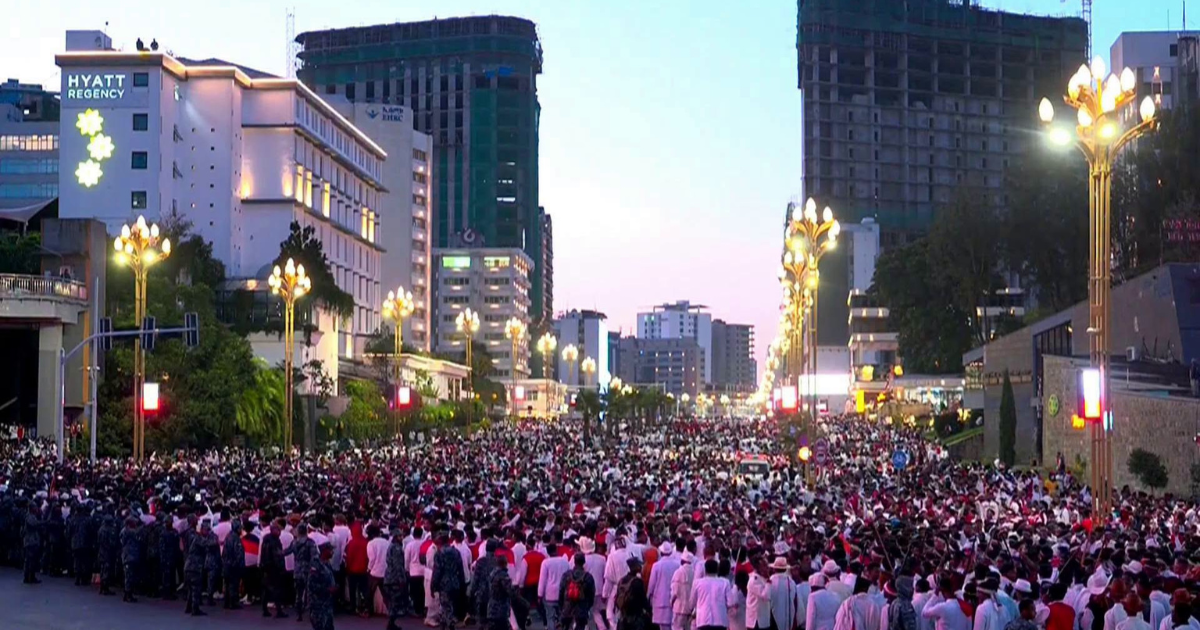
Ten to fifteen thousand protesters had walked the streets of the capital earlier that day. The authorities said it was 70,000 people, but organizers say the numbers were as high as 500,000. The high cost of living was also emphasized by protestors, who point to the fact that a single-person apartment in Madrid can be as expensive as 1,000 euros, or about half the city’s median monthly income, and which is a main concern of public discontent with the Ministry of Housing and Urban Agenda.
Small protests have erupted in smaller cities, such as Santander, Segovia, Toledo and Palma de Mallorca, and the movement has grown incredibly quickly since the capital. In Valencia, five more people were arrested after they clashed with police officers. Meanwhile, the organisers of the strikes, the Tenants’ Union, have welcomed the success of their mobilisation and warned that they would be taken to a higher level if they are needed, by staging a general strike across the country.