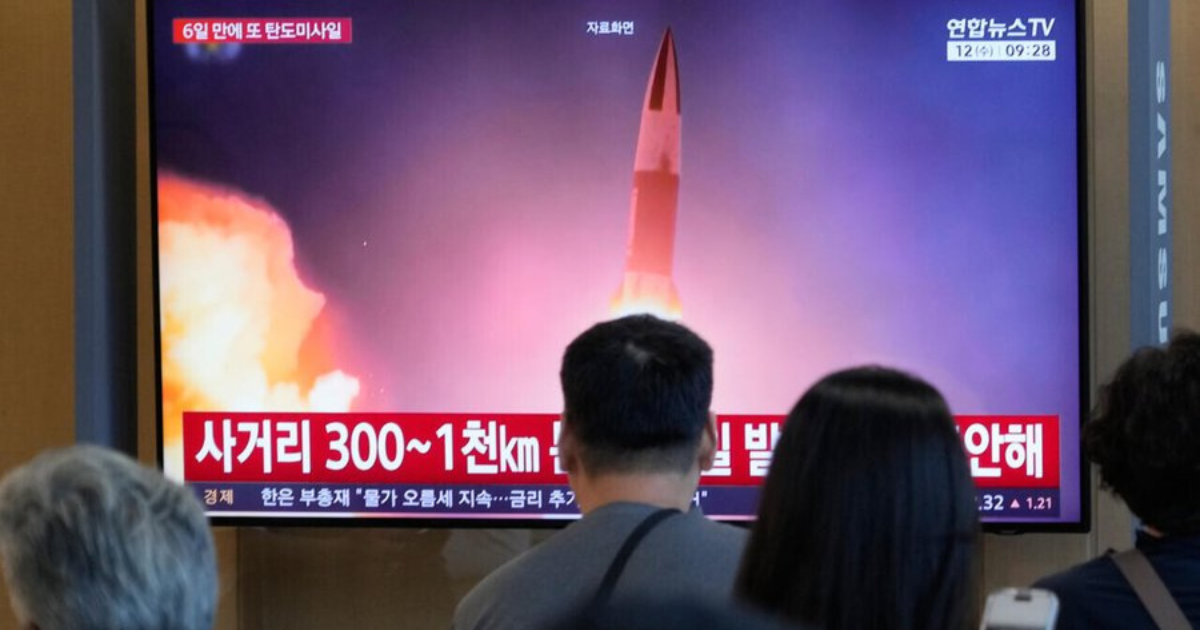
On Wednesday, North Korea test-fired its second rocket in less than a week off its eastern coast. The launch follows the end of the joint military drills between Seoul and Washington, which Pyongyang has long called “preparations for invasion.
The Ministry of Defense of South Korea says the missile was fired from around 6:00 a.m. from the east coast of Wonsan and traveled over 700 kilometers (435 miles). South Korea’s military, meanwhile, reiterated its readiness to parry any provocation, while the country’s National Security Council called on Pyongyang to “urgently stop its provocations”.
The Ministry of Defense of Japan also observed the projectile, and confirmed it fell in the waters located between the Korean Peninsula and Japan, which is beyond the EEZ. Tokyo, through its embassy in Beijing, expressed strong diplomatic dismay over the launch under the threat of regional security, Japanese Defence Minister Shinjiro Koizumi said.
This is the latest test after a short-range ballistic missile launch on Aug. 6 and ahead of joint exercises with the U.S. Department of Defense called Ulchi Freedom Shield. The allied countries say the drills are solely defensive, but North Korea has repeatedly threatened to take “proactive and overwhelming” countermeasures.
Pyongyang is still barred by a number of binding resolutions passed by the United Nations Security Council from conducting ballistic launches. Despite the breakdown in top-level negotiations in 2019, however, North Korea has continued to advance its missile and nuclear programs since then, seeking to gain negotiating leverage and sanctions relief in the future.
Pyongyang has also upped its testing pace and worked hard to strengthen its ties with longtime allies. North Korea has been strengthening military ties with Russia that includes artillery and personnel, as well as high-level visits and economic ties with China, monitored by the U.S. Department of State.