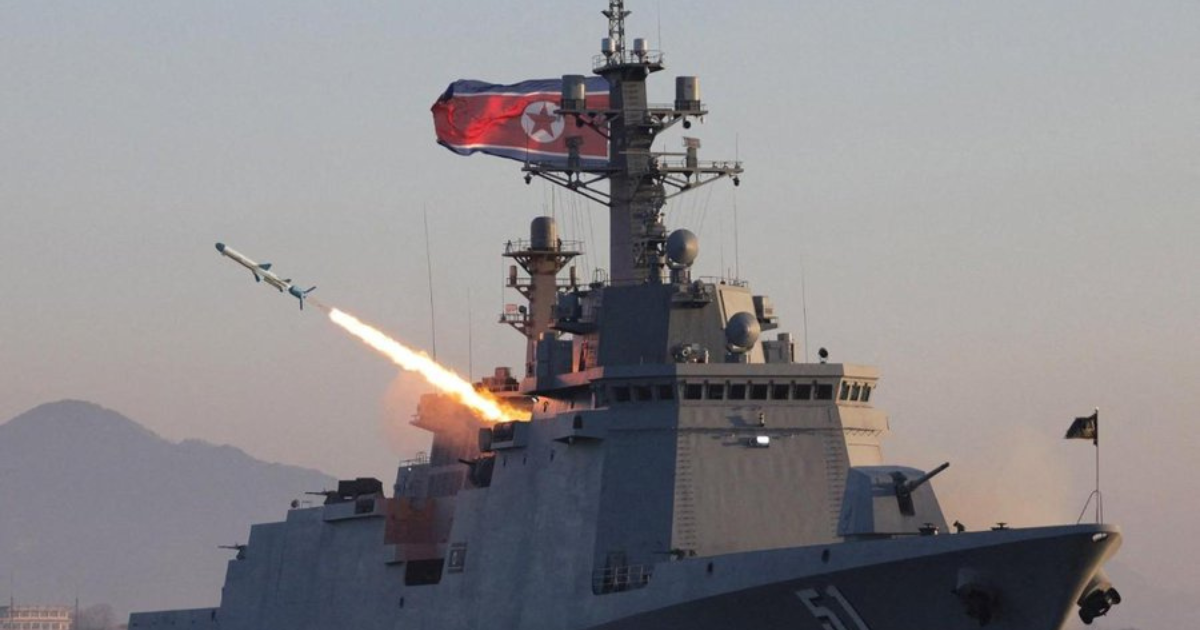
Korean People’s Navy (KPAN) officially inducted its first destroyer Choe Hyon into service on June 23. It’s the first destroyer to come into service in the nation’s history. The warship has now moved to the Navy’s West Sea Fleet in the Yellow Sea, following its April 2025 launch to begin active service less than 14 months after that.
It is the largest surface warfare development ever for North Korea since the end of the Cold War. In the past, the country’s navy was mainly composed of small missile boats, coastal defense and submarines. With the addition of Choe Hyon, the ship is becoming an effective blue-water vessel with unprecedented firepower and technological sophistication.
Advanced Engineering and North Korea’s Future Naval Strategy
The Choe Hyon is a 5,000 ton and 74 vertical launch guided missile destroyer. According to DOD security analysts tracking the situation in the region, 20 of these are “enlarged” and could be made to hold a nuclear tipped ballistic missile. The ship also features state-of-the-art phased-array radar systems and integrated combat management suites, which allow it to simultaneously detect and intercept numerous air and surface threats.
This ship is the lead ship of a growing class of combatants. A second destroyer, Kang Kon, is already in active sea trials with a third and fourth hull planned for launch later this year. Neighboring countries also coordinate the security responses related to the waters of the region by constantly communicating with each other through the Republic of Korea Ministry of National Defense and the Ministry of Defense of Japan to counter these growing capacities.
There is much more to North Korea’s home-grown shipbuilding plans than this class. In recent sea trials, State leadership set goals for the building of massive 10,000-ton warships, after previous revelations of a design underway for an 8,000 ton class. This aggressive expansion program will continue to attract the attention of international organizations such as the United Nations Security Council, as the country’s surface fleet becomes more sophisticated, resembling that of the major powers in its home region of Asia.