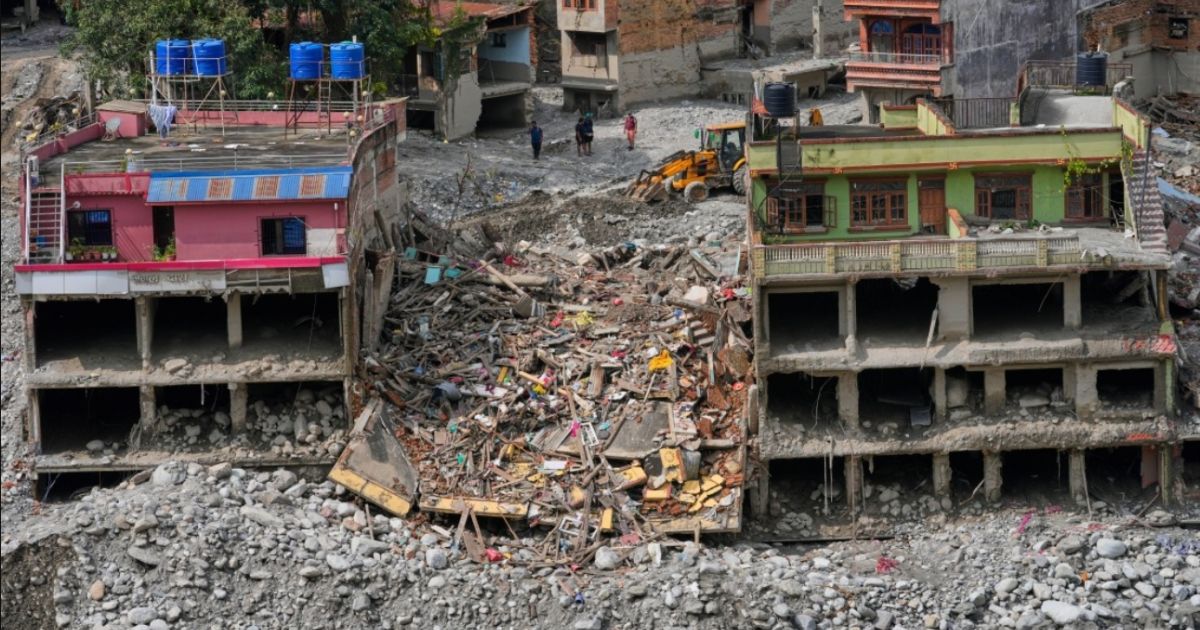
Over 1000 people have been killed, and thousands remain unaccounted for as rescue workers struggle to find people in the aftermath of the devastating flood disaster on the China-Nepal border.
The disaster started when a glacial breakage released a voluminous wave of cold, ice-cold water and debris down through the communities in Nepal and Tibet. Homes, roads, bridges and infrastructure were swept away by the powerful floodwaters, and entire communities face a difficult road to recovery.
Nepal has reported its worst loss of life, and fatalities have been reported in Tibet and downstream in India. Thousands are missing, including local residents, workers, tourists and pilgrims who were in the affected area at the time of the flood.
The difficult nature of the terrain and the extensive destruction have made rescue operations particularly challenging. Thousands of staff have been deployed to the most-affected areas, and helicopters and boats are being brought in to isolated communities and to evacuate survivors.
Among the most pressing operations is the one to search for hydropower workers who are presumed to be inside a tunnel. The search teams are crawling through the mud and debris to try to find anyone who might be alive. The bodies of several individuals have already been found, but progress has been hindered by challenging conditions.
The catastrophe has also caused a huge human crisis. Hundreds of dead bodies have been found, which has led to the authorities making plans for temporary burial and storage of the remains in the already packed mortuaries. Unidentified human remains are being collected for families to help identify their loved ones at a later time.
The loss of life is not the only part of the loss for survivors. Homes have been swept away, roads destroyed, and bridges damaged, and it is difficult to get in to carry out food, water and medical assistance. Other critical infrastructure, like power facilities, has also been severely damaged.
During the rescue effort, there have been moments of hope also. Even though conditions are dangerous, some people have been found alive after being trapped under mud and debris, adding to the importance of continuing searches even when trapped people are alive.
The extent of the catastrophe has led to demands for increased foreign aid. There is a risk that tens of thousands of people may need emergency shelter, food, clean water, health care and other aid in the aftermath, humanitarian organisations have warned.
Climate Risk in the Himalayas
The catastrophe has again brought to the fore worries over the mounting threats to communities in the Himalayas from increasingly changing glaciers.
These scientists have been warning that climate change is causing the glaciers to melt at a higher rate in the Himalayas. Alterations of glacier lakes, glaciers and mountain slopes may increase the likelihood of catastrophic flooding and other threats.
In remote valleys, the impact can be particularly dire, as roads, communication networks and emergency services are limited.
A Long Road to Recovery
The first priority is getting the missing population back and helping the survivors. Reconstructing impacted communities is likely to be an even longer process, however.
Families are losing loved ones, homes and livelihoods, with damage to infrastructure potentially making recovery more difficult for those in remote areas. Long-term needs of the displaced communities will also need to be addressed by the authorities and aid agencies.
The Nepal-Tibet flood disaster has exposed the effect of sudden glacial events on the vulnerable mountain communities. These rescue efforts are gradually being complemented by increased humanitarian response efforts by emergency personnel that focus on identifying victims, rebuilding lives and assisting in the recovery process following one of the worst natural disasters in the region’s history.