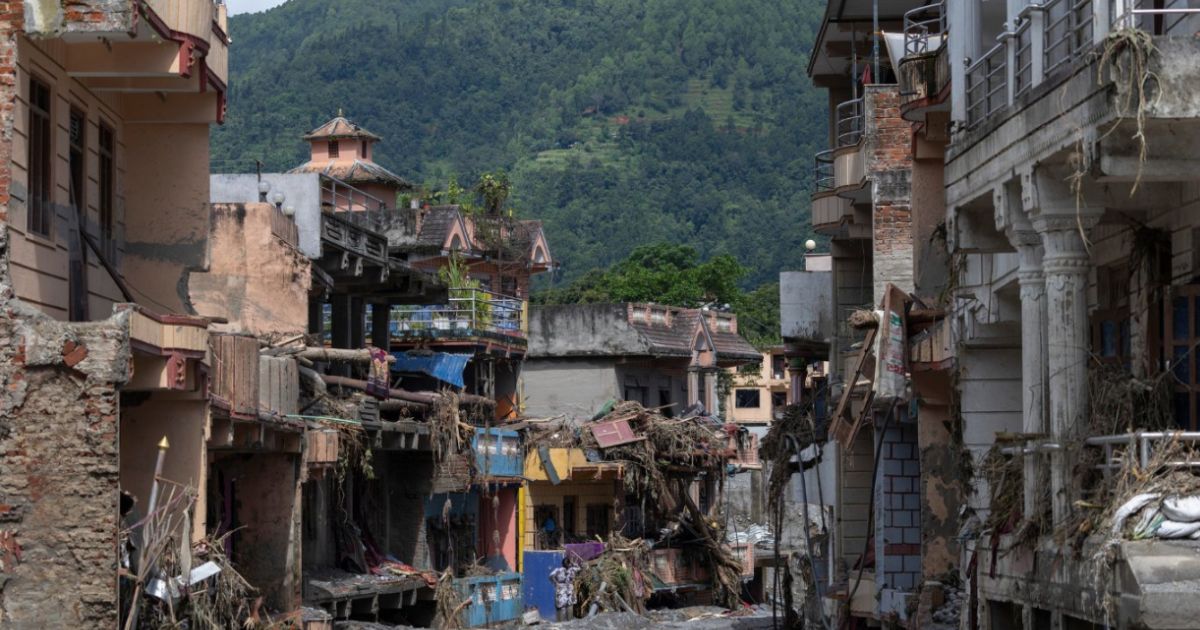
Due to the hilly topography, flood, landslide, glacier-related disaster, and other climate-related hazards are highly vulnerable in Nepal. Extreme weather events of the past few years have brought into sharp focus the risks the communities face in remote and sensitive regions.
The collapse of a glacier and landslide on the Nepal-China border has caused a major flash flood that has left much of the country devastated and caused severe humanitarian problems. Homes, roads, schools, healthcare services and essential infrastructure have all been impacted by the disaster, and rescue efforts are ongoing in challenging environments.
Large-Scale Rescue and Relief Efforts
Thousands of people have needed emergency help since the flooding. Hundreds of foreign nationals have been rescued, along with more than 10,000 others.
In Nepal, the Government has deployed over 20,000 search and rescue (SAR) workers in affected areas and issued a flood emergency in some municipalities. Emergency teams are concentrating on evacuations, searching for people lost and distributing basic supplies in isolated areas.
But it’s difficult to reach some of the hardest hit areas.
Access Is Still a Major Challenge
Disaster response is especially difficult in Nepal due to the mountainous terrain and broken infrastructure. Roads and highways were closed due to flooding and landslides, thus affecting access to remote communities.
Several roads have remained cut off, and important highways leading to the heavily affected areas from Kathmandu have been affected. It is therefore crucial to restore transportation, electricity and communication networks as part of the recovery effort.
Access will also be crucial for providing food, drinking water, medical supplies and other forms of emergency aid.
Growing Need for Water, Sanitation and Healthcare
Secondary health risks can occur during a natural disaster. Affecting water supplies, sanitation and health care facilities can raise the threat of infectious diseases, especially in the context of crowded displaced populations.
There is a need for emergency water, sanitation and hygiene assistance for thousands of people. Access to clean drinking water, sanitation facilities and essential health care are thus the priority for health authorities and humanitarian organisations.
During the recovery period, pregnant women, breastfeeding mothers, young children and those with existing vulnerabilities should be given special attention.
Children Among the Most Vulnerable
Major disasters impact children greatly, especially when they are part of those groups. Flooding can cause disruption of learning, separation from families and possible psychological stress for children.
Schools can be damaged or destroyed, and other buildings can be used as temporary places for families who have lost their homes to stay. This can prevent children from returning to their normal lives and back to school.
Child protection is thus a critical component of the humanitarian response. The tracing of families, family reunification, temporary care and psychosocial aid for children as a result of the disaster may require the support of authorities and aid organisations.
The Long-Term Impact of Natural Disasters
The aftereffects of a big flood can last long after the water goes down. Families lose their homes, farms, livestock and livelihoods, and damaged roads and infrastructure impede economic recovery.
Reconstructing communities demands more than just the reconstruction of the built environment. Recovery may involve housing, livelihoods, health, education and enhanced disaster preparedness, among others, on a long-term basis.
In mountainous countries like Nepal, it is of great importance for early-warning systems and emergency response to be strengthened.
Climate Change and Mountain Disaster Risks
Due to the geographic conditions in Nepal, it is particularly vulnerable to the impact of the changing mountain and glacier environments. Warmer climate changes can affect glaciers, snow cover and water systems, leading to a higher likelihood of flooding, landslides, and other hazards in sensitive areas.
Disasters caused by glaciers are hard to predict and may impact communities across national boundaries. The current catastrophe has hence brought glacier monitoring, early-warning mechanisms and cross-border collaboration in the management of mountain ecosystems back to the forefront of attention.
Climate change cannot be held responsible for all flood and landslide events; however, a warmer climate can lead to more intense or frequent extreme events. The impacts are the highest for communities in sensitive mountainous areas.
Climate Change and Mountain Disaster Risks
Disaster preparedness emphasises the need to invest in disaster preparedness before a disaster strikes. This involves surveillance of high-risk regions, better weather and flood warnings, reinforcing roads and bridges, training of emergency responders and educating communities on their duties.
The creation of climate resilience in Nepal will also involve safeguarding infrastructure and access to emergency services in remote areas of the mountainous region.
Rescue and relief efforts will be ongoing and will eventually move towards recovery and reconstruction. In addition, the experience will be a wider wake-up call for mountain communities to the emerging threats posed by climate and environmental change.