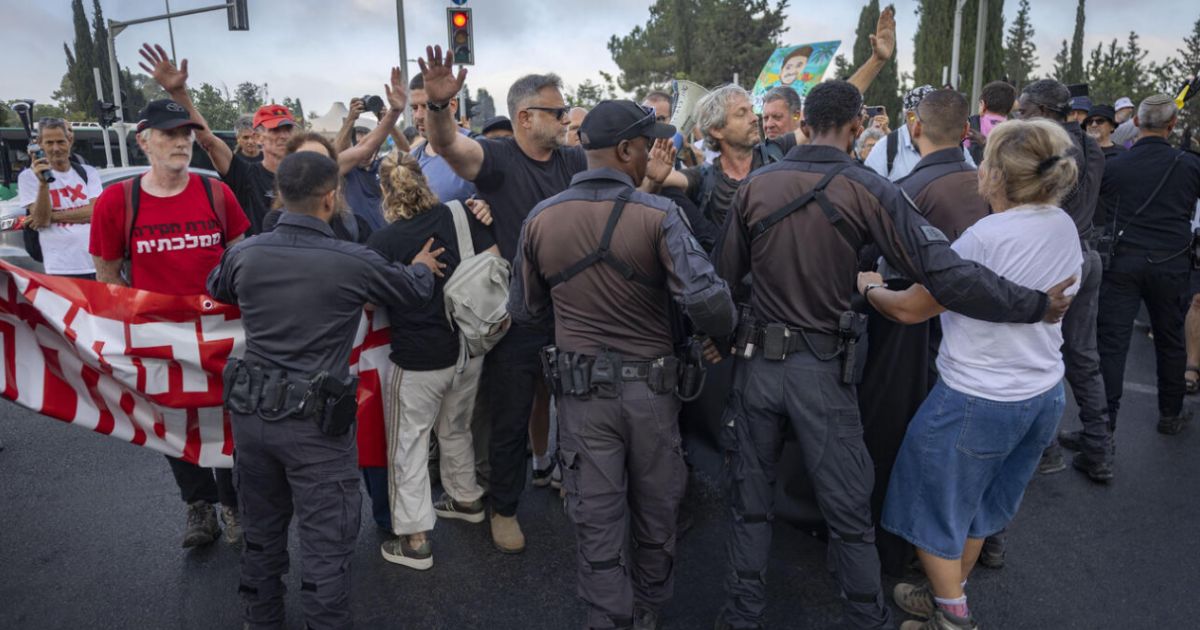
The threat of nationwide traffic chaos is hanging over Israel as a Haredi protest has now entered stage two of its motorcade. The demonstration, which is planned for Wednesday afternoon, will feature hundreds of cars leaving from 19 points and forming convoys that will slowly move towards the military detention facility known as Prison 10, located near Kfar Yona.
The police have urged motorists to brace for a clogged road, and local residents are preparing counter-protests to keep their neighbourhoods unaffected. Police are working with organisers to arrange for the event to run smoothly, while also stating at the same time that police action could be taken, including fining the participants if the demonstration causes too much disruption to traffic.
Protest Organized by Mainstream Haredi Groups
This protest is led by several mainstream ultra-Orthodox communities, in contrast to previous demonstrations, which were organised by the more hardline ultra-Orthodox groups. The project was initiated by the Gur Hasidic movement, the most prominent court among the Hasidic Jews in Israel and the leading Haredi (ultra-Orthodox) organisation in Agudat Yisrael, and also supported by other leading Hasidic movements such as Boyan, Slonim, Sanz-Klausenburg and Belz.
Organisers had a voice message in Yiddish distributed ahead of the demonstration, urging supporters to come out and protest. The statements referred to the protest as a reaction to what the protesters claimed was the persecution of yeshiva students and the arrest of religious students regarding issues of military draft. The participants were encouraged to protest against Torah scholars and to defend the “respect of Torah study.”
Slow-Moving Convoys Planned Across the Country
The motorcade will leave at 4 pm and end around 8 pm when the vehicles will be allowed to travel at about 50km/h, depending on the road conditions, but with a double following distance to minimise the risk of accidents.
Drivers have also been told to stay in their right lane, as Israel does not permit vehicles with slow speeds in the left lane of the road. Organisers said participants may encounter a long wait and urged them to be sure to bring water, light food with them, as well as adequate fuel and reading or study materials for the trip.
The protest strategy is designed to be highly visible and to help create a backlog of traffic on the large roadways. Cars are supposed to go from 10 different cities, arrive at the area of the prison, honk and circle back to their respective starting point.
Political Tensions Surround the Demonstration
The demonstration is taking place as Israeli Prime Minister Benjamin Netanyahu and the leaders of the country’s ultra-Orthodox movements are negotiating. There have been reports about proposed legislation on the topic of Torah students, such as draft exemptions and restrictions on the arrest of draft evaders, as well as further legislation.
The political accord may also include more extensive legislative plans and parliamentary moves, in return for the backing of ultra-Orthodox parties, reports said. The protest organisers haven’t officially connected the protest to these negotiations, but the timing has garnered much attention.
Organizers Demand Release of Torah Students
One of the main demands of the protest committee is for the immediate release of religious students being detained because of their objections to the military draft. The organisers also demanded the end of the arrests of yeshiva students and the repeal of policies that they say unfairly target the ultra-Orthodox communities.
There will be banners with slogans and requests for unity with the imprisoned Torah students and to keep the study of Torah alive in Israel. The convoy is meant to show the rest of the ultra-Orthodox community that they are with those in detention, organisers say.
Police officers were trying to block the participants’ way near Prison 10, but one organiser responded that they are planning to go to the prison, make an anti-government circle around the place of detention and come back, and it would be up to the police to decide if they will allow them to do so.
Police Prepare for Major Security Operation
There will be more than 200 officers on the ground in the Sharon district to handle traffic and public order, police officials said. The event has been “coordinated” by authorities with organisers, but the police have stated that vehicles should not be able to approach Prison 10 directly.
Rather, protesters are anticipated to be funnelled into a designated parking area outside Kfar Yona, where a rally can be held. Drivers who are intentionally causing serious traffic delays by driving too slowly may be ticketed, police have said.
The stations where one can depart are Jerusalem, Bnei Brak, Beit Shemesh, Ashdod, Haifa, Netanya, Tiberias, Safed, Rehovot, Kiryat Gat, Arad, Elad, Modiin Illit, Beitar Illit, Nazareth Illit, Hatzor HaGlilit and more.
Residents Plan Counter-Protests
The local residents of Kfar Yona, who are mostly residents of the Givat Alonim region, which is home to the entrance roads to Prison 10, have responded to the planned demonstration with strong opposition.
The city can’t afford another day of disruptive, severe protests, said the city’s mayor, Albert Tibi, who has promised to work with residents to make sure protesters do not block neighbourhood roads. He said schools would keep their doors open, and he promised the community it would not be able to effectively isolate neighbourhoods with demonstrations.
The residents also have their countermeasure in place, claiming they will block access points into their residential areas if it becomes necessary, using slow-moving vehicles. Local organisers say peaceful protest is a democratic right, but it shouldn’t be a disruption of the lives of locals.
“Politicians from Israel’s Democratic Party will visit Kfar Yona during the protests, further adding to the tense atmosphere. Preventing violence between protesters and residents and political activists and maintaining a distance between the two is the primary concern for police,” officials have said.
Israeli police are bracing for one of the largest traffic jams in recent months as they anticipate large-scale protests and counter-protests. Motorists were warned of delays and to take alternate routes all day Wednesday afternoon and evening.