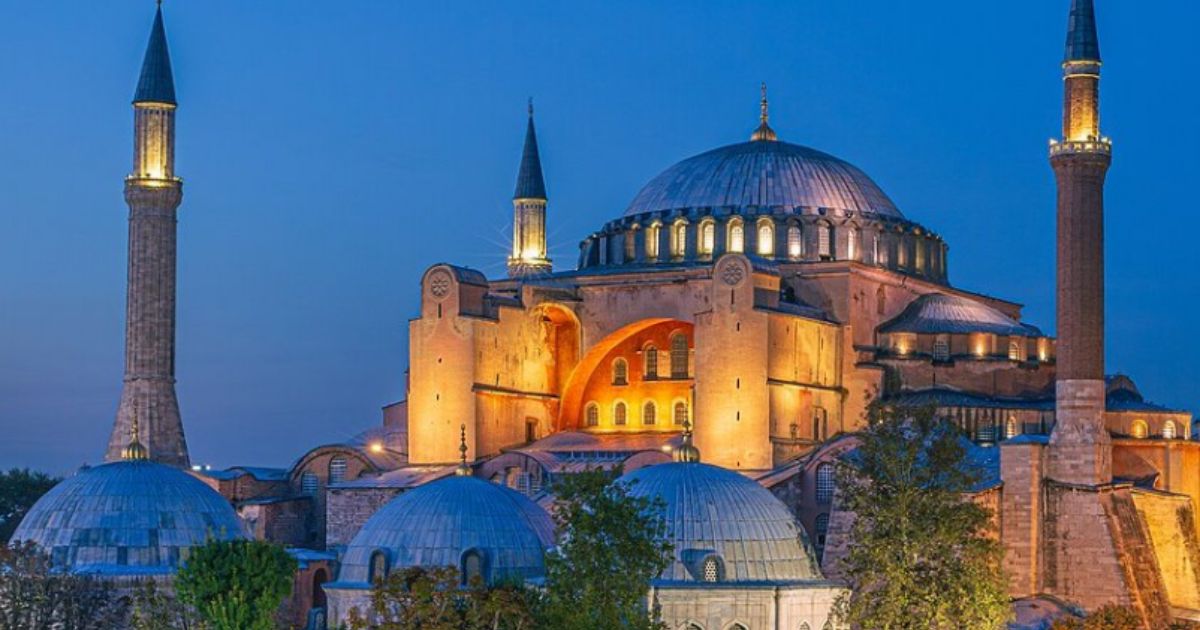
One of the most important historic landmarks in Istanbul, the Hagia Sophia is facing new heritage problems after its re-conversion to an active mosque, the renewal of restrictions on non-Muslim visitors and doubts about restoration work.
The monument was a great Christian cathedral until the Ottoman conquest of Constantinople, when it was converted into a mosque. It was converted into a museum by Mustafa Kemal Atatürk in 1934. However, the Turkish government returned it to the religious sphere in 2020, and its status as a UNESCO World Heritage Site has been questioned.
Its transfer from the Ministry of Culture to the Directorate of Religious Affairs has heightened even more concern among heritage professionals and international observers.
Restoration Work Raises Transparency Concerns
The large-scale restoration projects have raised questions about whether the historic and cultural layers of Hagia Sophia are receiving adequate attention.
It is not known if the restoration studies have fully taken into account the historical phases of the monument and international conservation guidelines, said Eleni Methodiou, former vice president of the World Heritage Committee under UNESCO.
She stressed the necessity of employing compatible materials and only intervening when absolutely necessary to preserve historic buildings.
The UNESCO/ICOMOS mission in 2024 also recommended the public dissemination of exhaustive documentation and digital records of the monument.
Visitor Restrictions Draw Criticism
Since January 2024, Turkey has granted separate access for tourists and worshipers.
Non-Muslims are required to enter the upper gallery and pay an entrance fee of 25 euros, but they are allowed to pray on the lower level free of charge.
This arrangement limits access to the main prayer area and some of the historic mosaics, including the 3rd-century A.D. Virgin Mary mosaic, the Platytera.
Heritage experts have slammed the restrictions, arguing they are separating visitors by religion and nationality, which is contrary to the monument’s universal cultural importance.
World Heritage Watch chief executive Stephan Doempke said the visitor system needed rethinking to allow equal access to the historic site.
Physical Damage and Preservation Concerns
There are also concerns about the protection of the building, as the restoration has also reported damage to the Imperial Gate and marble floors.
As far as large congregations are concerned, experts have been concerned about humidity and temperature changes for both visitors and worshipers. Carpet and fabric screens on walls may cause problems for sensitive historic materials because moisture can be trapped beneath them.
“Continuous surveillance of the building’s internal environment is necessary to guarantee the preservation of its mosaics, plasterwork and other historic elements,” said Turkish architect Ibrahim Canbulat.
UNESCO Review Expected in 2027
The religious use of Hagia Sophia is now being questioned regarding its compatibility with the provisions of the World Heritage List for religious sites, which was amended in 1985.
A new UNESCO/ICOMOS mission will be undertaken to Istanbul in 2026, and the issue will be taken up again by the World Heritage Committee at its annual session in Istanbul in 2027.
The reviews may trigger a discussion on the management of the monument, on the ways of restoring monuments and on the protection of various cultural and historical values.