They contain a third of the world’s remaining elephants, tigers and panda bears, as well as the final 10 vaquitas (or Pacific porpoises). These sites are home to more than 60% of the world’s species, including some 40% found nowhere else. They also include the world’s tallest tree (more than 115 meters tall) – a coast redwood named Hyperion in Northern California – and a seagrass meadow covering more than 200 square kilometres, or 28,000 football fields, in Australia.
UNESCO sites (including World Heritage sites, which are protected for their cultural or natural heritage, biosphere reserves and global geoparks, which are known for their geological features) are home to a remarkable diversity. UNESCO has, for the first time, together with research institutions, conducted an assessment of the conservation status of these sites. The report, titled “The conservation status of UNESCO-listed sites: an assessment of the benefits for wildlife and plants”, was released on Tuesday, April 21, and says that while these areas, totalling more than 13 million square kilometres (roughly the size of China plus India), are coming under increasing pressure, they continue to be of enormous benefit for animals and plants.
The new report’s authors used data from the “Living Planet Index” published by the World Wide Fund for Nature (WWF) to show this. The index shows that the world’s population of wild vertebrates has fallen by 73% in the last half-century. But when this index is applied to only UNUSCO’s 2,260 sites, the results show that populations in these sites have remained relatively stable.
“Of course, sometimes these populations have increased or decreased, for example, because of poaching,” said Tales Carvalho Resende, lead author of the report. “But what is interesting is that when the populations declined, they were later able to recover because of the actions taken. UNESCO sites are well-equipped to act and reverse the trend.” For example, northern India’s Kaziranga National Park now holds the world’s second-largest population of one-horned rhinoceroses, which were once threatened.
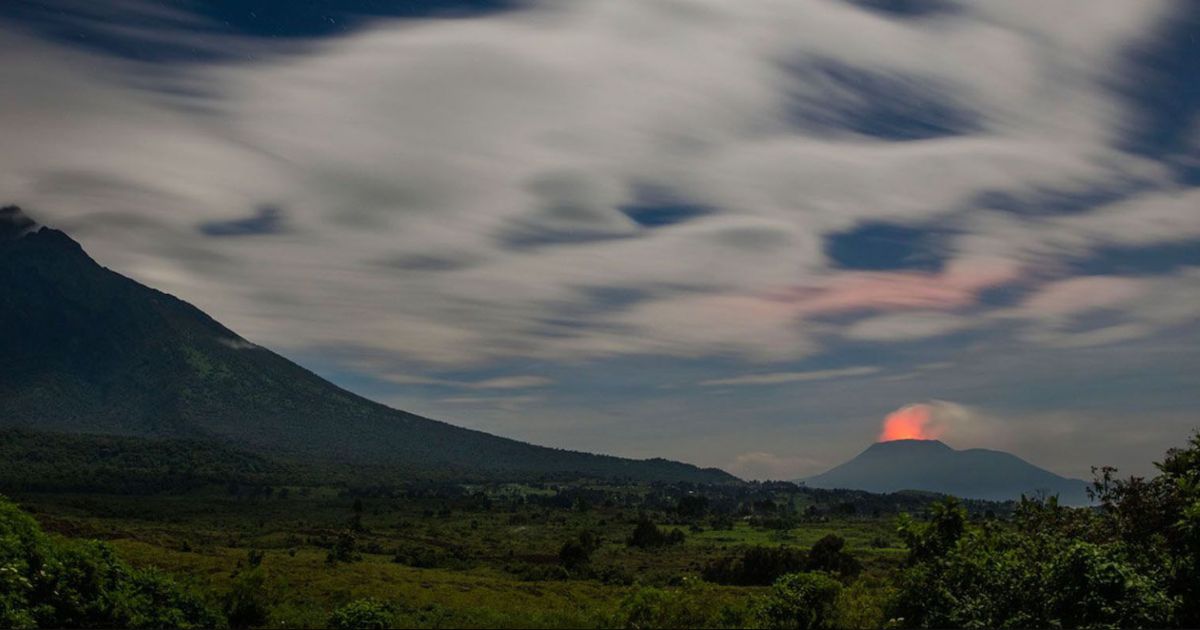
Virunga National Park, a World Heritage site in the Democratic Republic of Congo, has protected mountain gorillas, whose population is increasing at a rate of 5% annually. Many UNESCO sites are important stopovers for migratory birds, and millions of monarch butterflies spend the winter in a biosphere reserve northwest of Mexico City. These sites also contain 240 billion metric tons of carbon, the equivalent of almost 20 years of global carbon emissions at current rates, according to the report, created in partnership with some 20 research institutions.
The report confirms the benefits of conservation efforts, but also identifies an increase in threats. Most of the 2,260 sites are exposed to high environmental pressures associated with human activities (pollution, destruction), or the effects of global warming (drought, flooding). Exotic species have been found in 80% of the sites, and threats linked to climate change have grown by 40% in 10 years, with fires now the primary driver of forest loss.
Melting glaciers, dying coral reefs or forests that become a source, rather than a sink, of carbon – by 2050, 25% of these sites could reach a point where they are pushed beyond a tipping point, unless action is taken. A report published in October 2025, which looked only at the 271 natural World Heritage sites, revealed that their conservation outlook has worsened, largely due to climate change.
The authors of the report urged swift action to curtail greenhouse gas emissions, more action to restore ecosystems, improved international cooperation and increased inclusion of Indigenous peoples and local communities in the management of these sites. “These sites, the most remarkable places on Earth, are vital to our future,” stressed Lidia Brito, UNESCO’s assistant director general for science. “They are already part of the solution; now we must step up our efforts.” These areas are home to 10% of the global population.