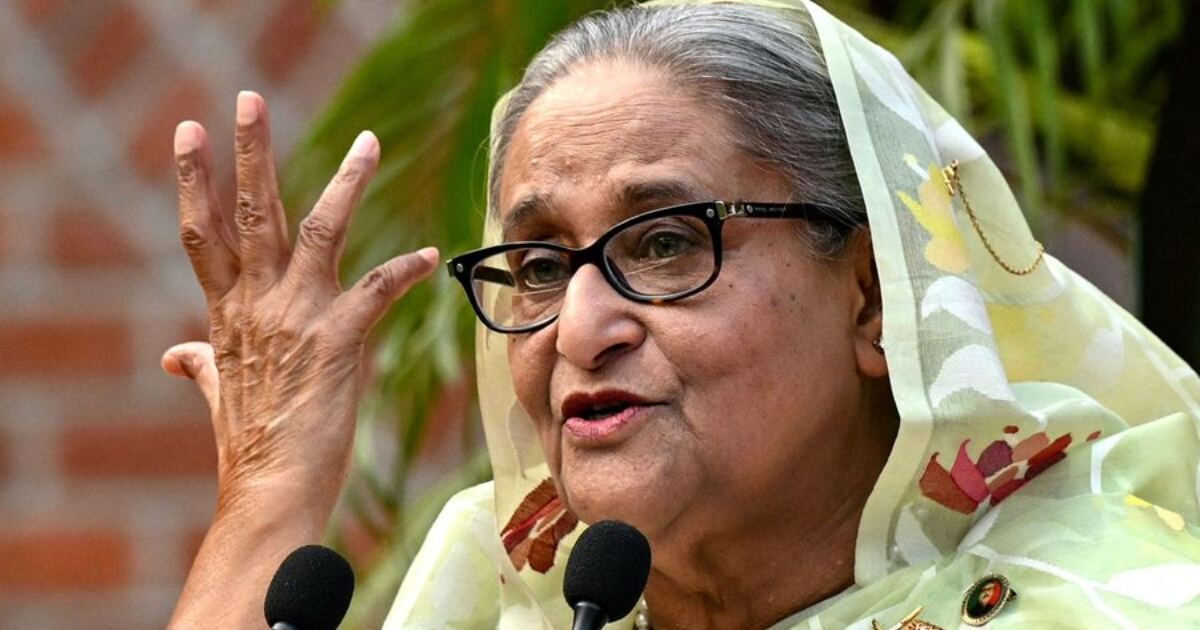
Even with the serious threats, legal and physical persecution, looming over her, former Bangladesh Prime Minister Sheikh Hasina says she’s planning to go back home. She is 78 now, and she admitted that trouble could await her as soon as she arrives. In her words, she understands very clearly that she might be killed, arrested, locked away in prison, or even deported once she goes, but she’s going anyway, because her people are calling her.
The massive student-led uprising brought an end to Hasina’s 15-year rule in August 2024. She was able to get away by helicopter to India as protesters toppled her home. The United Nations says that the violent crackdowns in the last months of her government left up to 1,400 people dead.
A court in Dhaka in November sentenced the former leader to death by hanging for committed crimes against humanity. Hasina promptly rejected the verdict, calling it “political vendetta in the name of the rule of law”.
Navigating Extradition and Defending Her Legacy
Since then, Hasina has been living in an unknown city in India. Since the election of the Bangladeshi prime minister, Tarique Rahman, who assumed the powers of the prime minister’s office in February, the relations between Dhaka and New Delhi have slightly settled down.
Her extradition was requested by the current Bangladeshi government. The Indian Ministry of External Affairs had said that the request is being looked into. Hasina, however, asserts that her return is not linked with any diplomatic pressure and she has been treated with dignity in India, adding that she has never discussed extradition with authorities.
The new government in Dhaka has promised Hasina fair trial in pending cases if she returns. In the meantime, Human Rights Watch has voiced concerns about the current laws in the country. The organization highlighted the need for accountability of perpetrators of past abuses, but many of the prosecutions carried out by the new government are not meeting international standards of fair trial.
Hasina strongly defended her record despite the widespread allegations of her suppression of the opposition, compromising the courts and orchestrating state violence. She said the claims against her were “campaigns” that were “politically engineered”, and any time a crime was reported, an investigation would always be launched.
The student movement, said Hasina, was not typical; rather, it was a very well-organised operation in line with hidden instructions to topple the Government of Bangladesh with violence. She showed sympathy for families losing loved ones during the unrest but she refrained from giving an apology for the events as such.
She evaded the question when asked about her political future, especially after being effectively barred from her Awami League party. In the last, Hasina said that her aim is not to hold on to power but service to the people.