The UNESCO World Heritage Committee recently added six new sites to the list, recognising their outstanding universal values, during its 48th session in Busan, South Korea, with all of them from MENA.
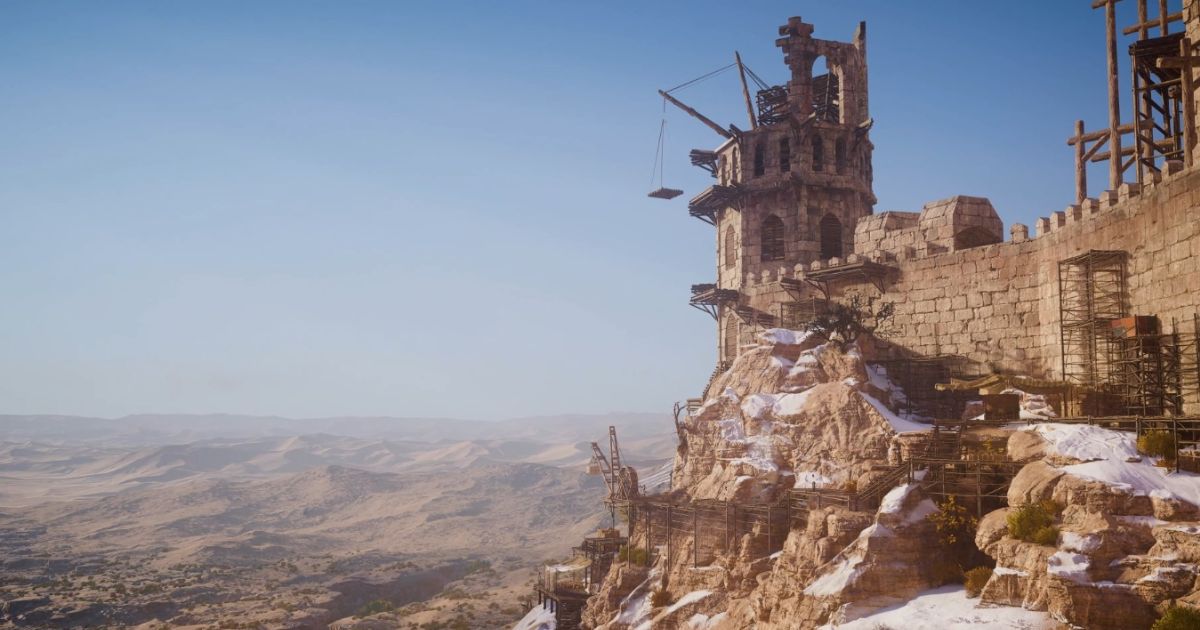
The six sites include the first natural World Heritage site of the UAE – Wadi Wurayah, the biodiverse Aqaba Marine Reserve in Jordan, the charming town of Sidi Bou Said in Tunisia, the historic castles of Mount Amel in Lebanon, the ancient village of Sebastia in Palestine and the medieval architecture of Alamut Castle and Related Fortifications in Iran.
The inscriptions coincided with the rising threats to regional heritage due to conflict, climate change, encroaching urban sprawl, and looting, among other factors, and renewed calls for better conservation.
“This year’s inscriptions to the World Heritage list illustrate two concurrent scenes in MENA,” wrote Maha Salah, a writer and journalist at Al-Dostour newspaper in Egypt who specialises in archaeology.
On one side of the coin, there are stable and forward-looking states that are developing their environmental and cultural capital, Salah told Xinhua, referring to Wadi Wurayah, Aqaba Marine Reserve and Sidi Bou Said as examples of how the preservation and protection of their cultural and environmental heritage are being reinforced to enhance sustainable tourism.
Meanwhile, Lebanon’s, Palestine’s and Iran’s new entries highlight the importance of heritage recognition in the protection of sites during this time of unrest in the region, Salah said.
Global institutions are putting such landmarks under quick international scrutiny and better protection mechanisms, thus setting a red line in the sand. “It is a tribute to the one thing that persists as the world is divided and physical security is declining – the will of the people to protect shared humanity and shared heritage.”
“Preserving cultural heritage in the regions affected by conflicts is getting challenging,” said Hussein Bassir, director of the Antiquities Museum at the Bibliotheca Alexandrina and expert in cultural heritage.
“As frontlines change and zones militarise, boots-on-the-ground access is null and void,” Bassir told Xinhua. Local heritage guardians are left stranded, and historical layers over many millennia are at risk of direct shelling, neglect or collateral damage.
The UNESCO recognition could be used to move forward in mobilising international conservation support, he said, but warned that long-term protection required ongoing regional cooperation.
To preserve and protect our common heritage, a common regional defence mechanism is needed because when a monument of the ancient world is lost, history suffers a loss of a chapter that can never be rewritten.