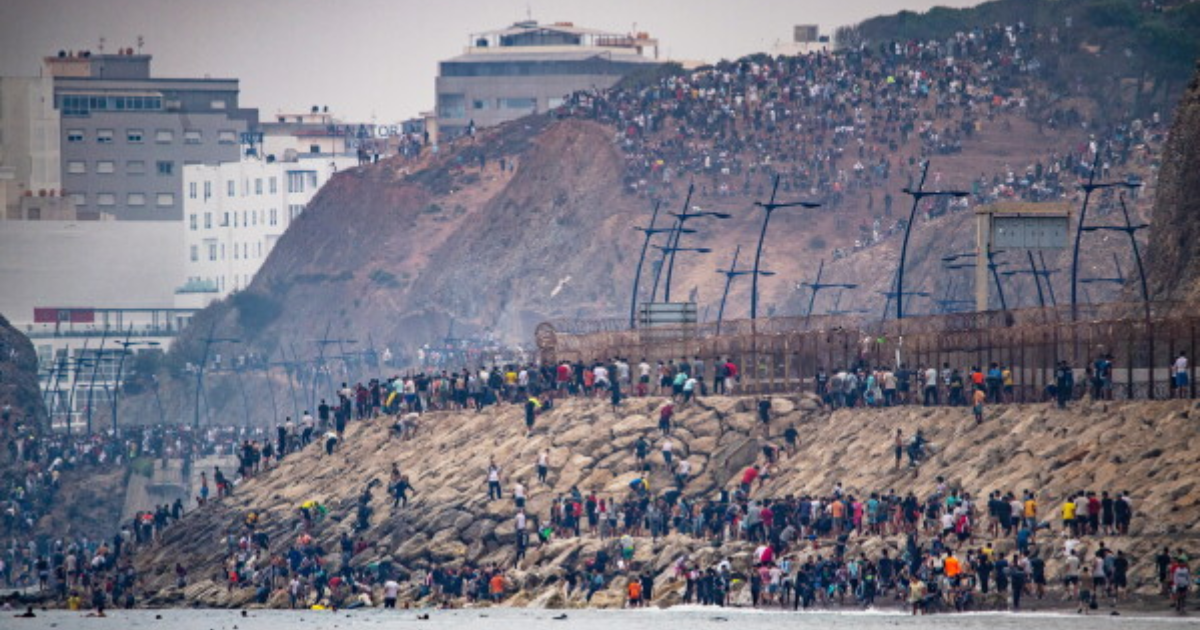
EU interior ministers will meet Tuesday in an emergency session to discuss the sudden influx of more than 50,000 migrants into the Spanish North African enclave of Ceuta. The influx has laid bare a deep rift between the bloc in the policies of border security and migration.
EU member states and experts from the Frontex border agency agreed unanimously to hold the summit during a meeting of the two groups on a chilling weekend. The crisis has had a terrible human impact: Spanish police have stated that at least 67 people were drowning or crushed as they tried to cross a breakwater barrier to get past.
To counter this, Spain has placed a 500-metre floating wall at its border with Morocco, stopping new crossings. More than 48,000 people were quickly brought back to Morocco after military action, but Ceuta’s president, Juan Jesús Vivas, warned that thousands are still in the city and high security is still needed to ensure the safety of the public.
Divisions Over Schengen and Border Control Erupt Across the Bloc
The crisis caused a major crisis in the diplomacy of member states. The Government of Spain was dealt a severe rebuke by Italy, with the backing of Denmark, Poland and Sweden, for its management of the situation. Indeed, Italy even placed a temporary ban on cooperation with Spain on the free movement of persons for a month, arguing that the migrants were due to Madrid’s recent plan to regularize illegal immigrants.
In a letter sent to the European Commission and other top officials, Spanish Prime Minister Pedro Sánchez strongly rejected these accusations. He denounced disinformation and pointed out that Spain’s borders are much less porous than Italy’s. During the weekend meetings, suspected Russian disinformation campaigns seeking to further divide Europe were also discussed.
The meeting of the EU’s leaders on Tuesday was called by the Government of Ireland, currently in the EU presidency. Irish Prime Minister Micheál Martin said he was closely monitoring the situation, and the Irish Justice Minister said he shared Madrid’s pain in dealing with the border crisis.
Other European neighbors have also vowed to support Spain. British Prime Minister Andy Burnham has offered support and the French Ministry of the Interior has firmly refused consideration of suspending Spain from the Schengen zone, stressing good bilateral relations.
The Spanish Government believes the sudden influx is driven by criminal groups exploiting recent changes to the law on at-sea interceptions by the Supreme Court.The Spanish Government is mostly blaming the influx on the recent Supreme Court’s decision on at-sea interceptions. But there are some experts on migration who say it is much more complicated than that, as there has been a steady rise in arrivals before the ruling. The event is a far cry from the 2021 crisis when 10,000 migrants stormed Ceuta gates while diplomatic tensions between Madrid and Rabat over the Western Sahara issue grew.