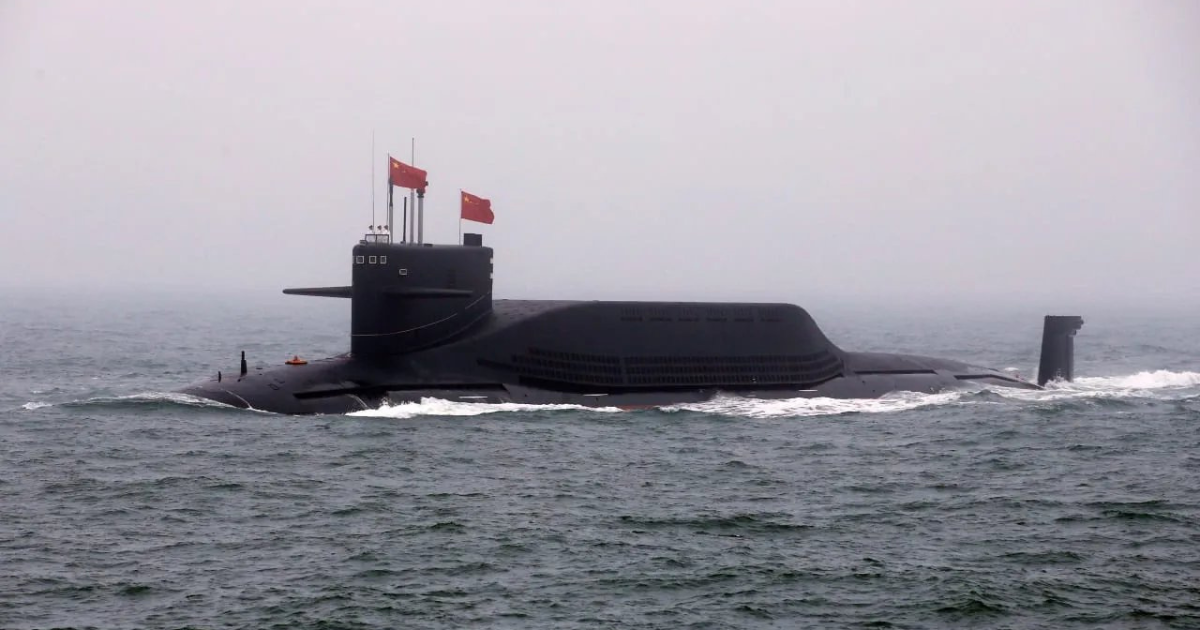
When China recently fired a ballistic missile from its submarine into the southern Pacific Ocean, it was a serious chance for its military leaders to test its new nuclear arsenal. The test on Monday allowed officials to study the complex process of command and control of nuclear-armed submarines and how these forces communicate, analysts said.
The Chinese Communist Party, which has total control over government, has a huge problem with operating undetected. “Logistics problems still exist, but China is quickly moving towards having a fully functional maritime strike capability,” security experts say. The current submarines may not be able to easily intrude on the continental United States without being detected, but it’s clear they can hit targets such as Guam and Hawaii with ease.
Strengthening the Nuclear Triad and Second-Strike Strategy
The missile had a dummy warhead and immediately attracted criticism from the regional powers. The U.S. Department of Defense classified the launch as an intercontinental ballistic missile test. These foreign worries, however, were brushed aside as “pure distortion and hype,” the Ministry of National Defense of the People’s Republic of China said the drill was routine, lawful, and aimed solely at protecting national security.
The analysts confirmed that the missile was launched from one of China’s six Type-094 nuclear-powered submarines. The ships, which are mainly based in Hainan Island, play crucial roles in China’s second-strike ability. China’s “no-first-use” nuclear strategy makes its reliance on submarines particularly strong to withstand a first strike and then retaliate.
The United States and its partners use a network of hidden sensors under the water and aerial patrols to combat this emerging maritime danger. The Chinese Navy has been tracked by advanced surveillance planes, including the U.S. Navy’s P-8 Poseidons, in recent years at critical maritime choke points.
Despite these concerted tracking endeavors, a recent Pentagon report revealed the Chinese are now making a nearly continuous deterrence patrol. But a recent study in the Bulletin of the Atomic Scientists said it was not clear whether they are armed with nuclear warheads when they are on their normal patrols, especially in light of the recent political purges in the military ranks of China.
To strike the continental United States these submarines would have to move through enemy waters into the western Pacific and put into use new and more powerful weapons such as the JL-3 missile, which has a range of 10,000 km. The state run Global Times published an editorial after the successful test on Tuesday, hailing the launch. A publication said the event has confirmed that China is moving forward in its military efforts to bolster its “nuclear triad” and thus to deter foreign forces from launching pre-emptive military strikes on the country.