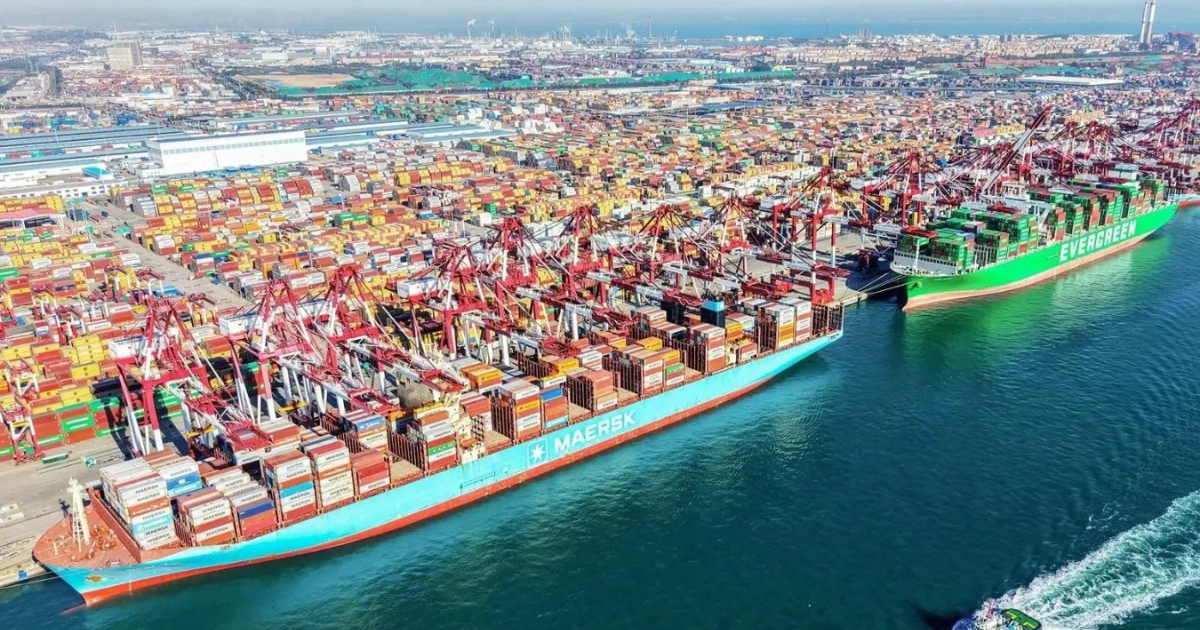
China, which is already the second-largest global economy, is now set to record its highest foreign trade figures yet as it achieved a $133.5 billion trade surplus for September. The trade surplus was the highest since January 2025. It was possible due to a massive year-on-year growth of 36.3% in exports, as per the statistics released by the General Administration of Customs.
When it comes to imports, this figure for the same period, comparing to the previous year, was no smaller, since it increased by 31%. But if we look at the total trade deficits as of the end of the same month of September, this amount has increased to a staggering $938.1 billion in total.
The statistics come before European Union chief of trade, Maros Sefcovic, met with Beijing. Speaking on behalf of the European Commission, Sefcovic had high-level discussions which focused on the “unsustainable” trade imbalance, which currently stands at almost one billion euros a day.
In September, Chinese exports to the European Union (EU) grew 25.3%, as imports stayed flat. This trend also drove the trade surplus with Europe to unprecedented levels, prompting economists to caution that the record trade surpluses will probably further spread current trade tensions.
The diplomatic maneuverings to rebalance international trade have been made some steps recently. Sefcovic and his PR China counterparts reached a preliminary deal to cap Chinese hybrid vehicle exports to Europe. This is a first step, and Brussels is reportedly interested in broadening restrictions to other critical industry sectors.
Meanwhile, trade is changing hands with the United States. September was a rebound from an historically low base, due to previous punitive tariffs, as shipments to the U.S. increased 39.6%. The recovery comes after a recent meeting between President Xi Jinping and Donald Trump at the White House, where both pledged to further extend their trade truce in October 2025 and to discuss reductions in each other’s tariffs.
Proliferation in demand for AI infrastructure globally is a primary driver of China’s current export success. The sum of exports for computer equipment and integrated circuits greatly exceeded analysts’ estimates. Integrated circuits’ dollar-value exports increased by 136% globally, albeit with just a 1% increase in volume due to the soaring price of the AI products.
Likewise, the volume of vehicle exports grew by 56.3% from last September, reflecting strong overseas demand for China’s electric vehicle exports. The export-led push is key to Beijing’s economic security, particularly given the fact that domestic retail sales rose only 0.4% year-on-year in August.
China is highly dependent on foreign markets to realize its yearly economic goals and could experience drags. The International Monetary Fund recently revised its growth projections downward to 4.5% this year, and to 4% by 2027, due to economic weaknesses within the country.