Garment workers in Bangladesh resumed strikes on Tuesday for the fourth straight day, as violence erupted again after some factories, especially in the Mirpur area of Dhaka, reopened in the morning.
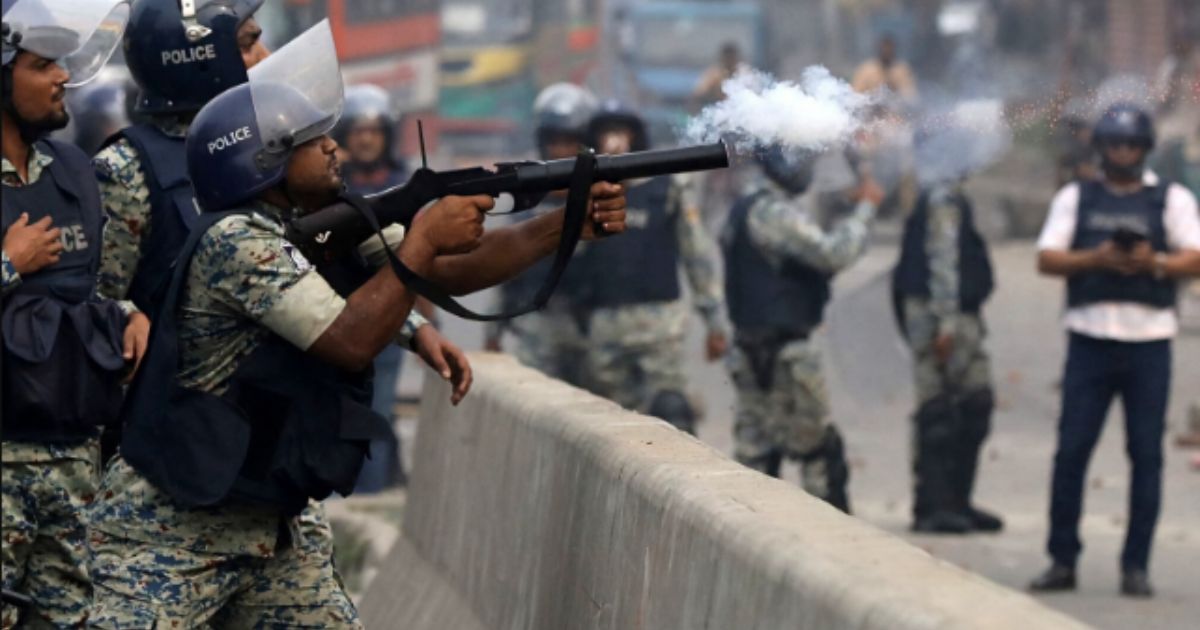
Although workers had started returning to factories as operations gradually resumed, the situation became tense again as garment workers came out of factories and took to the streets. Police officers were called in to quell the violence and stop it from worsening.
There was continued police presence in Mirpur where some factories had reopened, but there were still some security concerns. The garment sector experienced some recovery, but new strikes showed that the situation remained tense.
The new developments coincide with the garment workers’ ongoing protest for a significant raise of their minimum wage, which is currently BDT 12,500, far lower than their demand of BDT 30,000 per month.
Earlier on Monday, the Home Minister of Bangladesh, Salahuddin Ahmed, had claimed that the industrialists and factory owners who were associated with the Awami League government were fuelling unrest in the country’s garment sector.
After a discussion with the leaders of the Bangladesh Garment Manufacturers and Exporters Association (BGMEA) and the Bangladesh Knitwear Manufacturers and Exporters Association (BKMEA) at the Secretariat on Monday, Salahuddin said some of the former lawmakers and ministers were involved in inciting and stoking the unrest, The Daily Star reported.
“Some of them were MPs, ministers or state ministers at one time or another,” he said, as quoted by The Daily Star, adding that it has been proven that these industrialists are behind the unrest.
The minister claimed that this sort of organisation was using workers to disrupt the area by blocking the roads, setting fire to buildings and engaging in violence against the people. He also alleged some people working, who were under the banner of labour organisations, were involved in these activities.
The government had gathered some of the videos and audio recordings, and some people have already been brought to justice, said Salahuddin, who added that the ministry had also gathered evidence of the incidents of violence.
It had to be clarified that those involved in activities against the interests of workers, who violate law and order and conspire to create instability, will be dealt with sternly,” he added, quoting The Daily Star.
They also accused some factory owners of “deliberate closing” to exacerbate the situation, reports The Daily Star. BGMEA and BKMEA leaders had agreed to give the government a list of factories that are allegedly being closed with ulterior motives.
Authorities had also wanted information about labour leaders and unions allegedly fueling the unrest.
The Home Minister said that real workers in the garment sector and their bodies were not behind the violence, as they would not want to put their business at risk.
The government had first tried to remedy the situation but the government was warned of possible unrest via intelligence. But now there was a directive to law enforcement to be tough on attempts to incite violence or to disrupt public order.
On Sunday, the government had set up a minimum wage board to address workers’ demand for a pay rise, Salahuddin said.
The new minimum wage will come out of the discussions, he said, adding that the current wage review period is three years and ends in December.
Some factories in Gazipur and Kaliakair, which were closed on Sunday after the violence, reopened on Monday, Salahuddin added. Several other units stayed closed, however, for reasons other than the protests—such as lack of export orders and financial problems.
The demonstrations have been reported in various industrial quarters, such as Gazipur’s Konabari and Chandra and parts near Dhaka where there are many garment factories. Some factory operators had stopped their production due to fears of attacks and security concerns.
While the factories are partially reopened, heavy police presence and renewed demonstrations in Mirpur on Tuesday suggest the situation is still tense in Bangladesh’s garment industry.