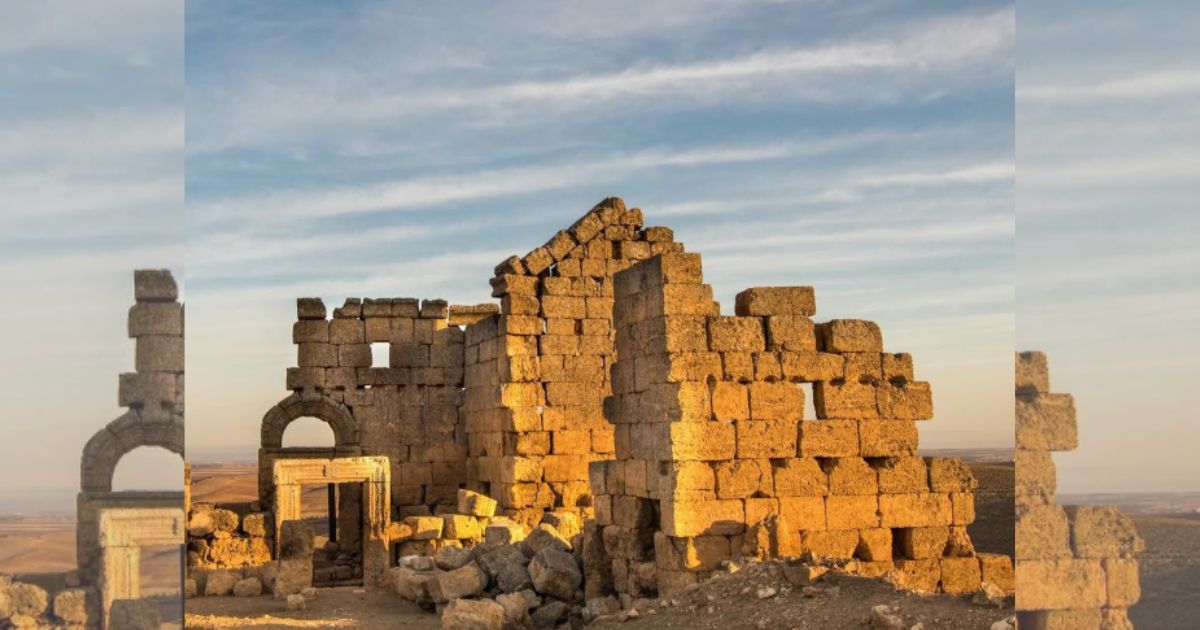
By the time the UNESCO World Heritage Committee convenes in July 2026 to consider potential candidates, Turkey is virtually guaranteed of a new addition, one that is unravelling a long-lost ancient cult of war, so secretive that the rites of its cult were believed to have been lost to the world. With a successful implementation, Zerzevan Castle and Mithraeum will be the fifth UNESCO World Heritage site in the Tigris and Euphrates River valleys, which will generate the desire to explore the country in the little-known southeastern part.
“Recent digs at Zerzevan Castle have uncovered one of the most well-preserved and possibly oldest Mithras sanctuaries in the Roman Empire, which has made a splash in the local and international archaeological scene,” says Aytaç Coșkun, a professor of archaeology at Dicle University and director of the excavation site at Zerzevan Castle. Since 2020, the site has been on the tentative list of the UNESCO World Heritage.
“Despite the fact that many Mithras temples are known to have been all over the world, very few of them have managed to survive to this day,” Coșkun says. “The rituals carried out were highly confidential, and no one outside the religion was allowed to know about the beliefs, making archaeological discoveries highly significant in enabling us to learn about this enigmatic sect.”
What has been discovered
Excavations have revealed parts of the castle, such as a 60-foot-high watchtower, and traces of enormous city walls that were up to 45 feet tall since work started in 2014. Researchers have recorded a church, administration buildings, storage rooms and residential quarters, with only a part of the hilltop space discovered. Some of the discoveries that have been made public this year: A highly advanced water storage and transport system, which Coșkun calls “an engineering wonder” with 63 huge underground cisterns and waterways outside the castle walls.
However, it is the Mithras temple, which was found in 2017, and its discoveries, which have captured the attention of the world. The militaristic religion, which was open to men only, and devoted to an ancient Indo-Persian sun god, originated in Iran and in the Roman world of the first to fourth century C.E. before being outlawed by the Christian revolution. The presence of images of bulls cut into the walls, sacrificial hooks suspended on the ceiling, a bowl and a pool, intended to receive blood, testify to the popularity of animal sacrifice during rituals.
Director General of Culture Heritage and Museums, Birol İnceciköz says that “visitor interest in Zerzevan Castle and Mithraeum has surged over the past few years as excavation and restoration work is undertaken. When Zerzevan Castle and the Mithraeum are put on the UNESCO World Heritage Site, visitor numbers will be increased dramatically in the area.”
With swelling visitor numbers in mind, the site has been undergoing upgrades, such as the opening of a new visitor centre this spring.