Social Media giant Meta is back in the news for content regulation in Australia. U.S.- based tech firm Facebook, responsible for social media platform Facebook and its two mobile apps, Instagram and Threads, appeared before the Royal Commission into Antisemitism and Social Cohesion to address issues on how it regulated antisemitic content on its platforms.
Tech platforms were moderating content, and that will be one of the focuses of the investigation.
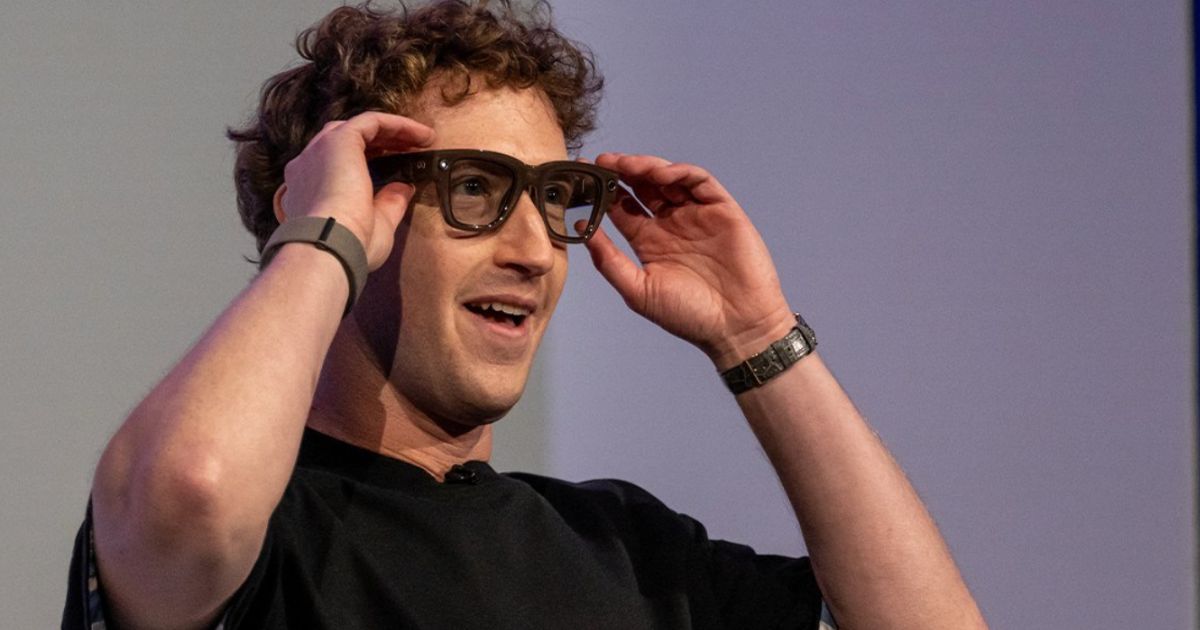
The owner of Meta, Mark Zuckerberg, has released a set of updates in January 2025, with one of those updates being the removal of fact-checking for community notes in which people could contribute.
According to the statement provided by Meta, Meta has moderated 5.8 million Facebook posts from October to December 2024, but after the updates, it has been reduced to 1.2 million from July 2025.
According to Benjamin Good, Global Director of Content Policy at Meta Platforms Inc, they were trying to find the right balance between banning hate content and freedom of speech.
“That’s a really serious issue that we have to be careful of in terms of hate speech – let’s say hateful conduct – where we don’t go overboard and say we have to have as much content as possible taken down, but we have to ensure that if we do that, we’re not going to silence people who are from the groups that we are trying to support by speaking out against hate.”
Mr Good also states that the new policies on content moderation enable more discussion on topics such as gender and immigration, and that the company would not tolerate anything hateful that is antisemitic in nature.
However, Meta also stated to the commission that it has no specific policy to mitigate against antisemitism.
Rather, it is based on a “suite of policies” with a multi-faceted approach to the issue, as Mr Good states.
“The rationale for that is that antisemitism is an evil and complex issue; it changes, it is coded, and it sadly manifests in other subject matter, so we need to have different policies to apply to antisemitism.”
At present, there are two methods that Meta uses, including machine learning and A-I to delete posts that are determined to contain hateful content, and addressing complaints from users, says Mr Good.
The investigation, however, also found that Meta wasn’t able to take down a Holocaust denial post from Instagram from 2020 to 2023.
During this period, Meta received six reports about the post, two of which were reviewed by human moderators.
Kick, a live streaming platform founded by Australia’s billionaire Edward Cravan, was also summoned to the inquiry as well as Bespoke, a company that had once been owned by the late Mark Zuckerberg. In addition to Meta, a live streaming site was also present before the inquiry, as was Bespoke, a company now owned by the late Mark Zuckerberg but originally founded by him.
Tal-Or Cohen Montemayor of the database CyberWell that monitors online antisemitism told Commissioners that just 50% of antisemitic posts identified by CyberWell were deleted by social media platforms.
“Also, there’s the way that social media responds to the unevenness and the differences, which are also narratives of self-victimisation, and if that’s seen as being in violation of the policy, then most of the time it will have to say something that is highly contest-dependent, and when the platform says something that is highly contest-dependent, that’s up to them.”
The hearing comes after eSafety Commissioner Julie Inman Grant gave robust comments, following continued criticism. The hearing comes on the heels of robust comments by eSafety Commissioner Julie Inman Grant, who followed on from continued criticism.
She has recently been critical of “X”, which was previously known as Twitter, for failing to take down the videos of the terror attack in December in Bondi Beach that killed 15 people.
“They are mainstream platforms that want to distribute and monetise this, we are not going to allow them to distribute this any worse than what you would see in a gore movie,” said “we fight hard” against allowing X more Bondi content.
Muslim communities in Australia have reported being targeted with more online abuse than ever before, according to a new report.
In late June, a Muslim man with three children was stabbed outside a mosque in Melbourne’s south. In Melbourne’s south east, a Muslim man, father of three, was stabbed outside a mosque in late June.
The man told AAP on condition of anonymity that he was videotaped and the video was uploaded to the internet, sparking anti-Muslim comments which were termed “shocking”.
The Australian Federation of Islamic Councils states the incident is part of a growing trend of Islamophobic hostility and anti-Muslim sentiment in Australia.