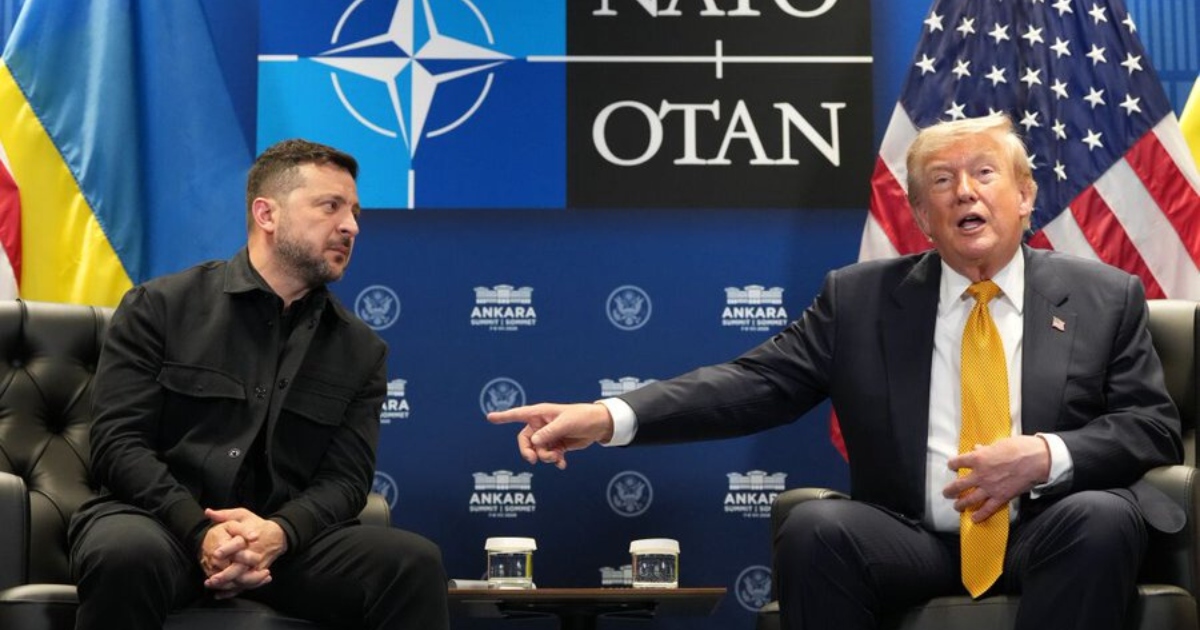
At the July 2026 NATO summit in Ankara, Turkey, U.S. President Donald Trump expressed his appreciation for the “tremendous unity” among NATO allies on defense spending to reach the lofty goal of spending 5% of GDP per year.
The European leaders expressed their renewed commitment as well. European “free-riding is over,” said Germany’s Chancellor Friedrich Merz, citing the word of outgoing UK Prime Minister Keir Starmer, who said the alliance was “stronger and more united” from the talks.
Geopolitical Shifts, Defense Pacts, and Ongoing Conflicts
But the relations were faring much better between the US and Turkey. Erdogan met with Trump to discuss cooperation in the field of shipbuilding, among which are frigates and submarines, in the Turkish Navy. Trump confirmed he is thinking about selling F-35 fighter aircraft to Ankara, although most of the US defense sanctions against Turkey have been removed. Erdogan promised to hit the 5 per cent defense spending mark by 2030 and said that the country would be spending $24 billion on a new missile defense project, dubbed the “Steel Dome”.
Ukraine has secured pledges from NATO allies to provide €70 billion worth of military aid for 2026, with the exception of the Czech Republic. In bilateral talks, Trump pledged to give licenses for the manufacture of Patriot air defence systems directly in Ukraine to the Ukrainian President Volodymyr Zelensky.
Meanwhile, the battle raged on the ground as leaders met. At least seven people were killed in Russia’s latest ballistic strike against Kyiv in a series of attacks in the city in under a week. In Ukraine, the forces struck deep in Russian areas with shots fired at an oil pumping station in the Bashkortostan republic and at shadow fleet tankers in the Sea of Azov.
The European defence capabilities were strengthened by a number of significant financial and operational enhancements. The UK will spearhead a dozen European countries in a 10-year joint investment of $50 billion in next generation long range precision missiles, the UK government said.
Furthermore, the Baltic air policing mission was officially changed to an active air defense mission, so that air policing pilots could shoot down airborne threats. The allies also committed to investing €27 billion in the improvement of the fuel storage infrastructure in the alliance and Romania, Bulgaria and Turkey enhanced their Black Sea anti-mine operations to safeguard underwater pipelines and energy grid infrastructure.
Trump made a number of abrupt geopolitical turns around what can be considered the “business of alliances.” He informed Congress that he will issue a rescission of Syria’s designation as a State Sponsor of Terrorism after a bilateral meeting with Syrian President Ahmed al-Sharaa, a 45-day congressional review. On the other hand, Trump said that a temporary ceasefire to calm the conflict between Iran and Israel was “over for a while.
Tensions arose between the two continents with the issue of trade and territory. Trump’s controversial request for the U.S. to buy Greenland was revived as the Arctic island was described as a “big problem” in a call to action that was met with immediate denials by Danish Prime Minister Mette Frederiksen and EU officials. Last, Trump threatened to stop all U.S. trade with Spain because of an issue with defense spending, but Spanish Prime Minister Pedro Sanchez said that was “business as usual.