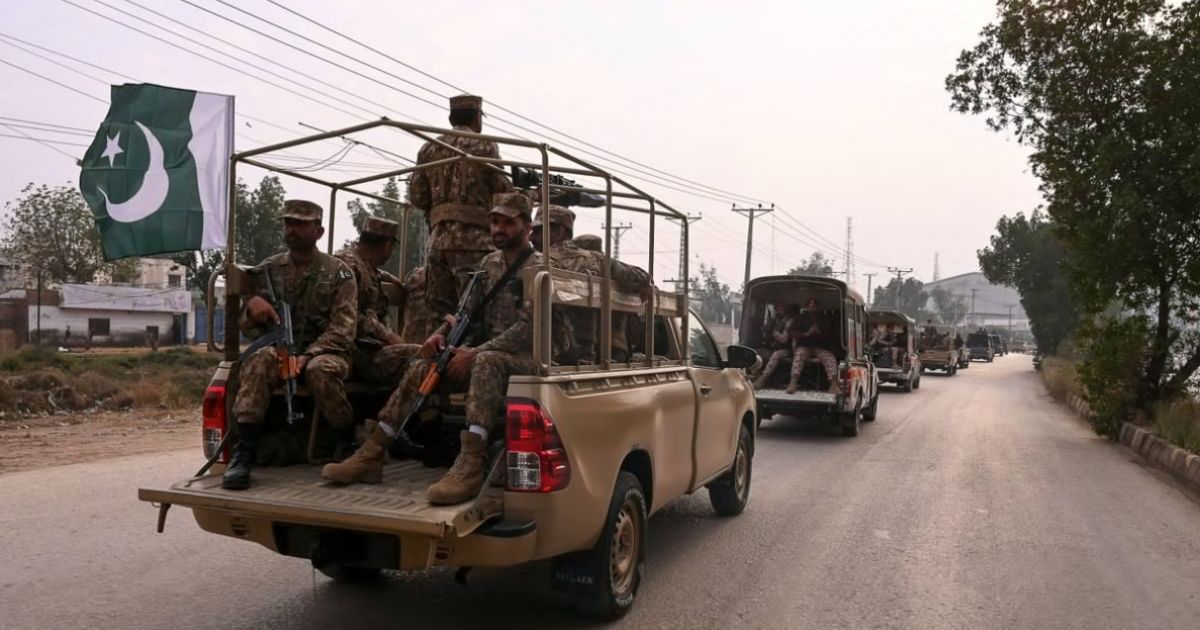
Pakistan’s security forces on 5th June shot dead six suspected militants in an intelligence-based operation in the restive Balochistan province of the south-west of the country, amid a rise in militant attacks across the country.
Balochistan is Pakistan’s largest province, and has had a separatist insurgency since before the state’s inception that has grown more violent in recent years. Security forces, government officials, infrastructure projects, foreigners and non-local workers are often targeted by militants.
The military’s media wing, Inter-Services Public Relations (ISPR), in a statement, said a raid was conducted in Panjgur district after reports of the presence of militants of what is called “Fitna-al-Hindustan”, or “Fitna” in Urdu, which is a term used by Pakistani authorities to refer to Balochistan Liberation Army (BLA) militants allegedly supported by India. The allegation is denied by New Delhi.
During the course of the operation, own forces had entered and neutralised various terrorist camps, and in the process of high-intensity encounters, six terrorists from the Indian sponsored camps have been sent to hell, the ISPR said in a press release.
“Weapons, ammunition, improvised explosive devices and a vehicle were recovered from the militants who allegedly were involved in other attacks in Balochistan,” the military said.
The army claimed it was still carrying out operations “to weed out the threat of foreign-sponsored and supported terrorism from the country.”
On June 3, Pakistan’s military took the lives of 17 militants through a series of intelligence-based operations in Balochistan after a train bombing which killed over 30 people last month.
Balochistan is strategically important for Pakistan because of its huge mineral and hydrocarbon deposits, and is a route for the multibillion-dollar China-Pakistan Economic Corridor, China’s flagship project under the Belt and Road Initiative.
The province also hosts the deep-sea Gwadar port on the Arabian Sea that Islamabad considers pivotal to the regional trade and energy routes connecting China, Central Asia and the Middle East.
The central government of Pakistan is accused by separatist groups of exploiting the natural resources of the province and neglecting the local communities. Islamabad denies the claims, stating it is spending on development and security to contribute to the province’s stabilisation.