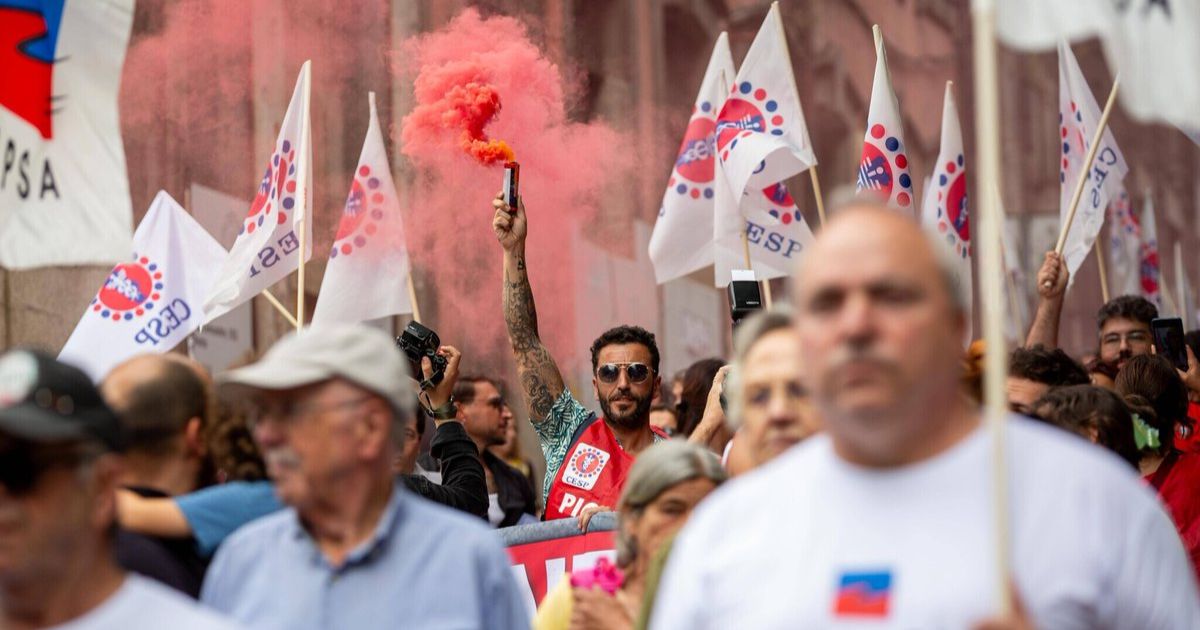
Workers launched a second general strike in six months to disrupt services in Portugal on 3rd June, and hundreds of flights were cancelled, as well as train services and schools, after unions protested against the government’s plans for new labour reforms.
Portugal’s minority centre-right government is likely to pass a bill with support from the far‑right Chega party proposing changes to over 100 articles of the labour code that aim to boost productivity and spur growth after talks with unions collapsed.
The reform would hurt workers by further strengthening “precarious” jobs, further deregulating workers’ hours, making it easier to dismiss workers, and further weakening workers’ rights to strike and parents’ rights to protection, said Tiago Oliveira, leader of Portugal’s biggest umbrella union CGTP, which declared the general strike.
The reform would also mean that young workers would be forced to work “50 hours a week without any additional compensation,” while it would be easier for employers to fire and replace them with outsourced “cheaper labour,” said Rodrigo Azevedo, 30, who works in a bank.
“It’s not just the future of young workers that is threatened, it’s the current in which we play,” he said.
The metro in Lisbon closed, and State-owned railway CP suspended its long-distance and most regional trains.
A nationwide strike of nurses and a shortage of staff in schools closed down schools and postponed most surgeries and appointments in hospitals.
Portugal’s flag carrier TAP said it would fly 79 of its usual 300-plus daily flights on Wednesday, while Iberia was anticipating 50% to 75% fewer flights.
Labour Minister Maria do Rosario Ramalho said that participation by private sector workers — who make up about five times the number of public sector workers — was marginal, and the reform is largely targeted at these workers.
She told reporters that “the overwhelming majority of workers are working and the economy has not stopped.
The reform is to make it easier to fire employees for good reason, to be able to reject reinstatement of employees who have been fired illegally if they have been offered compensation, and to abolish the ban on outsourcing.
An earlier strike in December was the first general shutdown since protests against austerity in 2013.