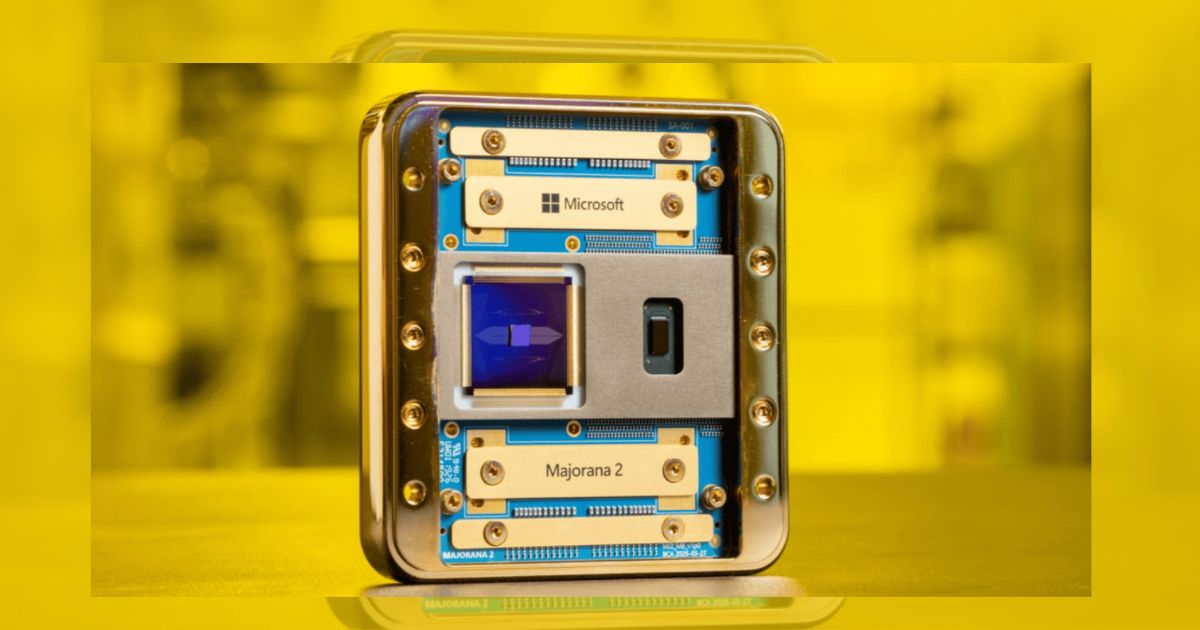
Microsoft announced the new version of its Majorana quantum processor, which it redesigned with the help of AI, on 2nd June. Microsoft claimed the new chip is a thousand times more reliable than its predecessor, cutting the time it takes to create a scalable quantum computer in half.
The new goal falls in line with other companies such as International Business Machines (IBM), which plans for its fault-tolerant quantum supercomputer to be available by 2029.
However, Microsoft has a lot more scepticism to overcome after some blunders. In 2021, the company retracted a highly publicised, peer-reviewed paper that lacked key raw data, per an independent finding. In the first paper, researchers announced the first detection of a Majorana fermion, the theoretical particle at the heart of the tech giant’s quantum computing project.
Similar scrutiny has been levelled at other announcements, such as the one made by Microsoft, claiming to have made a “breakthrough” with the launch of its Majorana 1 chip last year. As of yet, there is no peer-reviewed information available about the performance of Majorana 2.
As far as the market goes, the news isn’t going to do anything to help the shares. The stock tumbled 3.3% on Wednesday following a drop of more than 4% in the previous session.
Microsoft is just one such larger and diversified tech company laying claim to quantum. Alphabet -owned Google, too, is striving to develop highly performant quantum chips. But unlike IBM, Microsoft and Google are in no rush to commercialise their quantum technology.
For Google, the firm is offering select partners access to its quantum processors to create and test quantum algorithms. As of the moment, Quantum is considered an in-house project aimed mainly towards research and academia.
Meanwhile, Microsoft is selling access to third-party hardware via its Azure Quantum platform. It provides open-source quantum software, but it currently doesn’t have any commercial quantum machines. It has collaborated with private company Atom Computing to create a computer that it hopes to launch later this year.
At that time, there will be several years of competition between the two, and Wall Street will be aware of it. In a note late Tuesday, KeyBanc analysts called the company’s quantum effort a “longer-term growth focus.”
Not to mention, there are other areas investors should be focused on. On Tuesday at its Build developer conference, the company announced seven new AI models to take a stand against OpenAI and Anthropic.
In April, Microsoft terminated its exclusive deal with the ChatGPT creator, paving the way for both companies to move on to the creation of AI products on their own.
“One of the models we saw was particularly interesting, MAI-Thinking-1, Microsoft’s first reasoning model with a low-token cost,” KeyBanc analyst Jackson Ader said. He said that the company has been creating models with its own chips, Maia 200.
“This is great as silicon co-design will help to reduce costs, and as Microsoft is going to be an opponent to chips like Amazon’s Trainium and Google TPUs,” Ader added.
The shares are up by almost 20% since the start of April, but have lost 12% of their value in 2026. But for investors, there are reasons to doubt the recovery can endure—and quantum isn’t about to give them any comfort.